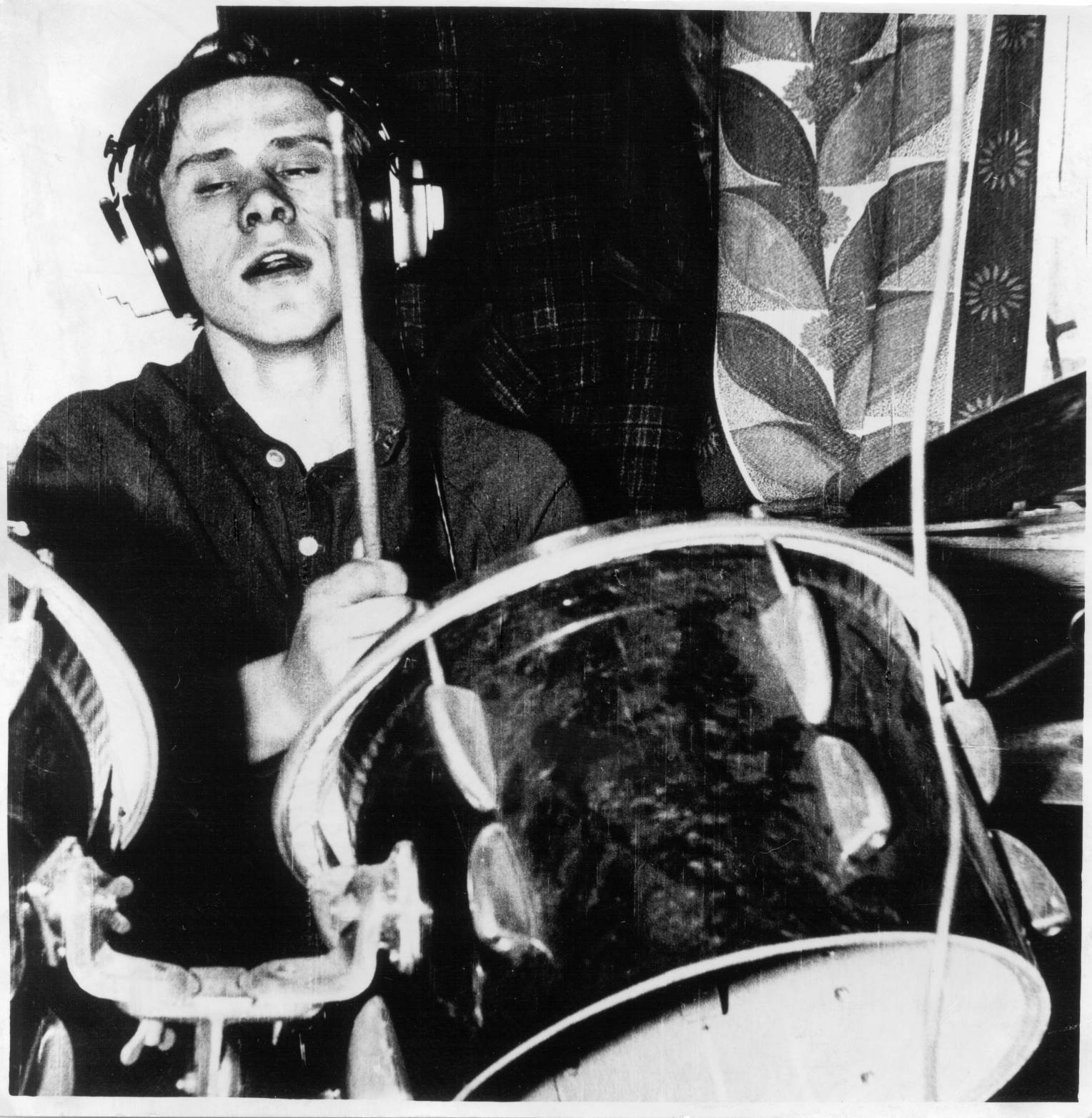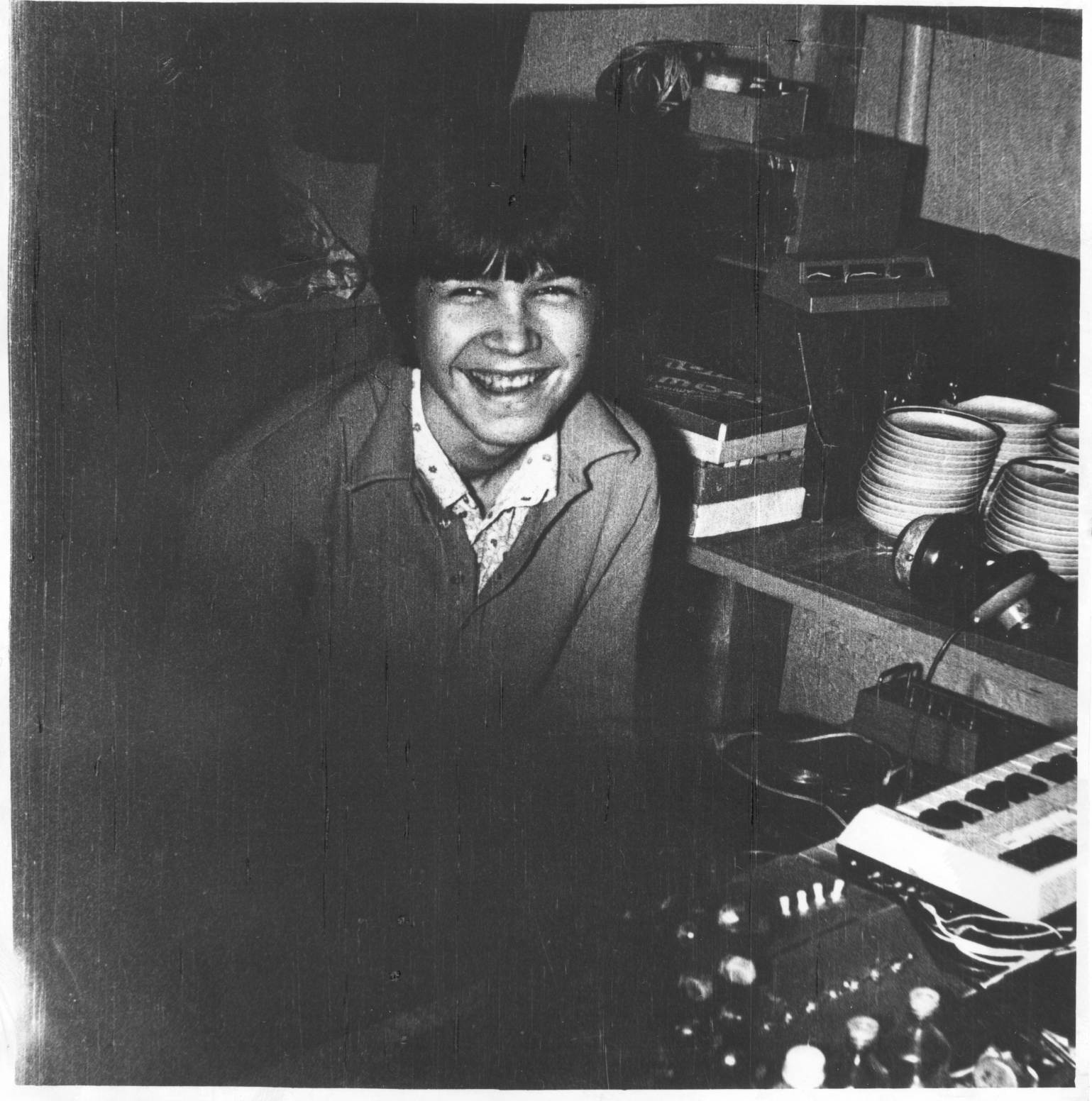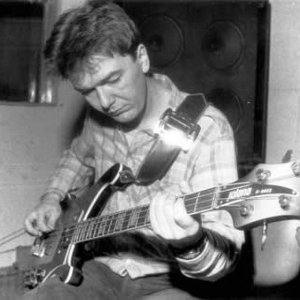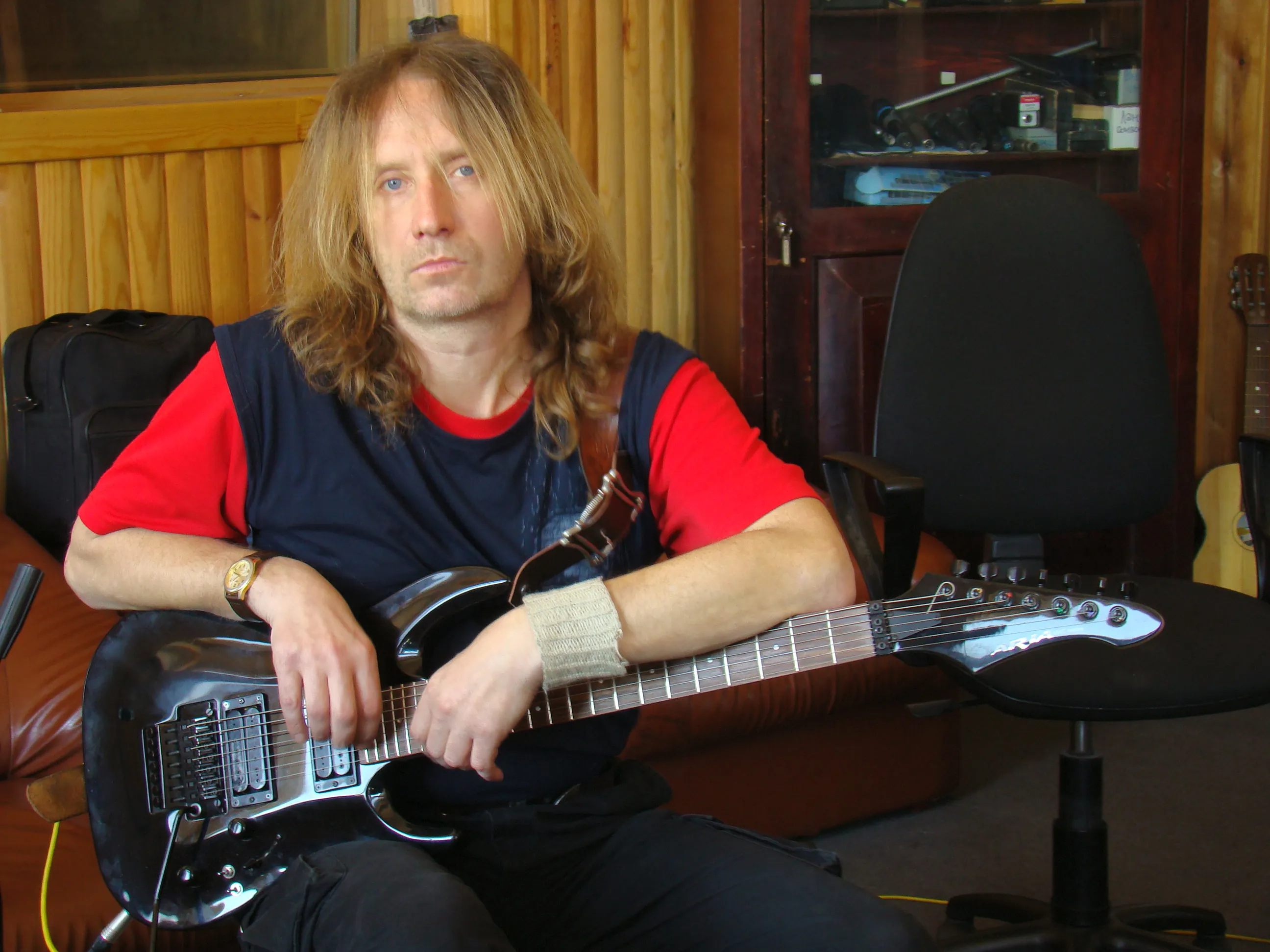
In a video interview of 2008 Sergey Bogaev answers a journalist’s questions at a rehearsal base (the journalist is not named in the recording; behind Bogaev there is a drum kit and a Confederate flag). The recording lasts 44 minutes 48 seconds and is in the "Video" section. Below is a retelling of what is not in our other materials, with short quotations. We do not give the surnames of the factory’s komsomol secretary and of the officers mentioned: in the recording only Bogaev names them, from memory, and we cannot verify it.
Video interview with Sergey Bogaev, 2008 (44:48). You can listen to it in full: a retelling follows.
How "Myortvye Ushi" became "Oblachny Kray"
Bogaev recalls: after a year of rehearsals in the factory’s house of culture he was summoned to the komsomol committee of "Krasnaya Kuznitsa" and told that a regional contest of vocal-instrumental ensembles had been announced, to which the factory must send an entrant. The condition was three songs by Soviet composers. He took poems by Konstantin Simonov and two texts by Orlov ("Nad zaryoyu shar zemnoy" — the very song the page "Ego zaryli v Shar Zemnoy" is about), and wrote his own music, a "punchy" one. Asked by the secretary for the ensemble’s name, he said "Myortvye Ushi", and the secretary replied that it would not do for the contest entry of the Krasnaya Kuznitsa factory. The previous name, "Bolshoe zhelezo", did not please either; the secretary suggested "Korabely", "Pomory" ("merry shipbuilders", Bogaev joked), something "poetic, northern". Bogaev, joking, tossed out: "well, there is also Oblachny Kray" — and the secretary told them to put exactly that in the application: "Vocal-instrumental ensemble Oblachny Kray. That’s it."
The performance, by his account, was not what was expected: at the contest nine ensembles sang "Malinovki zaslyshav golosok" and seven "Letny vecher", while Oblachny Kray played three songs with its own music — "we hammered out the third piece", and "complete silence" fell in the hall. The jury, as Bogaev tells it, asked "who let these freaks out at all" and who this "composer Bogaev" was: an electrician, he was told, had no business climbing onto the stage. The committee secretary who had vouched for the band was displeased, but it turned out that his acquaintances from the security services, who liked the music, stood up for it: "you will not lose your post". Later, having recorded "Oblachny Kray I" (by analogy with "Led Zeppelin I"), the band kept the name: Oleg Rautkin insisted — "since you made your mark so well". (Our Chronicle describes this episode from other sources — as the 1981 event in Novodvinsk.)
A line-up "geographically determined"
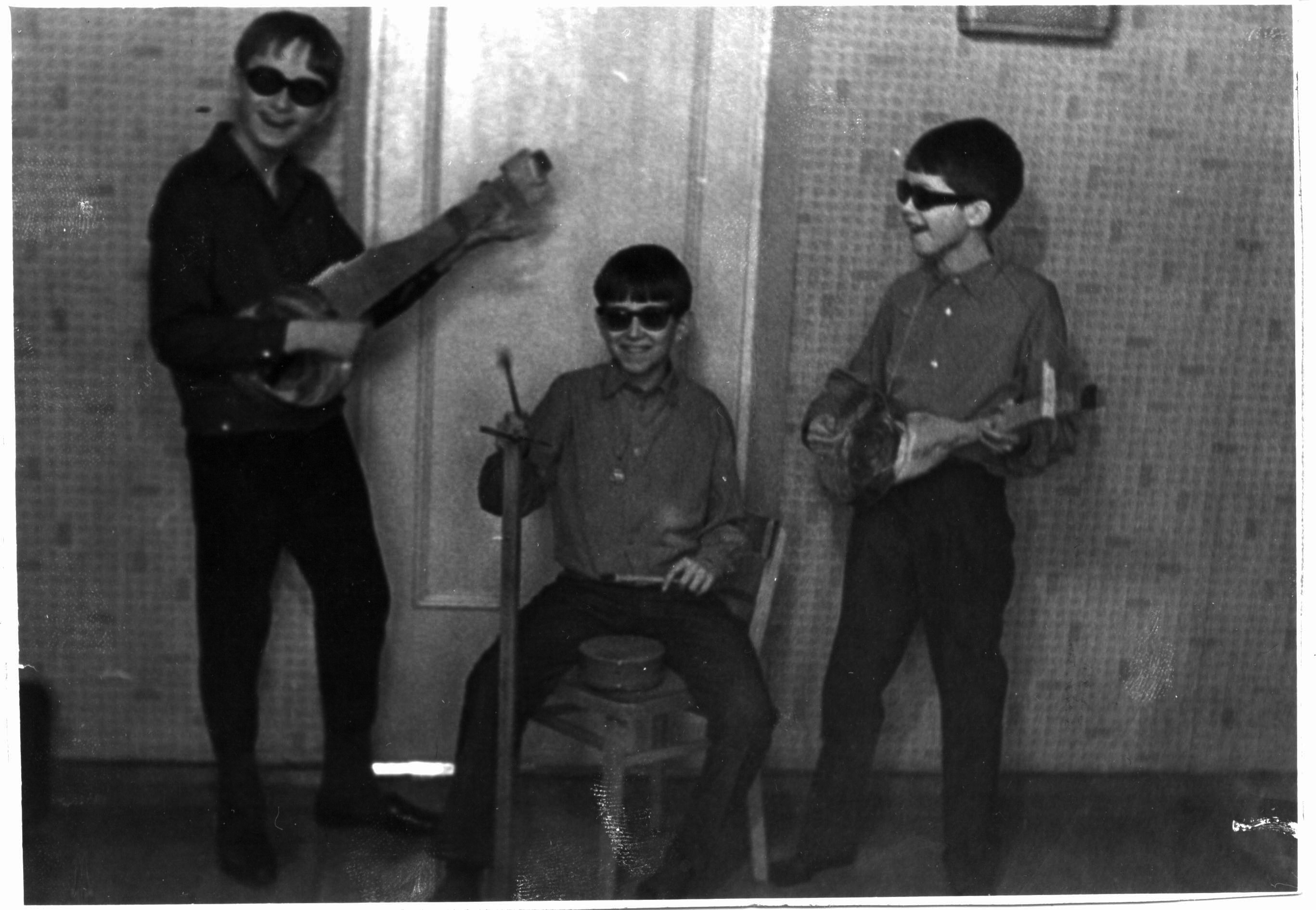
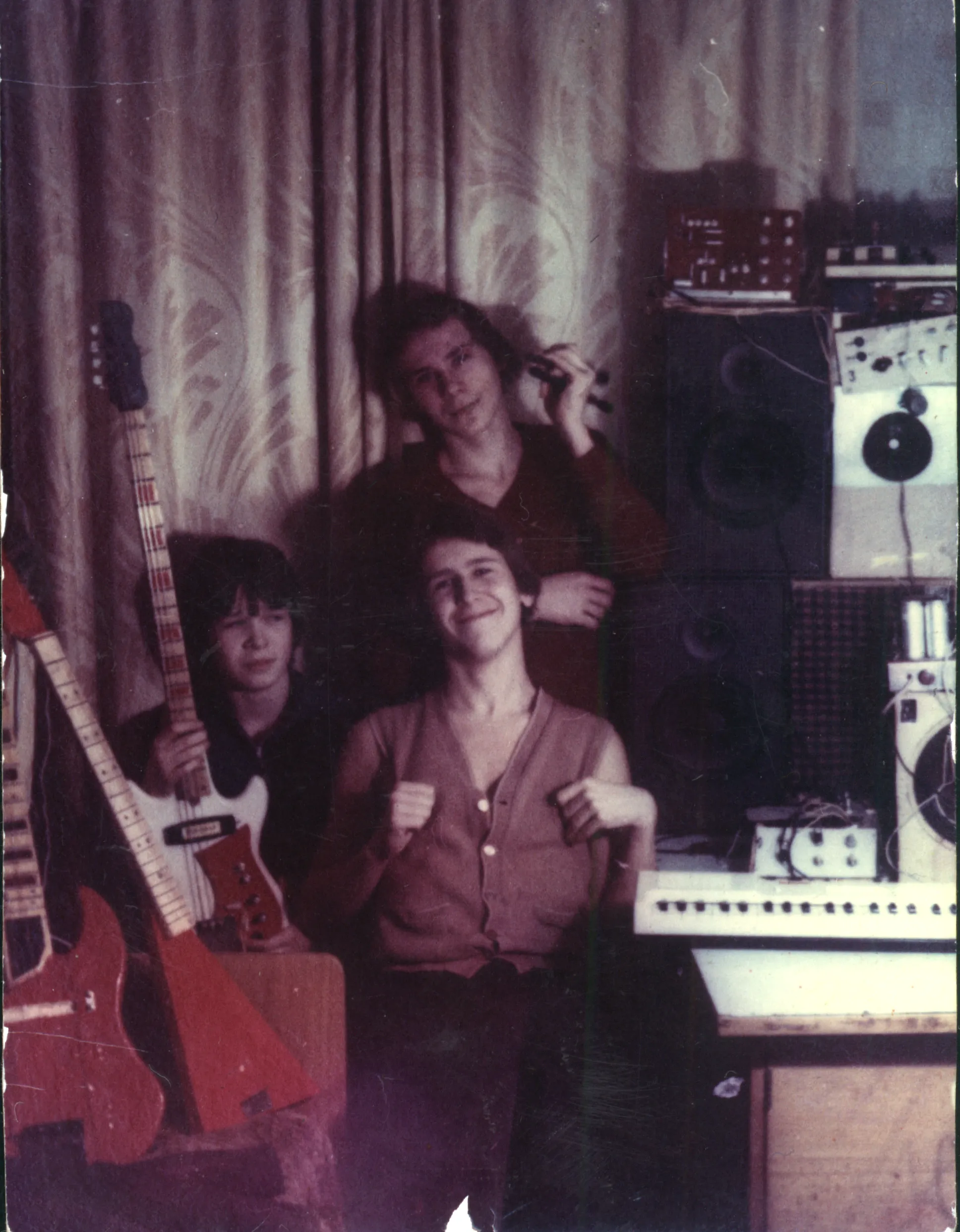
The first line-up, says Bogaev, was not selected: the boys lived in the same entrance, on the same floor, "from three years old, from five you could not get past each other". By 1978 they decided to create their own ensemble; there were "a million" names. Roles were assigned by liking: Nikolai Lyskovsky — "I like the sound of a bass guitar, and keyboards" — got bass and keyboards; Oleg Rautkin — "I really like drums, and I have a loud voice" — drums and vocals; Bogaev himself, knowing a few chords, the guitar. The style, he adds, was not chosen: "we played the music we liked; had we liked another, we would have played another". On how he discovered heavy rock (a Melodiya flexi disc "Vocal-instrumental ensembles of the world" with Creedence and Deep Purple, Artemy Troitsky’s (designated a foreign agent in Russia) article in "Rovesnik") see his biography.
"I sing what I see": the conversation at the personnel department (1984)
Asked about influences on the lyrics, Bogaev answers: "I sing what I see — like the Chukchi". And about pressure from the authorities he tells in detail. In 1984, while he was on shift as an electrician, the head of the personnel department phoned him in a "dead voice": "come immediately". He came with a screwdriver and a tester — "thought something had burnt out". Two men were sitting in the office ("I understood at once from their mugs"); the head left, and he was given a sheet of paper and a pencil to write that he "undertakes henceforth not to compose, record or distribute any more songs". Bogaev refused to write and asked what the complaints were. He was shown printouts of the texts of all four albums, "from the first to the fourth" (Bogaev himself, he says, had no such copies).
- "Pesnya molodogo agronoma" (the album "Selkhozrok", 1982): the hero, a graduate of an agricultural institute, walks a country road barefoot, "I feel the breath of the earth with my bare heels". His interlocutors asked whether he meant that the working class has "such a miserable wage" that it cannot afford shoes. Bogaev answered that this had come into their heads, not his, and asked whether they had ever walked barefoot in summer.
- "Russkaya narodnaya": "long-bearded oaks, boyars and princes" and "if there are so many goats in office, what progress is there". They asked who the "goats" and "oaks" were (it was 1985, "Gorbachev had just come"). Bogaev explained that the song was inspired by Alexey Tolstoy’s novel "Peter I", and the boyars are the boyar duma that hinders young Peter’s reforms: until he has recruited young people there will be no progress.
- "Moy Afganistan" ("Tremble, dushman, beware, dushman, I will defend Afghanistan like Azerbaijan, like Uzbekistan"): he answered that our soldiers in Afghanistan "fulfil their internationalist duty" and defend Afghanistan the way they would defend other republics.
He was also asked about his "mental health"; Bogaev said that he works as an electrician with a clearance for over 1000 volts and had passed a medical commission, including a psychiatrist, only the day before. There, in his words, "our conversation ended": he signed nothing. He did not take on trust the interlocutors’ words that someone among his acquaintances had already signed such a paper ("I don’t believe it"); we do not retell them because they cannot be checked.
After that, Bogaev continues, the band "was taken off concerts". He recalls that in 1988 or 1989 they were to play at the "Rock-Panorama" in Moscow: posters hung across the whole Luzhniki Sports Palace, "now comes the band Oblachny Kray" had already been announced from the stage, they were walking down the corridor to the stage — and "right before the stage they pulled us out". The same, he says, happened at the Leningrad Rock Club. (He gives the years approximately, and we have no other confirmation of this episode.)
The press and "scraps from the kitchen of anti-Sovietism"
Of the press Bogaev likes best the magazine "Absurd" published in Arkhangelsk and launched by Sergey Supalov — the very man who drew "half of our album designs": it covered not only heavy rock but all Arkhangelsk rock. Of the official press — a clipping from "Severny Komsomolets": "Oblachny Kray is scraps from the kitchen of anti-Sovietism".
Three eras: the 80s, the 90s, the 2000s
Bogaev calls the eighties the most prosperous and the nineties the gloomiest: by the album "Svobody zahoteli?" (1990, Melodiya) the band had a permanent bass player — Andrey Lukin from the Arkhangelsk band Autodafe, who became his "best friend" "both in music and in life"; in the early nineties Lukin tragically died in Moscow, and Bogaev, in his words, "went into a stupor" for several years. He sees the 2000s as "a repetition of the eighties": a revival; and is glad that "eighteen- or twenty-year-olds" come to the studio and play "heavy, aggressive, modern" music with no eye on commerce.
The brightest moment: Leningrad, 1987
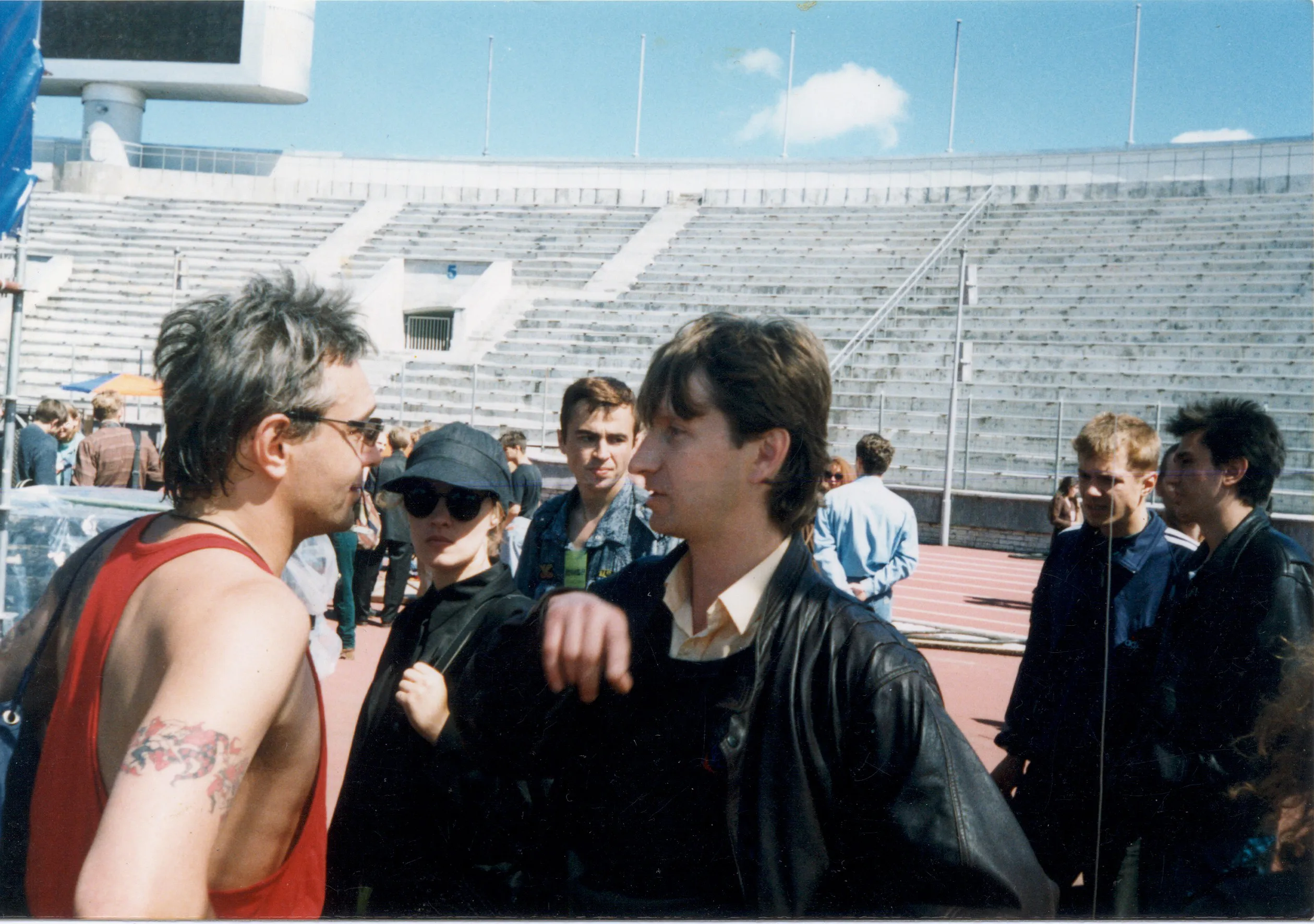
Among the bright moments Bogaev names the first performance in Leningrad, at the Palace of Youth: in spring 1987 he invited Konstantin Kinchev with Alisa to the Arkhangelsk rock festival ("nobody in Arkhangelsk knew them then"), in autumn Alisa invited Oblachny Kray and Autodafe for a return visit. How Autodafe’s drummer did not fly in and Alisa’s drummer Mikhail Nefyodov played the whole concert instead, how after the concert the band, "tipsy", was detained in the police room of the Palace of Youth and how Konstantin Kinchev and other musicians whom he names stepped in — Bogaev tells with humour; more on this trip in his memoir part 2, chapter 1.
Where the band stood in 2008
Asked about plans, Bogaev answers: the thirteenth album in 26 years is being finished, begun in 2004, "not that we recorded it all this time" (tours, "visits from time to time"); the music is "all played, recorded and mixed", of thirteen songs three are ready and ten remain to be sung. Then — to release it, rehearse and put together a concert programme. He sees the future of heavy music in Russia as "the best": judging by the young people who come to the studio and to concerts; to those who predicted that "heavy music will end with your generation" he remarks: "they screwed up as always".
Source: Sergey Bogaev’s video interview (2008, 44:48), a transcript of the recording; a retelling with short quotations. Dates and circumstances are as Bogaev remembers them; where we cannot confirm them this is noted.