The legendary hard rock band from Arkhangelsk was formed in 1978, consisting of: Sergei Bogayev — guitar, vocals, bass; Igor Lyskovsky — organ, vocals; Nikolai Lyskovsky — bass, organ; Oleg Rautkin — drums, vocals. Until 1982, they went by the name "Mortvye Ushi" (Dead Ears), under which they left two rec...
The legendary hard rock band from Arkhangelsk was formed in 1978, consisting of: Sergei Bogayev — guitar, vocals, bass; Igor Lyskovsky — organ, vocals; Nikolai Lyskovsky — bass, organ; Oleg Rautkin — drums, vocals. Until 1982, they went by the name "Mertvye Ushi" (Dead Ears), under which they left two recordings (1978 and 1980).

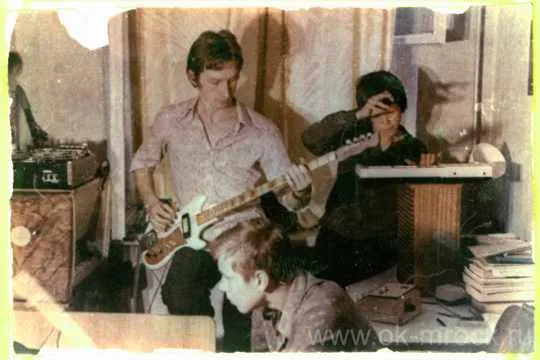
Armed with a Ural guitar, a homemade bass carved from a birch log, battery-operated children's Mickey keyboards, Soviet Faemi keyboards with an inimitable sound spectrum, an acoustic guitar (bought for 12 rubles and 50 kopecks), and pioneer drums, the group changed its name to "Oblachnyy Krays" (Cloudy Land) to attend a competition for amateur Soviet song ensembles. With a lineup of Sergei Bogayev — guitar; Andrei Varvinsky from the group "Little flowers" — keyboards, vocals; Oleg Zaitsev from the group "Rape" — bass, backing vocals; and Oleg Rautkin — drums, they traveled to Novodvinsk. There, quite expectedly, they were rejected after performing a hard rock song of their own making called "He Was Buried in the Earthly Globe," set to a poem by the famous front-line poet Sergei Orlov. As a result, not seeing prospects for their musical activities and due to his studies at a medical institute, Oleg Zaitsev and Andrei Varvinsky left the band. Over the course of four years, changing their lineup and continuously searching and experimenting, by 1982 the group finally found its signature sound and style. This was undoubtedly the merit of the band's leader—a guitarist, composer, arranger, poet, and sound engineer all rolled into one—Sergei Bogayev.

In January 1982, when Sergei had just turned 21, the band's vocalist and drummer Oleg Rautkin was 17, and keyboardist Nikolai Lyskovsky was 16, the group recorded their first album, "Oblachnyy Krays-1," popularly known as "Tales of the Forest." With this album, the rock band "Oblachnyy Krays" astonished the musicians of "Akvarium," who had arrived in Arkhangelsk for a concert tour along with their sound engineer, the future famous producer Andrei Tropillo, with their originality and unconventional approach to recording.
In April 1982, the second album, "Oblachnyy Krays-2. 'Selkhozrok' (Agricultural Rock)" (sound engineer Sergei Bogayev), was recorded. It included elements of krautrock, was made non-stop in the vein of "Pink Floyd," and featured Vladimir Budnik from the group "Svataya Luiza" on vocals. On this album, the vocal parts were performed by Oleg Rautkin, Vladimir Budnik, and Sergei himself.

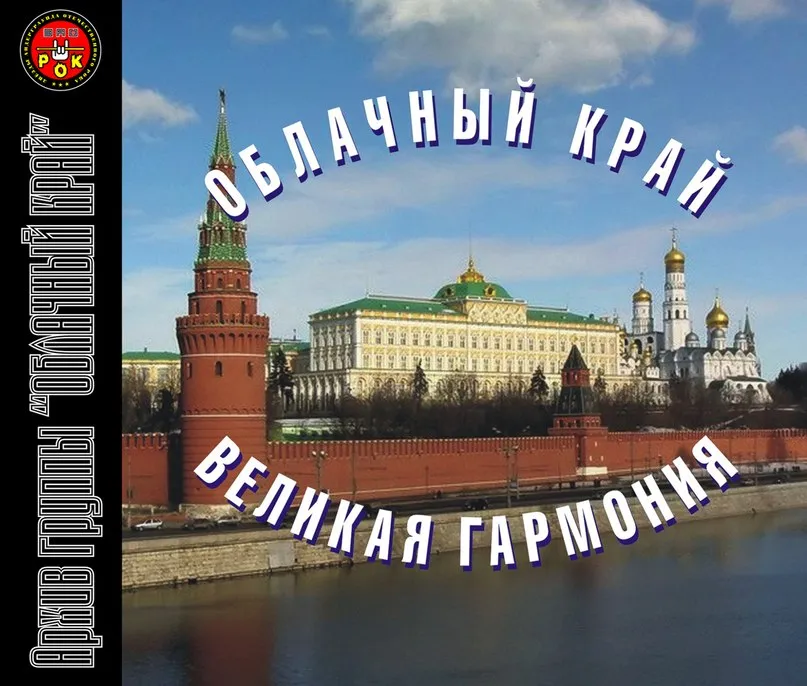
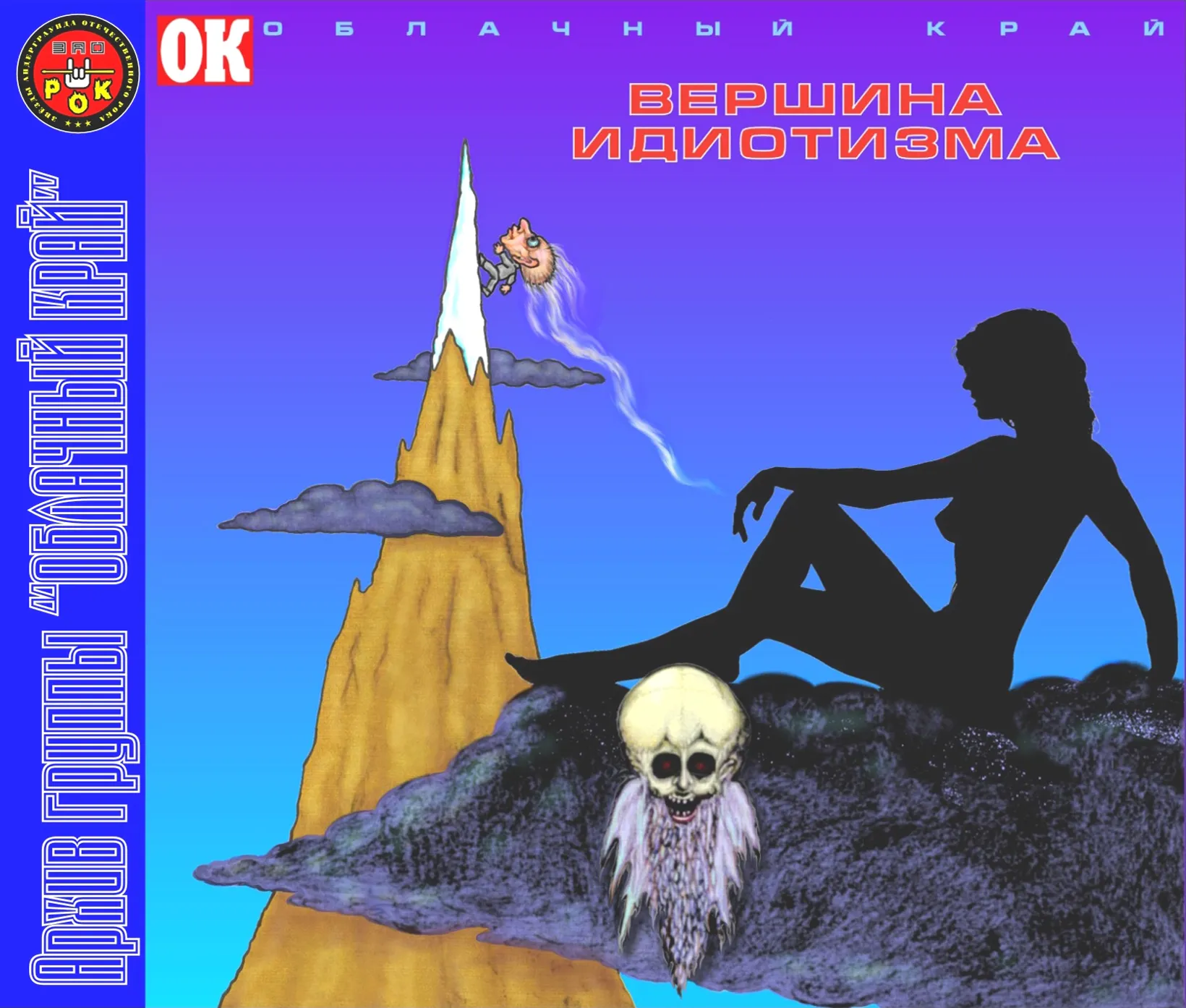
In November 1982, the third album, "Velikaya Garmoniya" (Great Harmony) (sound engineer Sergei Bogayev), saw the light of day. With this album, the band got heavier and began performing songs with anti-Soviet undertones. In principle, the rock band "Oblachnyy Krays" was perhaps the most anti-Soviet group of that time, and Sergei Bogayev's main trick was that, while performing their own compositions, the band managed to drive the authorities to a white heat, but there was nothing they could really find fault with. The works of "Oblachnyy Krays" spoke of the same problems that were broadcast from high rostrums, on the radio, and on TV, but it sounded like a complete mockery of the existing regime! On this album, all vocal parts were performed by Vladimir Budnik. Each of the listed albums was innovative both in terms of material and recording. In 1983, in the classic lineup of Bogayev-Rautkin-Lyskovsky, the group recorded one of their strongest albums of the Arkhangelsk period, "Kh-Ya Samodeyatelnost" (Amateur Performance) (sound engineer Sergei Bogayev), which, unlike the previous ones, was conceptual, art-rock, and completely anti-Soviet! After the release of this album, very strong pressure began to be exerted on the group by the authorities. "Oblachnyy Krays" was kicked out of the "Red Forge" Palace of Culture, where the group had rehearsed and recorded. They were forbidden to perform, rehearse, and record, and were recommended to disband the group. Otherwise, all sorts of punishments were to be expected. In January 1984, in the same lineup, additionally inviting the musicians of the "Stsena" group Vladimir Abroskin (drums on certain tracks) and Konstantin Lapshin, who had previously also played in the group "Blues-inspector" (flute, saxophone), and having recorded the album "Vershina Idiotizma" (The Peak of Idiocy) (sound engineer Sergei Bogayev) under the most difficult conditions, Sergei decided to move to Leningrad at the invitation of Andrei Tropillo. This marks the end of the Arkhangelsk period of the rock band "Oblachnyy Krays," which resulted in five magnificent rock albums recorded on the remains of Soviet tape recorders, using primitive microphones, homemade effects pedals, special effects, and marked by the undeniable talent of the musicians Oleg Rautkin, Nikolai Lyskovsky, and Vladimir Budnik, as well as the sound engineering work of Sergei Bogayev.

From the middle of 1984, the "Leningrad" period of the group begins. Arriving at Andrei Tropillo's studio, "Oblachnyy Krays," simultaneously with "Alisa" who was recording their album "Energiya" there, began recording the album "Ublyuzhya Dolya" (The Fate of a Wretch) (sound engineer Andrei Tropillo) in the lineup: Sergei Bogayev, Vladimir Budnik, and the legendary Evgeny Guberman from "Akvarium," who joined the group by sitting behind the drum kit. The album was released in November 1984 and immediately became super popular throughout the entire Soviet Union. Many music lovers of that time began their acquaintance with the work of "Oblachnyy Krays" precisely with this album, one of the compositions of which was even released on French vinyl.

In 1985, the band, consisting of Bogayev — Rautkin — Lyskovsky — Guberman, recorded their most famous album, "Stremya i Lyudi" (The Harness and the People) (sound engineer Andrei Tropillo), which featured the legendary saxophonist Mikhail Chernov "Uncle Misha" from DDT, and which was included in the "100 Magnetic Albums of Soviet Rock" collection. After this, "Oblachnyy Krays" embarked on active concert activity. The group was actively supported by Alexander Gradsky, who included the song "Kostya Perestukin" from the 1985 album in the program of his show "45 Minutes in the Sunday Studio" on All-Union Radio. Alexander Gradsky called "Oblachnyy Krays" the only domestic rock band known to him that played genuine improvisational hard rock, which could unashamedly be placed on par with the best examples of world rock music. He invited Oleg Rautkin to Moscow and personally tutored him as a vocal teacher. In 1987, "Oblachnyy Krays," consisting of Bogayev — Rautkin — Lyskovsky and joined by musicians Dmitry Leontyev (drums) from the group "Autodafe" and Andrei Lukin (bass) from the groups "Zapasnyy Vyhod" and "Stsena," triumphantly performed at the famous rock festival in Podolsk.

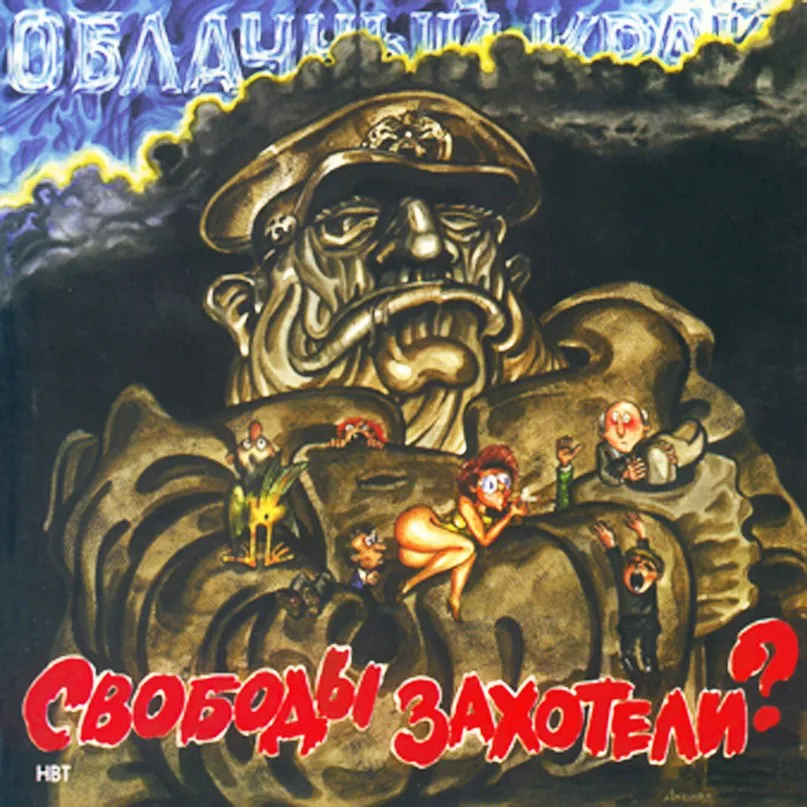
In 1990, at the Leningrad Recording Studio of the All-Union Gramophone Record Firm "Melodiya," thanks to the director of the firm's Leningrad branch, Andrei Tropillo, the band—consisting of Bogayev — Rautkin — Lyskovsky — Lukin plus the drummer from "Autodafe" Yury Korablov—recorded and released on vinyl a powerful metal album, "Svobody Zakhotteli?" (Wanted Freedom?) (sound engineer Yury Morozov), in a very beautiful cover drawn by Sergei Supalov, a well-known Arkhangelsk artist, photographer, and guardian of Arkhangelsk rock. The album sold in huge numbers across the country. During these years, the group had its most powerful lineup of musicians and reached the peak of its creativity. In 1991, after recording the album "Oblachnyy Krays-1991" at the Petrostudio in Moscow, with the sound engineer being the Arkhangelsk actor, guitarist, and vocalist Igor Patokin from the group "Shish", the band's bassist Andrei Lukin tragically died, after which Oblachnyy Krays effectively disbanded.

Only eight years later, in 1999, Sergei Bogayev recorded and released on "Anthrop" a very mature and strong album, "Lyubov k Zhizni" (Love for Life), inviting his friend Dmitry Leontyev on drums once again, as well as musicians Dmitry Kulikovsky (from the group "Talazhskie Blondiny") and Maxim Dyuryagin (from the group "Novaya Zemlya") on saxophones. He performed the vocal parts himself; in addition, he also played the bass and keyboard parts under the pseudonyms Egor Zadrygin and Ivan Besprobudnykh, as well as working as a sound engineer on the album. Andrei Korelsky from "Autodafe" with his "chamber" orchestra also took part in the recording of the album. In 2003, the album "Patriot" was released, also recorded with Dmitry Leontyev (drums) and musicians: Valery Zhuravlyov (drums, from the groups "Pomory," "Avers," "Bohemia") and Maxim Dyuryagin (saxophones)—it is a very mature and high-quality album in terms of musical forms, but heavy, transitioning into the category of modern metal music. In 2004, an instrumental album called "Zhizn v 2007 Godu" (Life in the Year 2007) was recorded but not released anywhere, featuring the lineup of musicians: Sergei Bogayev — guitars, bass; Nikolai Lyskovsky — keyboards; Valery Zhuravlyov — drums; Dmitry Kulikovsky — saxophone. The album turned out to be very diverse and interesting, revealing Bogayev as a talented composer.

Working as a sound engineer at the "Anthrop" studio during these years, Sergei recorded many different musicians and ensembles. In 2004, as a sound engineer and keyboardist, he participated in the recording of the album "Kannibaly Svyashchennoy Voiny" (Cannibals of the Holy War) by the group "Raskolnikov." He also took part in tributes to Yury Morozov, Boris Grebenshchikov, and the group "Rossiyane." He participated in the rock opera "Olliport" dedicated to A. Tropillo. In 2007, based on the results of the Yury Morozov competition, Sergei Bogayev was included in the top ten best sound engineers in St. Petersburg and was awarded a commemorative prize.

In January-March 2007, two instrumental albums were released: "Tayny Mirozdaniya" (Secrets of the Universe) and "Povrezhdyonnaya Realnost" (Damaged Reality), which are the result of a joint collaboration between Sergei Bogayev and the rock band "Plen Off g.r. + Metal M." These albums were made in an experimental style and sound.
From 2007, a full-scale reissue of all surviving recordings of the band begins. The recordings were taken either from the original master tapes or from their copies, previously digitized by Sergei Supalov, the main custodian of the creative legacy of "Oblachnyy Krays." Some recordings came from the personal archives of Sergei Bogayev and Andrei Tropillo's "Anthrop" studio. At the same time, the early albums are being published for the first time in their full (uncut) versions, as originally intended by the group. All covers were restored by Sergei Supalov from the original designs of the samizdat magnetic albums, provided by the band members. These designs were taken from the personal archives of Sergei Bogayev and Sergei Supalov. Thus, without exception, all recordings of the "Oblachnyy Krays" group were restored and remastered. Moreover, the original titles of all compositions were preserved.
This website presents all the albums, compilations, and live albums of the group in existence. They are published and available for purchase. On the Internet, you can find low-quality pirated compilations from music lovers' personal collections that correspond to the official album releases presented on this site. There are no alternative versions of these albums. What might be presented as an alternative version is, in fact, only a low-quality copy. In 2008, another project was implemented in collaboration with the group "Plen Off g.r. + Metal M." — the album "Filial Raya" (Branch of Paradise).
For six years, the musicians of the "Oblachnyy Krays" group, consisting of Sergei Bogayev — guitars, vocals, drums, bass; Alexei Vishnya — loops, keyboards; Evgeny Guberman — drums, did not stop working on a new vocal album called "Ygyatta." The work on it was completed in December 2010. "It can be confidently said that this album possesses the most powerful hard rock sound in the entire history of Russian recording." (Andrei Tropillo) During the recording of this album, the song "Nekomu Berezku Zalomati" was recorded for the A. Bashlachev tribute, in collaboration with Dmitry Revyakin from Kalinov Most. On May 28, 2011, a live music video for the song "Aria of the Varangian Guests" was filmed by St. Petersburg musician Boris Kononov from the new lineup of the group Plen Off g.r.+ Metal M. This was Sergei Bogayev's last creative work. Sergei had serious plans to travel around the country with concert performances, but, unfortunately, these plans were not destined to come true. On June 2, 2011, Sergei passed away. The great Russian rocker was buried at the Theological Cemetery on the Alley of Stars.

1978 – 2011