Skip to music player
1978 — 2011

Band History

33 years of underground rock from Arkhangelsk

Band timeline

1978
1978 Story

'Dead Ears' — Four Guys from Arkhangelsk

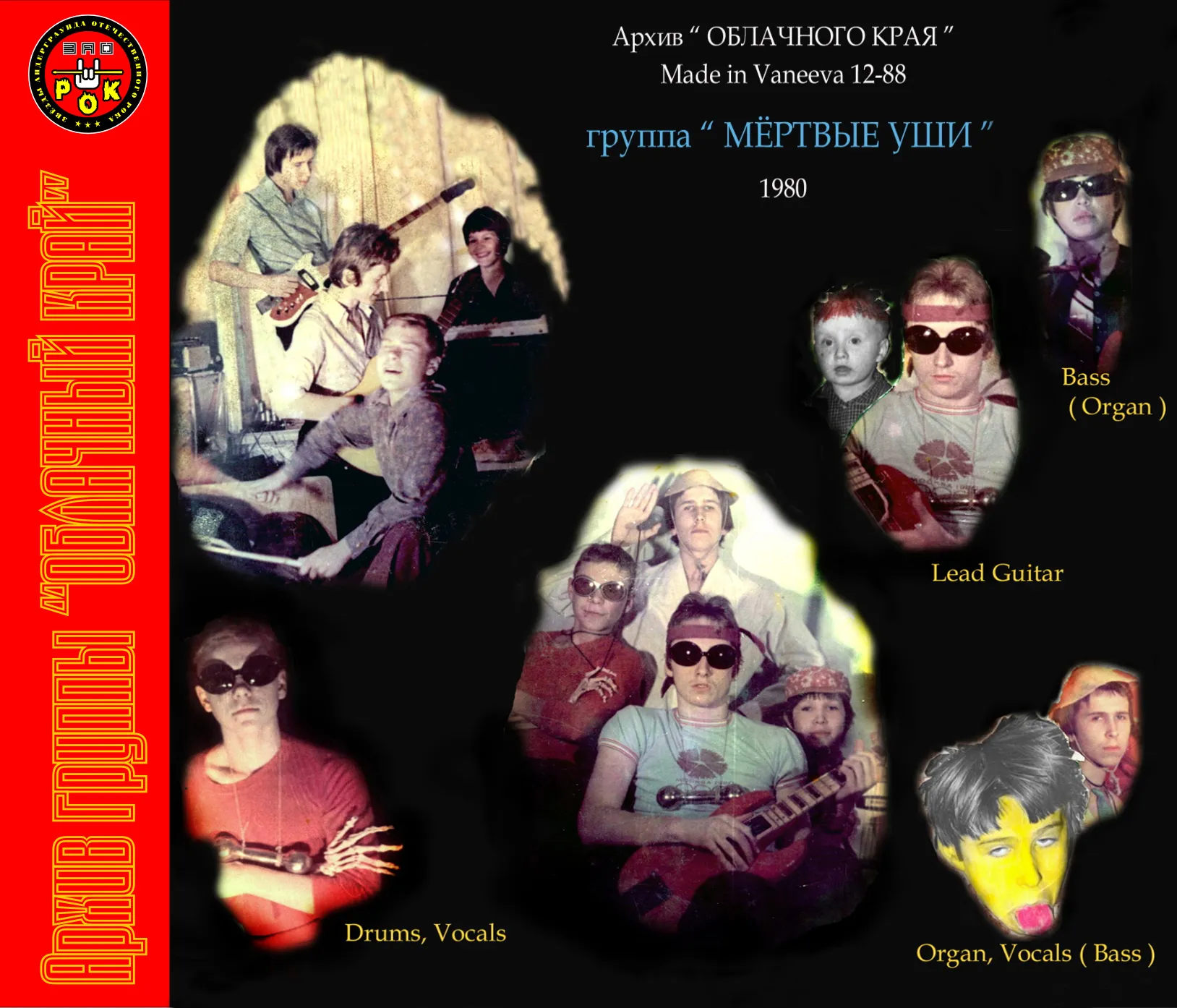
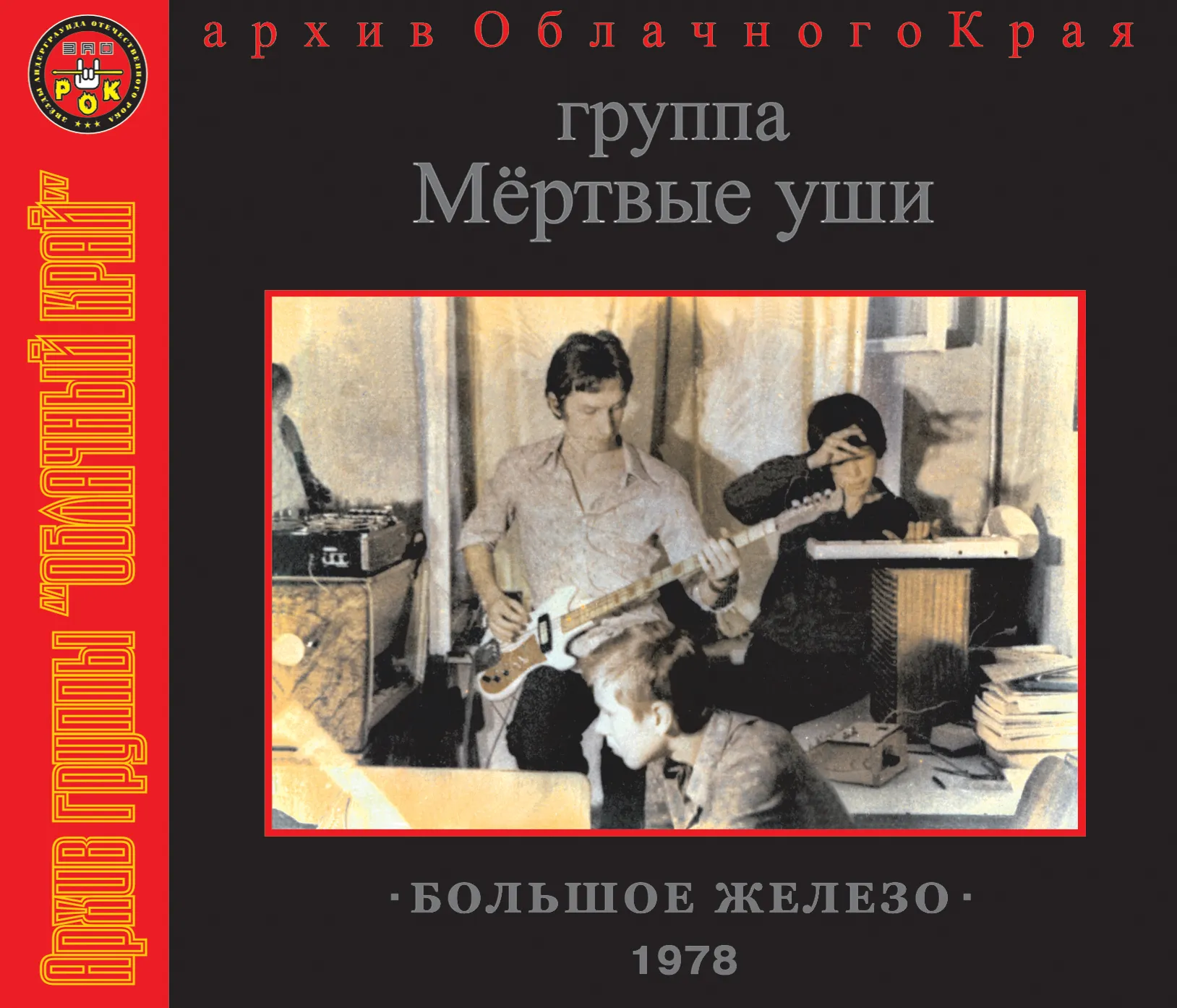
In 1978 in Arkhangelsk, four kids — Sergey Bogaev (guitar, vocals, bass), Oleg Rautkin (drums, vocals), Nikolay Lyskovsky (bass, organ) and his brother Igor (organ, vocals) — named their band 'Dead Ears.' No real instruments — just a 'Ural' guitar, a homemade bass carved from a birch log, battery-powered children's 'Mickey' keyboards, Soviet 'Faemi' organs, an acoustic guitar for 12 rubles 50 kopecks, and pioneer drums. From makeshift radio parts Bogaev soldered his first 'fuzz' pedal — forever defining their signature raw overloaded sound. No access to Western music — heavy rock just burst out of them on its own.

'Dead Ears' — Four Guys from Arkhangelsk
1978 Album

Big Iron

The band's first magnetic-tape album, recorded in 1978 under the name 'Dead Ears' — four years before the group took the name Oblachny Kray. The core lineup was already in place: Sergey Bogaev (guitar, vocals, bass), Oleg Rautkin (drums, vocals), Nikolay Lyskovsky (bass, organ), and his brother Igor (organ, vocals). They had almost no real instruments: a 'Ural' guitar, a homemade bass carved from a birch log, battery-powered children's 'Mickey' keyboards, Soviet 'Faemi' organs, a 12-ruble-50-kopeck acoustic guitar, and pioneer drums. From spare radio parts, Bogaev soldered the band's first fuzz pedal — it permanently defined their raw, overdriven signature sound. There was no access to Western music at the time; heavy rock simply came from within, from an internal need to sound different.

Big Iron
Listen to the album →
1978.01 Concert

Founding of the group "Dead Ears"

Sergey Bogaev founded the band Мёртвые Уши (Dead Ears) in Arkhangelsk. It became the starting point of one of the most unusual stories in Russian rock.

Arkhangelsk
1978.06 Concert

Recording the album “Big Iron”

The band recorded its first album under the name Мёртвые Уши (Dead Ears): a heavy, psychedelic sound with elements of progressive rock.

Arkhangelsk
1980
1980 Story

Two First Magnetic Albums — Magnitizdat Spreads Across the Country

Under the name 'Dead Ears,' the band recorded two magnetic albums (1978 and 1980) — on fragments of Soviet tape recorders, with primitive microphones and homemade effects. Cassettes spread through magnitizdat, the Soviet musical samizdat, across the entire country. Changing lineup and continuously experimenting for four years, by 1982 the band finally found its signature sound and style — entirely thanks to their leader: guitarist, composer, arranger, poet and sound engineer in one person, Sergey Bogaev.

1980 Album

Made in Vaneeva 12-88

The band's second magnetic-tape album, recorded in 1980 while still performing as 'Dead Ears'. The title is the address of Bogaev's apartment-studio on Vaneeva Street in Arkhangelsk, where the recording was made on broken Soviet tape recorders with homemade effects pedals and primitive microphones.

Made in Vaneeva 12-88
Listen to the album →
1980.01 Concert

Recording the album “Made in Vaneeva 12-88”

The group's second album has been recorded. The name indicates the address of the recording studio on Vaneeva Street in Arkhangelsk.

Arkhangelsk
1981
1981 Story

How 'Dead Ears' Became 'Oblachny Kray' — and Got Themselves Axed

For a trip to a Soviet song contest in Novodvinsk, the band was forced to change their name. They invited Andrey Varvinsky from 'Little Flowers' (keyboards) and Oleg Zaitsev from 'Rape' (bass). Taking the stage as 'Oblachny Kray,' they unleashed the heaviest hard rock piece 'He Was Buried in the Globe' set to verses by war poet Sergey Orlov. The jury was speechless. Naturally, they were axed. Zaitsev and Varvinsky left — seeing no prospects and due to med school. But the name 'Oblachny Kray' stayed forever.

How 'Dead Ears' Became 'Oblachny Kray' — and Got Themselves Axed
1981 Album

1981-1982

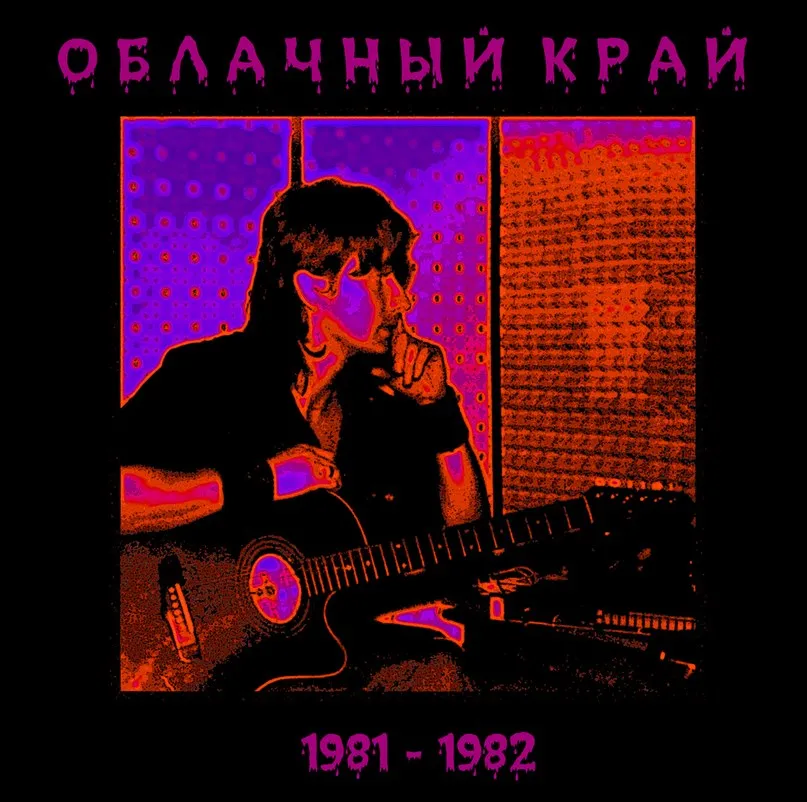
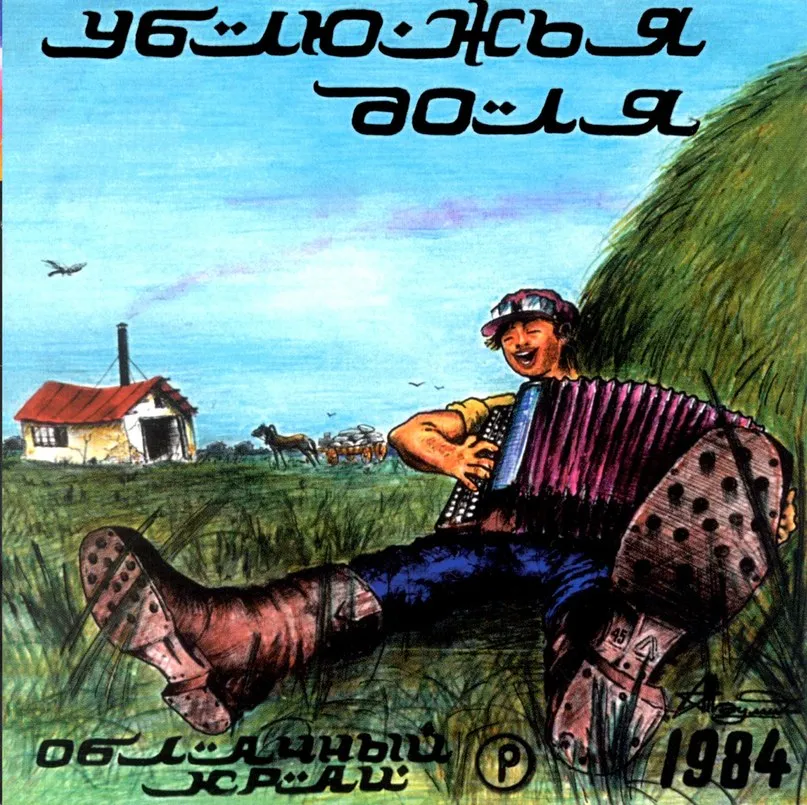
A collection of the band's early 1981-1982 recordings, reissued in 2013. Gives a sense of Oblachny Kray's sound at its earliest stage, before Bogaev's move to Leningrad.

1981-1982
Listen to the album →
1981.11 Concert

Renaming to "Cloud Edge"

The group changes its name from "Dead Ears" to "Cloud Edge". Under this name the team will acquire legendary status.

Arkhangelsk
1982
1982 Album

Great Harmony

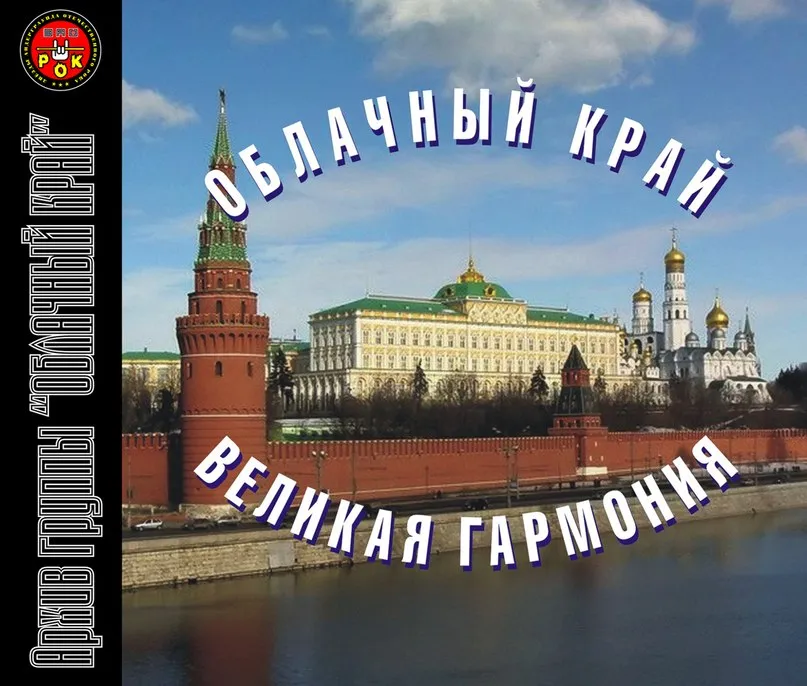
The third numbered studio album by Oblachny Kray, recorded in autumn 1982 at the Cultural Center of the Red Smithy factory in Arkhangelsk. All vocal parts were performed by Vladimir Budnik of Svyataya Luiza, with Oleg Rautkin contributing only as drummer. Widely circulated among Soviet rock enthusiasts; officially released with shortened tracks in 1999 and reissued with complete recordings and new artwork by Igor Plenov in 2009.

Great Harmony
Listen to the album →
1982 Album

OK I (Forest Secrets)

The first numbered studio album by Oblachny Kray, recorded January 6–March 10, 1982 at the Cultural Center of the Red Smithy factory in Arkhangelsk. The recording featured Sergey Bogaev (vocals, guitars, bass), Oleg Rautkin (vocals, drums), and Nikolay Lyskovskiy (keyboards), using a homemade bass guitar and self-constructed sound effects. The magnetic tape album spread beyond Arkhangelsk through connections with Aquarium; officially released on cassette and CD in 2001, with a remastered edition in 2009.

OK I (Forest Secrets)
Listen to the album →
1982 Album

OK II. Agri-Rock

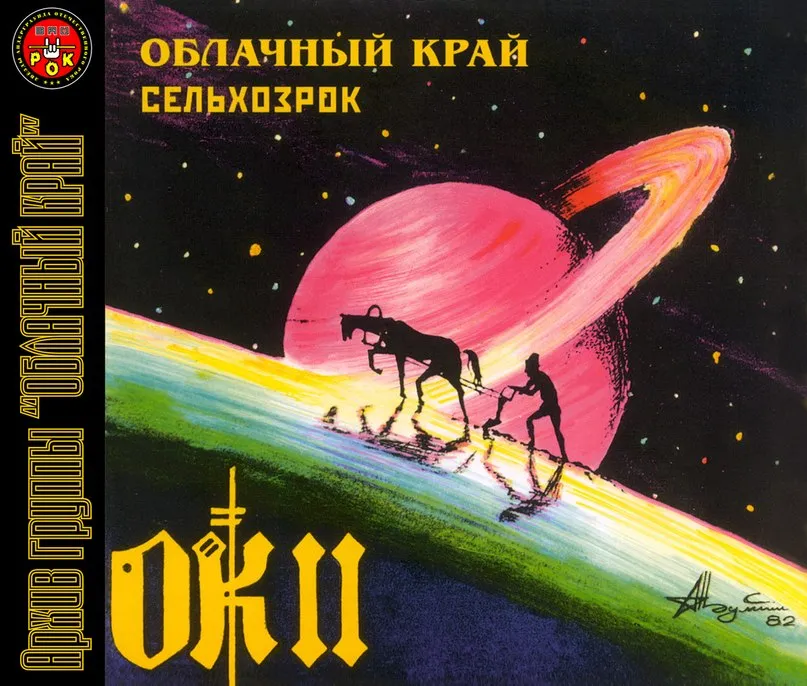
The second numbered studio album by Oblachny Kray, recorded in spring 1982 at the Cultural Center of the Red Smithy factory in Arkhangelsk. A concept album presenting agricultural themes with irony in a hard rock style, featuring guest vocalist Vladimir Budnik alongside the core trio. Originally distributed without cover artwork; officially released on cassette and CD in 1999, with an expanded reissue in 2009.

OK II. Agri-Rock
Listen to the album →
1982.01 Story

'Oblachny Kray-1' — Grebenshchikov and Tropillo in Shock

January 1982. Sergey barely 21, Rautkin — 17, Lyskovsky — 16 years old. On household tape recorders they recorded the debut album 'Oblachny Kray-1,' popularly known as 'Secrets of the Forest.' At this time Boris Grebenshchikov and Andrey Tropillo — the future famous producer — arrive in Arkhangelsk on tour. They hear the recording and can't believe it: such powerful, original sound — on makeshift domestic equipment? Tropillo immediately understood — this is extraordinary talent. Thus began the connection between Oblachny Kray and the Leningrad rock underground.

'Oblachny Kray-1' — Grebenshchikov and Tropillo in Shock
1982.01 Concert

Album “OK I (Secrets of the Forest)”

The first album under the new name “Cloud Edge”. The Magneto album was instantly distributed throughout the Soviet Union through Magnitizdat.

Arkhangelsk
1982.04 Story

'Selkhozrok' — Kraut-Rock Arkhangelsk-Style

In April the second album 'Selkhozrok' was recorded — sound engineer Sergey Bogaev. Non-stop, modeled after Pink Floyd. With kraut-rock elements. Vladimir Budnik from 'Svyataya Luiza' joined on vocals — Rautkin, Budnik and Sergey himself shared vocal duties. For the Soviet provinces this was incredible boldness — not just songs, but continuous sound, a stream. Each subsequent album was innovative — both in material and in sound.

'Selkhozrok' — Kraut-Rock Arkhangelsk-Style
1982.04 Concert

Album “OK II. Selkhozrok"

The second album is a continuation of the band's unique sound. The name "Selkhozrok" ironically refers to its provincial origins.

Arkhangelsk
1982.11 Story

'Great Harmony' — The Most Anti-Soviet Band in the Country

November 1982 — the third album 'Great Harmony.' All vocal parts by Vladimir Budnik. The band got heavier and began writing songs with openly anti-Soviet undertones. Bogaev's trick: he spoke of the same problems as official propaganda from high podiums, on radio and TV — but it sounded like a complete mockery of the existing system. Nothing to find fault with, but it drove them to white heat. Oblachny Kray was perhaps the most anti-Soviet band of that era.

'Great Harmony' — The Most Anti-Soviet Band in the Country
1982.11 Concert

Album “Great Harmony”

Third album of 1982. The group's incredible productivity - three albums in one year.

Arkhangelsk
1983
1983 Story

'X-Ya Samodeyatelnost' — A Conceptual Strike Against the System

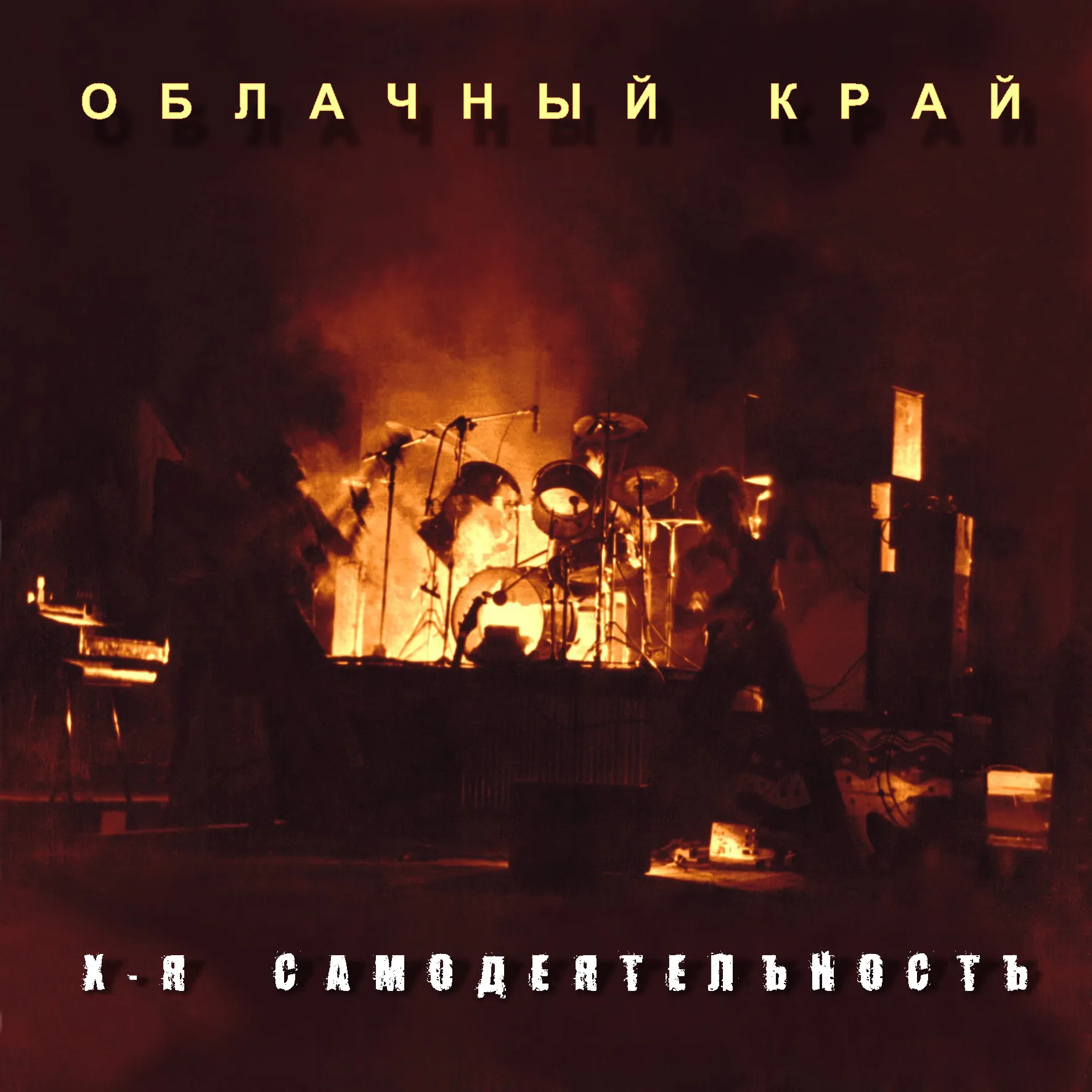
In the classic lineup Bogaev-Rautkin-Lyskovsky, one of the strongest albums of the Arkhangelsk period was recorded — 'X-Ya Samodeyatelnost.' Conceptual, art-rock, completely anti-Soviet. Unlike the previous ones — a unified work, not a collection of songs. The consequences were harsh: the band was kicked out of DK 'Krasnaya Kuznitsa' where they rehearsed and recorded. Performances, rehearsals, recordings — all banned. They were told to disband. Otherwise — 'various punishments.'

'X-Ya Samodeyatelnost' — A Conceptual Strike Against the System
1983 Album

X-Ya Amateur Show

The fourth numbered studio album by Oblachny Kray, recorded in 1983 at the club of the Red Smithy factory in Arkhangelsk. Bogaev (guitars, bass), Rautkin (vocals, drums), and Lyskovskiy (keyboards) performed six Bogaev compositions flowing continuously without breaks. Described as sharp satire that brought the group wide recognition; officially released on cassette by Otdelenie Vykhod and on CD by AnTrop in 2001.

X-Ya Amateur Show
Listen to the album →
1983.01 Concert

Album “X-amateur performance”

The album's provocative title reflects the band's rebellious spirit.

Arkhangelsk
1983.06 Concert

KGB pressure: expulsion from the Krasnaya Kuznitsa cultural center

Arkhangelsk — House of Culture "Red Forge"

Arkhangelsk
1984
1984 Story

Abducting Budnik — Operation 'Vocalist'

To record vocals, Bogaev flies to Arkhangelsk and literally pulls Vladimir Budnik out of a severe drinking binge. Giving him a lifesaving 'little bottle,' Sergey puts Volodya on a plane and delivers him straight to the Leningrad microphone. Such were the times — and such were the people. No studio comfort zones, no producers with promo campaign plans. But — real life in every note.

Abducting Budnik — Operation 'Vocalist'
1984 Album

Peak of Idiocy

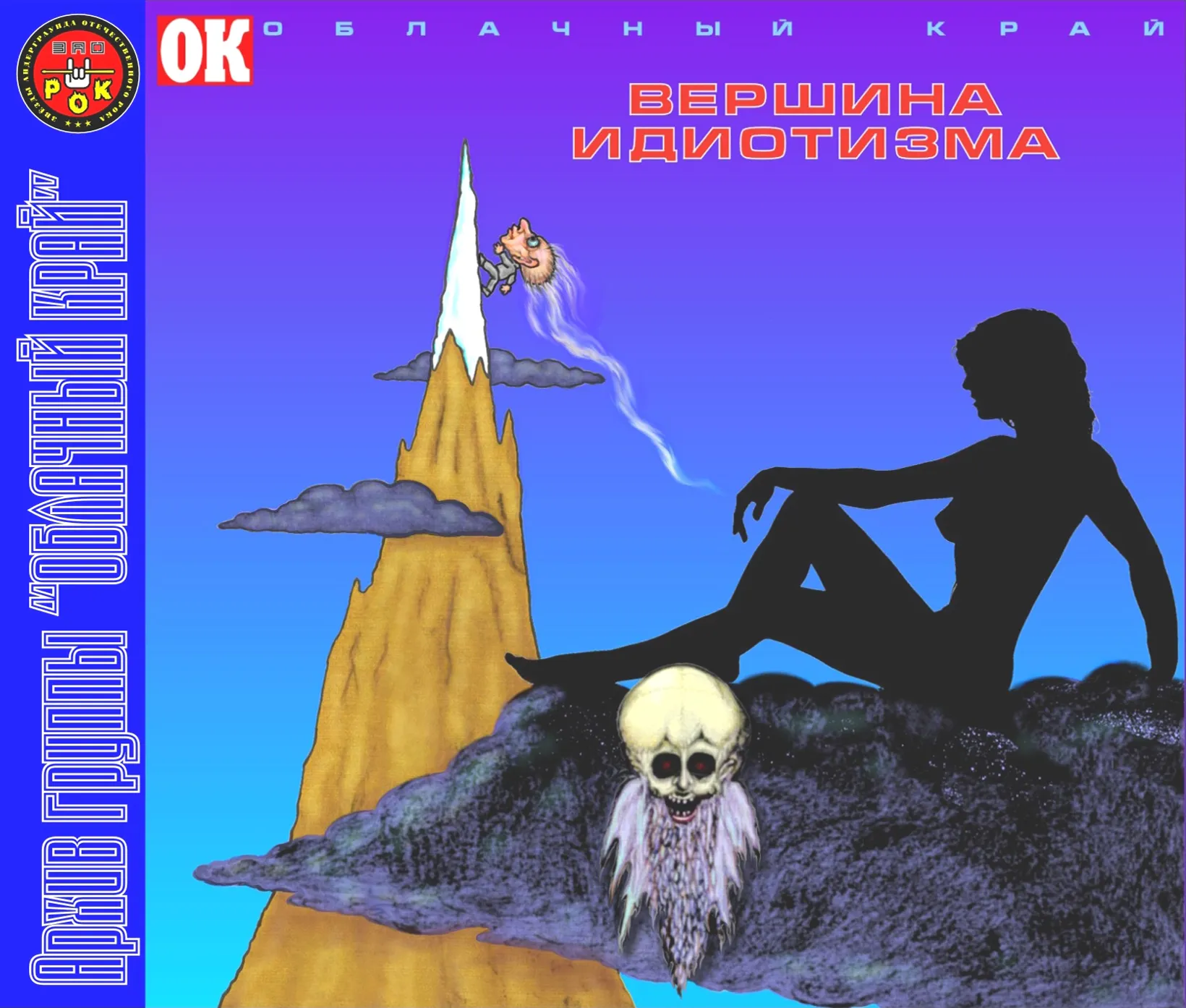
The fifth numbered studio album by Oblachny Kray, recorded in January 1984 at the Cultural Center of the Red Smithy factory in Arkhangelsk during building renovation. Session musicians were invited for the first time: Konstantin Lapshin (saxophone, flute) and Vladimir Abroskin (drums). Bogaev later described it as the best-sounding of their early recordings; a shortened edition appeared in 2001, with the complete version released in 2009.

Peak of Idiocy
Listen to the album →
1984 Album

Bastard's Fate

Recorded in 1984 at Andrei Tropillo's studio in Leningrad — at the same time Alisa was recording their album 'Energy' in that very studio. Legendary drummer Evgeny Guberman of Aquarium sat in behind the kit; his power and flawless technique stunned everyone. To record the vocals, Bogaev flew to Arkhangelsk and literally pulled Vladimir Budnik out of a severe drinking binge — gave him a lifesaving shot, put him on a plane, and delivered him straight to the Leningrad microphone. The session was kept in strict secrecy: the slightest noise could have brought the police. Released in November 1984, the album instantly became hugely popular across the entire Soviet Union — one track was even released on French vinyl. For many music fans, 'Bastard's Lot' was their first encounter with Oblachny Kray: the Leningrad period opened up an all-Union audience and proved that provincial guys from Arkhangelsk could compete on equal footing with the capital's rock giants.

Bastard's Fate
Listen to the album →
1984.01 Story

'Vertex of Idiocy' — Five Masterpieces on the Ruins of Tape Recorders

January 1984. In the most difficult conditions, inviting Vladimir Abroskin (drums) and Konstantin Lapshin from 'Blues-Inspector' (flute, saxophone), the band records 'Vertex of Idiocy.' This ends the Arkhangelsk period. The result: five magnificent rock albums recorded on the ruins of Soviet tape recorders, with primitive microphones, homemade effects — marked by the undeniable talent of Rautkin, Lyskovsky, Budnik, and Bogaev's sound engineering. Bogaev calls Tropillo — and leaves for Leningrad.

1984.01 Concert

Album “The Peak of Idiocy”

One of the group's most famous albums. Powerful hard rock with philosophical lyrics.

Arkhangelsk
1984.01 Concert

Bogaev's move to Leningrad

Leningrad

Leningrad
1984.06 Story

Leningrad — Alisa in One Studio, Oblachny Kray in Another

Arriving at Andrey Tropillo's studio, Oblachny Kray begins recording 'Bastard's Lot' simultaneously with Alisa recording their album 'Energy' in the same place. Behind the drums sits legendary Evgeny Guberman from Aquarium — his incredible power and flawless technique stun everyone. Sound engineer — Tropillo himself. Recording in strictest secrecy: the slightest noise and police could raid. Two great albums of Russian rock are born in one studio at the same time.

1984.11 Story

'Bastard's Lot' — A Sensation That Thundered Across the Union

The album came out in November 1984 and instantly became super-popular across the entire Soviet Union. One composition was even released on French vinyl. Many music lovers discovered Oblachny Kray through this album. The Leningrad period opened up an all-Union audience — and proved that provincial guys from Arkhangelsk could compete on equal footing with capital rock giants.

'Bastard's Lot' — A Sensation That Thundered Across the Union
1984.11 Concert

Album "The Whore's Share"

Continuation of uncompromising creativity. Two albums in a year - the group is working at its peak.

Leningrad
1985
1985 Story

'Stirrup and People' — The Peak. Guberman. 'Uncle Misha' from DDT

In the lineup Bogaev-Rautkin-Lyskovsky-Guberman, the band's most famous album was recorded. Boris Grebenshchikov lent his Squier guitar, Strannye Igry musicians provided a branded bass and keyboards. On saxophone — legendary Mikhail Chernov 'Uncle Misha' from DDT. Sound engineer — Tropillo. The album entered the cult collection '100 Magnetic Albums of Soviet Rock.' When Guberman was away, Bogaev himself sat at the drums and played complex parts so virtuously that professional Guberman was left speechless.

'Stirrup and People' — The Peak. Guberman. 'Uncle Misha' from DDT
1985 Story

Gradsky Puts Oblachny Kray on Par with World Rock Music

Alexander Gradsky includes the song 'Kostya Perestukin' in his show '45 Minutes in the Sunday Studio' on All-Union Radio. His verdict: Oblachny Kray is the only Russian rock band he knows playing real improvisational hard rock that can, without embarrassment, be placed on par with the best examples of world rock music. Gradsky personally invites Rautkin to Moscow and trains him as a vocal teacher. For an underground band from Arkhangelsk — this is all-Union recognition.

1985 Story

Rautkin Returns from Siberia — and Delivers Vocals on the Spot

When 'Stirrup and People' was already recorded, Oleg Rautkin mystically appeared in the studio — returning from a Siberian construction brigade. Without preparation, right from the doorstep — and delivered crazy vocals. That's how this band worked: not according to plans and schedules, but by intuition, on pure energy. No Soviet record label would ever release something like this — and that's exactly why it was real.

1985 Album

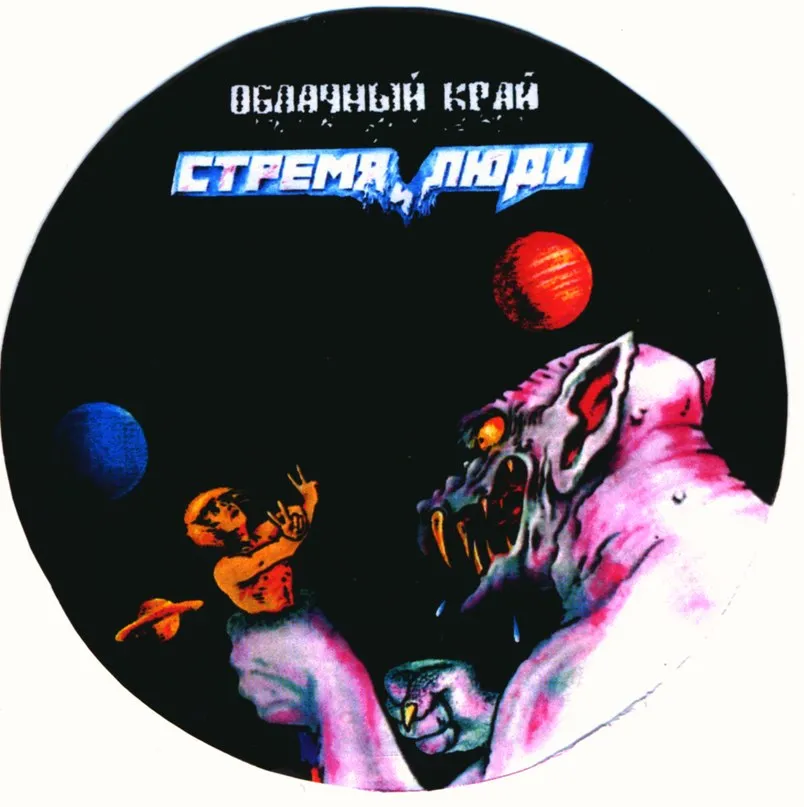
Stirrup and People

The band's most famous album, recorded in 1985 with Bogaev-Rautkin-Lyskovsky-Guberman at Andrei Tropillo's studio. Boris Grebenshchikov lent his Squier guitar for the session; musicians from Strannye Igry contributed a signature bass and keyboards. The saxophone part was played by legendary Mikhail Chernov, "Uncle Misha," of DDT. When Evgeny Guberman was away, Bogaev himself sat behind the drums and played the most complex parts so skillfully that a professional drummer would have been left speechless. After the album already seemed finished, Oleg Rautkin unexpectedly turned up in the studio, fresh from a Siberian construction brigade, and delivered vocals with zero preparation, straight off the street. Alexander Gradsky featured the track "Kostya Perestukin" from this album on his All-Union Radio show "45 Minutes in the Sunday Studio," calling Oblachny Kray the only Russian rock band he knew of playing genuine improvisational hard rock that could, without embarrassment, stand alongside the best of world rock music. The album was included in the cult collection "100 Magnetic Albums of Soviet Rock."

Stirrup and People
Listen to the album →
1985.01 Concert

Album "Strips and People"

An album that demonstrates the band's musical maturity. Complex arrangements and philosophical texts.

Leningrad
1985.06 Concert

Gradsky's program on All-Union Radio

Moscow — All-Union Radio

Moscow
1987
1987 Album

Concert at MEI

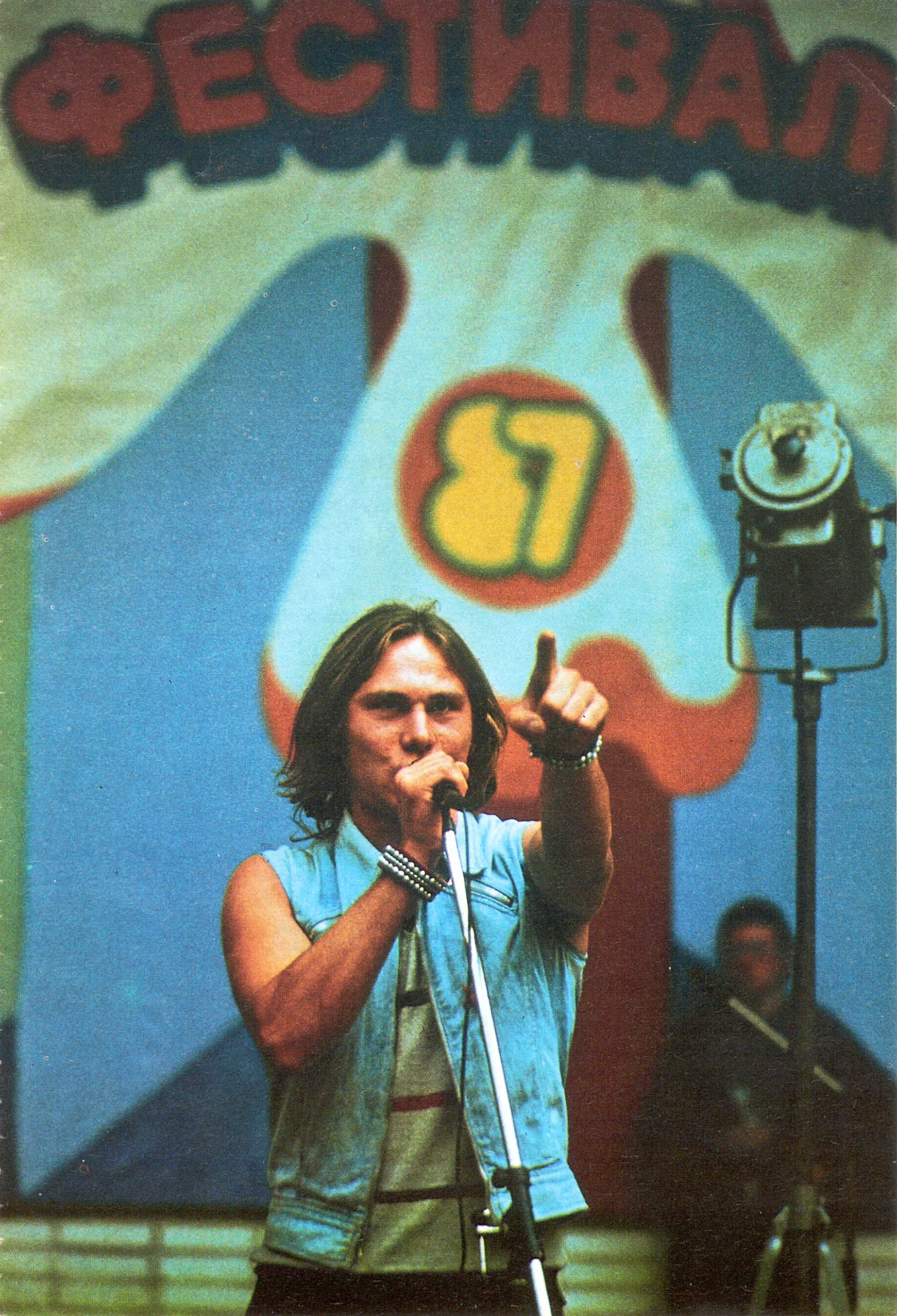
A live recording of Oblachny Kray's 1987 concert in Moscow at the House of Culture of the Moscow Energy Institute (ДК МЭИ). A restored video of this concert also survives. Six of the album's nine songs — "Союз композиторов", "Мой Афганистан", "Грустная история", "Русская народная", "Наша общая легавая" and "Мать порядка (1917)" — were also played the same year at the Podolsk-87 festival: different live takes of the same songs, recorded within one busy touring year.

Concert at MEI
Listen to the album →
1987 Album

Concert in Podolsk

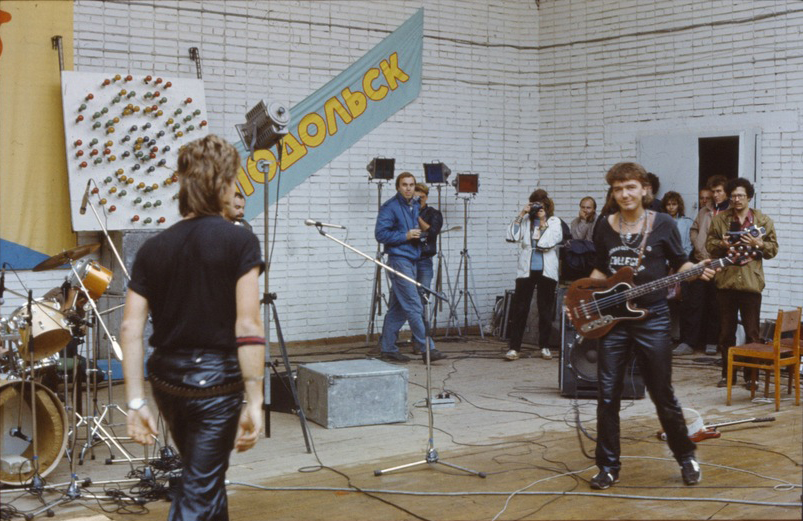
A concert documentary capturing the rock festival held September 11–13, 1987 at the Green Theater of Talalikhin Park in Podolsk. Twenty-two groups from fifteen Soviet cities performed, including Nautilus Pompilius, DDT, Brigada S, and Televizor. The official box set (8 CDs and 5 DVDs, limited to 999 copies) was released in 2012 on the Geometriya label; the festival is widely regarded as the Soviet Woodstock.

Concert in Podolsk
Listen to the album →
1987.03 Story

Arkhangelsk Festival — Rautkin in Tiger-Striped Pants

In their hometown — a massive rock festival. Rautkin takes the stage in tiger-striped pants and a leather jacket over his bare chest. The audience is in ecstasy. Oblachny Kray unconditionally takes the audience choice cup. At the same festival someone nicked Konstantin Kinchev's lucky red sweater with the letter 'A' — later the fan came to his senses and returned it, and everything ended with a grandiose joint drinking bout between two great bands.

1987.09 Story

Podolsk-87 — 'Ural' Guitar Smashed to Splinters, Thousands Go Berserk

The legendary rock festival. Dmitry Leontiev from 'Autodafe' (drums) and Andrey Lukin from 'Zapasny Vyhod' (bass) joined the core lineup — the most powerful lineup in the band's history. Rautkin swings his mic stand, Bogaev smashes his 'Ural' guitar to splinters on stage in the finale. Thousands of people roar. This concert made Oblachny Kray famous across the country. The band reaches the heights of its creativity.

Podolsk-87 — 'Ural' Guitar Smashed to Splinters, Thousands Go Berserk
1987.09 Concert

Concert at the festival "Podolsk-87"

A legendary performance at one of the first major open rock festivals in the USSR. The group performed in front of a crowd of about five thousand and created a sensation.

Podolsk
1987.11 Concert

Last concert at the Stroiteley Palace of Culture

Concert performance at the House of Culture of the Moscow Energy Institute. Recorded as a separate live album.

Arkhangelsk
1988
1988 Story

Concert for Thugs and Arrest Together with Kinchev

Two legendary episodes of one year. First: during the anti-alcohol campaign, Bogaev and Rautkin go to a criminal bootleg joint in Solombala for port wine. They find themselves among thugs — but Rautkin grabs a guitar and delivers a virtuosic set of criminal folklore. Touched bandits feed the musicians, sell them alcohol at cost, and carefully send them home in a taxi. Second: in Leningrad at a joint concert with Alisa, police harshly detain the Arkhangelsk rockers. Kinchev stands up for his friends — and gets locked up himself. Alisa fans besiege the precinct, pelting it with snowballs, and a terrified lieutenant colonel is forced to release everyone.

Concert for Thugs and Arrest Together with Kinchev
1990
1990 Story

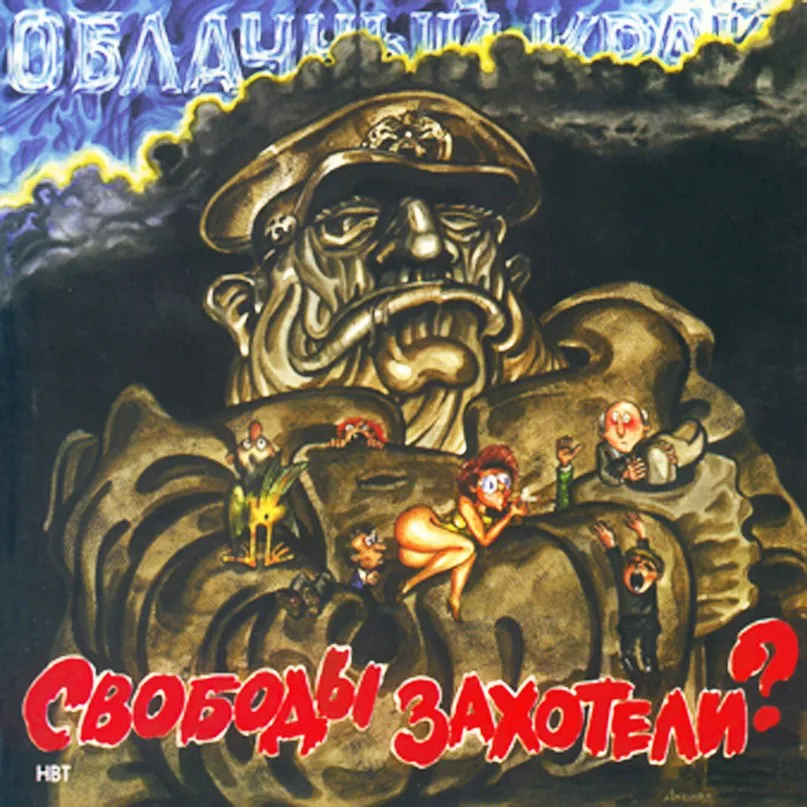
'Wanted Freedom?' — A Million-Copy Vinyl Prophetic Album

The Melodiya label releases the immensely powerful metal album 'Wanted Freedom?'. Lineup: Bogaev-Rautkin-Lyskovsky-Lukin and drummer Yury Korablev from Autodafe. Sound engineer Yury Morozov, cover by Arkhangelsk artist, photographer and keeper of Arkhangelsk rock Sergey Supalov. The album sold in huge quantities across the country — and amazed everyone: the musicians predicted the August putsch a year and a half before it began. In these years the band has its most powerful lineup and reaches its peak.

'Wanted Freedom?' — A Million-Copy Vinyl Prophetic Album
1990 Album

Wanted Freedom

A powerful metal album released in 1990 by the Melodiya label at the Leningrad recording studio. Lineup: Bogaev-Rautkin-Lyskovsky-Lukin with drummer Yury Korablev of Autodafe. Sound engineer Yury Morozov, cover art by Arkhangelsk artist, photographer, and keeper of Arkhangelsk rock history Sergey Supalov. The album sold in huge quantities across the country and stunned listeners: the band predicted the August putsch almost a year and a half before it happened. These were the years of the band's most powerful lineup — the period when Oblachny Kray reached the peak of its creative output.

Wanted Freedom
Listen to the album →
1990.01 Concert

Vinyl “Do you want freedom?” at the Melodiya company

An album recorded at the end of the Soviet Union. The name symbolically reflects the spirit of the era of perestroika.

Leningrad
1991
1991 Album

1991

The ninth numbered studio album by Oblachny Kray, recorded August 7–18, 1991 at Petrostudiya in Moscow — the group first recording in a Moscow studio. Bogaev (vocals, guitars, bass), Rautkin (vocals), Lyskovskiy (keyboards), Lukin (bass), and Korablyov (drums), with Igor Patakin as sound engineer. Dedicated to bassist Andrei Lukin, who died in 1993; officially released in 1996.

1991
Listen to the album →
1991.01 Concert

Album “Cloud Land-1991”

An album released in a turning point year for the country. After this, there is a long pause in the group’s activities.

Moscow
1991.06 Concert

The tragic death of bassist Andrei Lukin

Concert

1991.08 Story

Moscow, 'Petrostudia' — Blood, Lost Lyrics, and Tanks on TV

Recording the album '1991' — pure drama. Bassist Lukin meets businessman-fans from 'Edvin,' they open unlimited credit. Bogaev orders an exclusive guitar with Floyd Rose. Drummer Korablev suffers a severe hand injury — but bravely plays all parts, blood dripping on the drumhead. Bogaev loses his lyrics notebook on a Moscow street — reconstructs all poems from memory overnight. Drunk Rautkin storms the door guarded by an armed sentry. Sound engineer — Igor Patokin from 'Shish.' The band finishes mixing — and returns home to 'Swan Lake' on TV. The August putsch.

Moscow, 'Petrostudia' — Blood, Lost Lyrics, and Tanks on TV
1992
1992.08 Story

Death of Lukin — The Golden Era Is Over

Bassist, permanent member of the classic lineup, the life of the party Andrey Lukin tragically died, falling from a window. This loss was a devastating blow to Sergey Bogaev. Oblachny Kray effectively broke up. Sergey fell into severe depression. The golden era ended — the era of the most powerful lineup, creative peaks, all-Union fame. Bogaev was left alone with grief and emptiness.

1993
1993 Story

The Komarovo Witch and the Salvific Yamaha FX-900

To save Bogaev from alcoholism, Tropillo takes him to an esoteric 'witch' Irina. The creepy company with tales of saving the world scared Sergey so much that he instantly sobered up and fled. But real salvation came from elsewhere: Tropillo bought the latest Yamaha FX-900 guitar processor for the Antrop studio and handed it to Sergey. Captivated by thousands of new sounds, Bogaev began emerging from depression and generating ideas for future albums.

1995
1995 Story

The Electricity War at Antrop Studio

Working as a sound engineer at the Antrop studio, Bogaev wages a guerrilla war for electricity — the studio hasn't paid for power in years. The director cuts the power. Bogaev, a former electrician, secretly lays an overhead line. The administration responds by cutting out and stealing a piece of scarce cable. But in the dark and without money, music kept being born — because Bogaev simply didn't know any other way.

1995 Album

Film Soundtrack

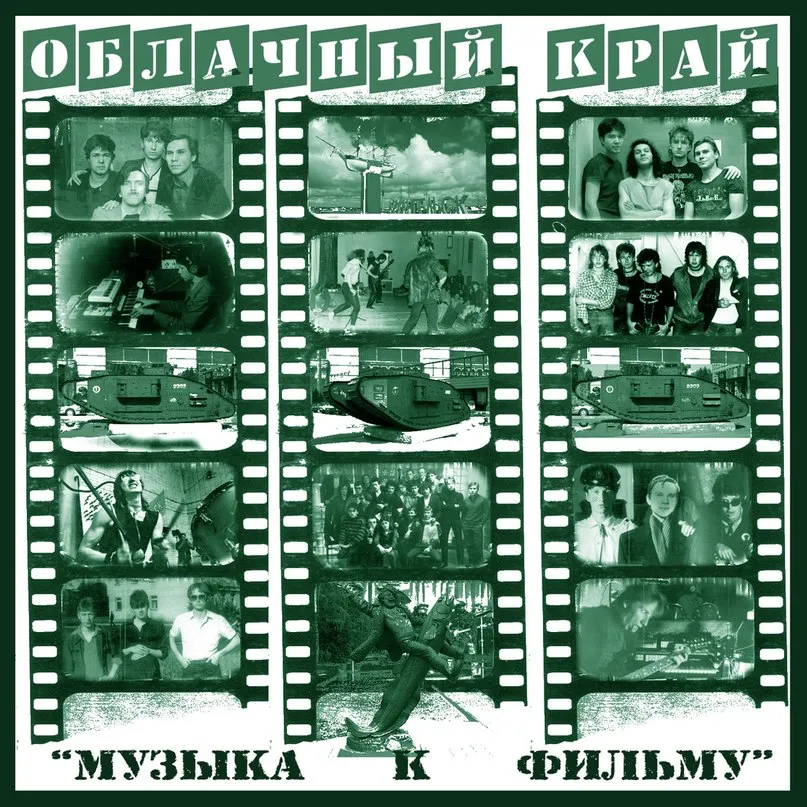
An instrumental soundtrack album for a film that was never made, recorded in 1995. Shows the cinematic, compositional side of Bogaev's talent beyond hard rock.

Film Soundtrack
Listen to the album →
1995.01 Concert

Album “Music for the film” (for the never-made film)

An instrumental album created as a soundtrack. Demonstrates the cinematic side of Sergei Bogaev’s talent.

Arkhangelsk
1999
1999 Story

'Love for Life' — Eight Years of Silence, and Here's the Answer

Eight years after the band broke up, Bogaev records and releases on Antrop the mature and strong album 'Love for Life.' Dmitry Leontiev (drums), saxophonists Dmitry Kulikovsky and Maxim Dyuryagin, Andrey Korelsky's chamber orchestra from Autodafe. Vocals, bass and keyboards Sergey recorded himself — under pseudonyms Yegor Zadrygin and Ivan Besprobudnykh. He's also the sound engineer. One man makes an album — and it sounds like a whole band. The talent hadn't gone anywhere — it had matured.

'Love for Life' — Eight Years of Silence, and Here's the Answer
1999 Album

Love for Life

The tenth studio album by Oblachny Kray, recorded in 1998–1999 at the AnTrop studio in the Petrograd district of Saint Petersburg. For the first time Bogaev performed all vocal parts himself; Andrei Korelsky contributed synthesizer orchestrations. The album features drummer Dmitry Leontiev and saxophonist Dmitry Kulikovsky, and runs 76 minutes.

Love for Life
Listen to the album →
1999.01 Concert

Return: album “Love of Life”

After a long break, the group returns with a new album, “Love of Life.” Cloud's Edge is back in action.

Saint Petersburg
2003
2003 Story

'Patriot' — Harsh, Angry, Crossing into Metal

The album 'Patriot' is released — with Dmitry Leontiev (drums), Valery Zhuravlyov from 'Pomory' and 'Avers' (drums) and Maxim Dyuryagin (saxophones). Very mature and high-quality in musical forms — but heavy, crossing into modern metal territory. Guitar riffs became choppy, lyrics hit hard with political incorrectness. Bogaev didn't soften with age — on the contrary, he got harsher.

2003 Album

Patriot

The eleventh numbered studio album by Oblachny Kray, recorded across four Saint Petersburg studios (Palitra, AnTrop, Arteks, MizAnTrop) and released by AnTrop in 2003. The twelve tracks, all composed by Bogaev, featured Bogaev (vocals, guitars, bass, keyboards), drummers Leontiev and Zhuravlyov, saxophonists Dyuryagin and Kulikovsky, and synthesizer programmer Korelsky.

Patriot
Listen to the album →
2003.01 Concert

Album "Patriot"

An album that continues the band's traditions into the new millennium. Socially charged lyrics and signature sound.

Saint Petersburg
2004
2004 Story

'Life in 2007' — A Prophetic Dream and an Instrumental Masterpiece

Bogaev has a nightmare: he will die in 2007 and watch life from beyond. Under the impression from the dream, he gathers Nikolay Lyskovsky (keyboards), Valery Zhuravlyov (drums) and Dmitry Kulikovsky (saxophone) — and records the instrumental album 'Life in 2007.' The album turned out diverse and interesting — Bogaev revealed himself as a talented composer, stepping far beyond hard rock. The album was never released.

2004 Story

Sound Engineer, Tributes, Rock Opera — Bogaev Behind the Scenes

Working at the Antrop studio, Bogaev records numerous musicians. As sound engineer and keyboardist he participates in recording 'Cannibals of the Holy War' by Raskolnikov. He takes part in tributes to Yuri Morozov, Boris Grebenshchikov and the group 'Rossiyane.' He participates in the rock opera 'Olliport' dedicated to Andrey Tropillo. All his life he was not only a guitarist and composer — but one of the best sound engineers in Petersburg.

Sound Engineer, Tributes, Rock Opera — Bogaev Behind the Scenes
2004 Album

Life in 2007

An instrumental album recorded after Bogaev had a nightmare about dying in 2007 and watching life go on from beyond. Nikolay Lyskovsky (keyboards), Valery Zhuravlyov (drums) and Dmitry Kulikovsky (saxophone) took part in the recording. The album turned out diverse and interesting — Bogaev revealed himself as a distinctive composer, stepping far beyond hard rock. Never officially released.

Life in 2007
Listen to the album →
2004.01 Concert

Album “Life in 2007”

An album with an English title, but with Russian content. A prophetic look into the future.

Saint Petersburg
2007
2007 Story

Top 10 Sound Engineers of Petersburg and Experiments with Plen Off

Two important events. First: based on the results of the Yuri Morozov competition, Bogaev enters the top 10 sound engineers of St. Petersburg and receives a commemorative prize — official recognition of a talent that worked in the shadows for decades. Second: together with Igor Plenov's electronic-avant-garde project 'Plen Off g.r. + Metal M.,' two instrumental albums are released: 'Secrets of the Universe' and 'Damaged Reality' — an experimental fusion of hard rock, noise, and dark ambient.

Top 10 Sound Engineers of Petersburg and Experiments with Plen Off
2007 Story

Global Reissue — Supalov Restores the Heritage

A full-scale reissue of all surviving recordings begins. Sergey Supalov — Arkhangelsk artist, photographer and main keeper of the Oblachny Kray heritage — carefully restores sound from original master tapes and restores covers from original samizdat magnetic albums from Bogaev's and Supalov's personal archives. Early albums are published for the first time in their full, originally intended versions. All recordings are remastered without exception. Original titles of all compositions are preserved.

2007.01 Concert

Bogaev is in the top 10 sound engineers in St. Petersburg

Saint Petersburg

Saint Petersburg
2007.03 Concert

Album “Secrets of the Universe” (with Plen Off)

Saint Petersburg — Studio

Saint Petersburg
2007.03 Concert

Album “Damaged Reality” (with Plen Off)

Saint Petersburg — Studio

Saint Petersburg
2007.06 Concert

Re-release of all albums

Saint Petersburg

Saint Petersburg
2008
2008 Story

'Branch of Paradise' — Continuing Experiments with Plen Off

Another joint project with the group Plen Off g.r. + Metal M. — the album 'Branch of Paradise.' Bogaev doesn't stop experimenting: hard rock mixes with electronics, avant-garde, noise. Age doesn't cool the passion for searching for new sound — on the contrary, it frees him from genre boundaries.

2008.01 Concert

Album “Branch of Paradise” (with Plen Off)

Saint Petersburg — Studio

Saint Petersburg
2010
2010.12 Story

'Ygyatta' — Six Years of Work, the Most Powerful Sound in History

Six years. Bogaev (guitars, vocals, drums, bass), Alexey Vishnya (loops, keyboards), Evgeny Guberman (drums). Work completed in December 2010. Tropillo's words: 'This album has the most powerful hard rock sound in the history of Russian recording.' During the recording, the song 'There Is No One to Break the Birch' was made for the Alexander Bashlachev tribute — together with Dmitry Revyakin from 'Kalinov Most.' The swan song of a great musician.

2010.12 Concert

Album "Ygyatta"

The band's latest album, named after a river in Yakutia. Musical testament of Sergei Bogaev.

Saint Petersburg
2011
2011 Album

Ygyatta

The band's final studio album — the result of six years of work. Recorded with Sergey Bogaev (guitars, vocals, drums, bass), Alexey Vishnya (loops, keyboards), and Evgeny Guberman (drums); completed in December 2010. In Andrei Tropillo's words, "this album has the most powerful hard rock sound in the history of Russian recording." During the sessions, the song "There Is No One to Break the Birch" was born — a collaboration with Dmitry Revyakin of Kalinov Most for the Alexander Bashlachev tribute. "Ygyatta" became Sergey Bogaev's creative testament: on May 28, 2011, the final footage for the video "Aria of the Varangian Guests" was filmed — his last creative work.

Ygyatta
Listen to the album →
2011.05 Story

The Last Video — 'Aria of the Varangian Guests'

On May 28, 2011, St. Petersburg musician Boris Kononov from the new Plen Off lineup conducted live filming of the video for 'Aria of the Varangian Guests.' This was Sergey Bogaev's last creative work. He had serious plans — to tour the entire country with concerts. These plans were not destined to come true.

The Last Video — 'Aria of the Varangian Guests'
2011.05 Concert

Filming of the video “Aria of the Varangian Guests”

Saint Petersburg

Saint Petersburg
2011.06 Story

Sergey Is Gone

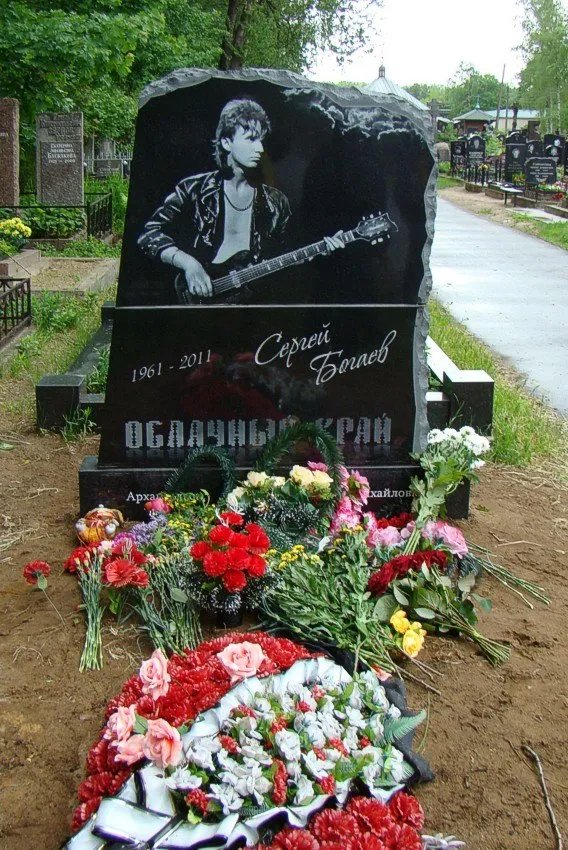
June 2, 2011. Sergey Bogaev is gone. Guitarist, composer, arranger, poet, sound engineer — the man who created a unique phenomenon in the history of Russian rock. A band that managed to drive the authorities to white heat, but nothing could be pinned on them. That recorded great albums on the ruins of Soviet tape recorders. That was perhaps the most anti-Soviet band of its time. Buried on the Walk of Stars at the Bogoslovskoye Cemetery in Petersburg. Arkhangelsk — Leningrad — St. Petersburg. 1978—2011.

Sergey Is Gone
2011.06 Concert

Departure of Sergei Bogaev

Saint Petersburg

Saint Petersburg
2012
2012 Story

The Music Outlived the Empire

The legacy of Oblachny Kray lives on. Tribute festivals are held, famous rock bands record covers, devoted fans bring stones from their hometowns to his grave. Music recorded on the ruins of Soviet tape recorders with homemade effects and pioneer drums turned out to be more enduring than the empire it mocked.

The Music Outlived the Empire

Frequently Asked Questions

Why did the band register at the Leningrad Rock Club as 'O'KEY'?

When officially registering at the legendary Leningrad Rock Club in 1986, the band used the pseudonym 'O'KEY'.

Which Oblachny Kray album was released on Melodiya?

'Wanted Freedom?' (1990) — the band's first official vinyl release on the state label Melodiya: the underground went official.

Why was there a multi-year hiatus in the 1990s?

After the death of bassist Andrey Lukin in 1991, the band paused for several years. Bogaev returned in 1999 with 'Love for Life', becoming lead vocalist for the first time.

Are the band «Мёртвые Уши» (Dead Ears) and the play «Мёртвые уши» the same thing?

No, they are two separate works by different authors. The play «Мёртвые уши» was written by the playwright Oleg Bogaev, while «Мёртвые Уши» (Dead Ears) was the first name of the band founded in Arkhangelsk in 1978 by Sergey Bogaev; it took the name Oblachny Kray in the early 1980s.