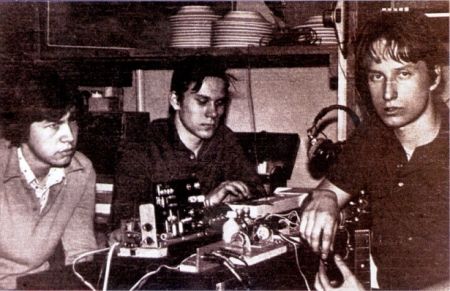
For five years Oblachny Kray had made albums without leaving the radio room, and in February 1987 it had to play live — in a full hall of rockers, in front of the whole of Arkhangelsk rock at once. Sergey Bogaev admitted afterwards that there was no way they could afford to fail. The band was the best known in the city, with seven tape albums behind it, yet it had never really been on a stage. He did not count the 1982 appearance at the Soviet song contest: they sang other people's songs to the words of Soviet poets, and the audience was different.
The festival — the fifth, and the first truly official one, under the wing of the Solombala district Komsomol committee — took place on 28 February and 1 March at the Krasnaya Kuznitsa culture palace, the new home of the revived rock club. Artemy Troitsky (designated a foreign agent in Russia) wrote afterwards in "Rock in the USSR" that it was a real holiday for Arkhangelsk rockers and, for Oblachny Kray, "the first and perhaps the most successful" performance in its whole history. The equipment and the sound were Bogaev's business, and for the last three days before the festival he lived at the club.
A few days before the start, looking at the sleeves of his favourite Western records at home, he noticed that the drums in the photographs always stand a little higher than the musicians: the drummer can be seen, and the stage looks more convincing. They went to the rock club president Rostislav Dubinin, and he went to the guys from Krasnaya Kuznitsa itself (the very name of the plant, Bogaev joked, promised plenty of metal and blacksmiths). After their shift they welded a collapsible riser, four by six metres and seventy centimetres high, covered it with chipboard, and the drums took their place. "Everyone understood at once that this was exactly what we had been missing." The riser then served Arkhangelsk rock faithfully, and it can be seen in the photographs of those years.
Everyone who counted in the city played. The festival was opened by the jazz-rock Blues Inspector, put together by Igor Koshkin and Konstantin Lapshin of Scena. Autodafe's heavy show (Alexey Bulygin, Leontyev, Korelsky, Andrey Lukin) was remembered by many. There was Zapasny Vykhod of the pianist Alexander Sukhanov, the acoustic Mistichesky Soyuz of Sergey Khokhryakov and the very young Termometr of Oleg Sigov, nicknamed Guslya: Konstantin Kinchev (Alisa) singled this lad out — "such potential; if he goes on like this, he will certainly become famous".
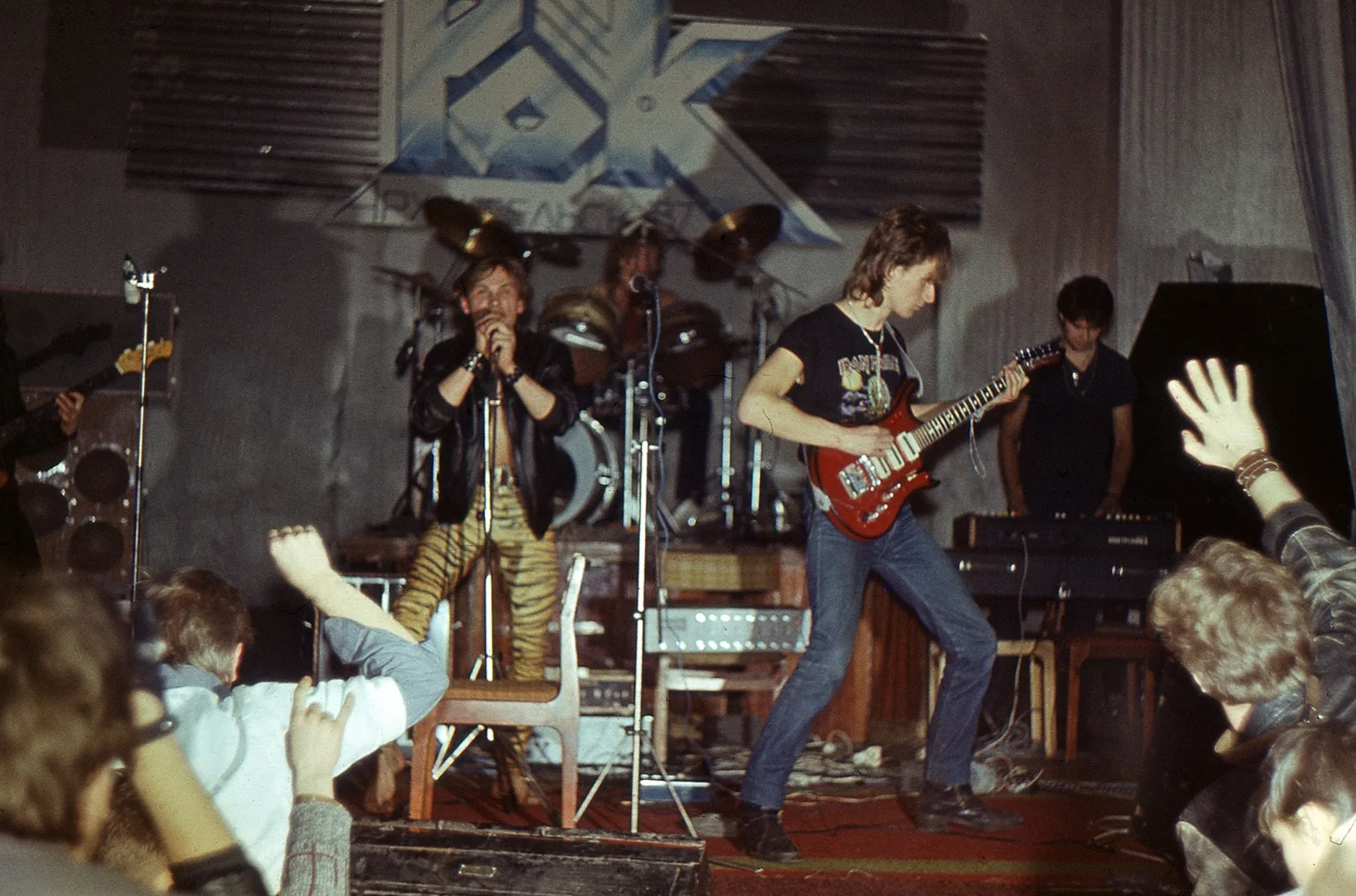
Oblachny Kray came out as a trio — Bogaev, Rautkin, Lyskovsky — with two "borrowed" friends: Dmitry Leontyev of Autodafe sat behind the drums and Andrey Ilyichev of Svyataya Luiza played bass. The programme was built from the two latest albums: "Soyuz kompozitorov", "Moy Afganistan", "Napadenie monstra na dvupaly individuum", "Grustnaya istoriya" — Rautkin sang it superbly at rehearsals and did not let them down on stage. Of the old repertoire they took only "Russkaya narodnaya". And the closing "Mat poryadka" was played twice as fast and short as on the record: for those times, "a heavy programme".
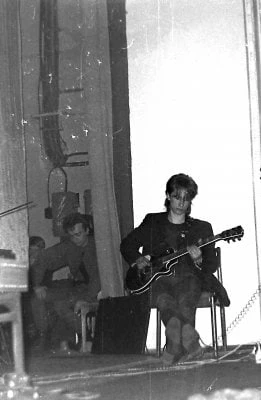
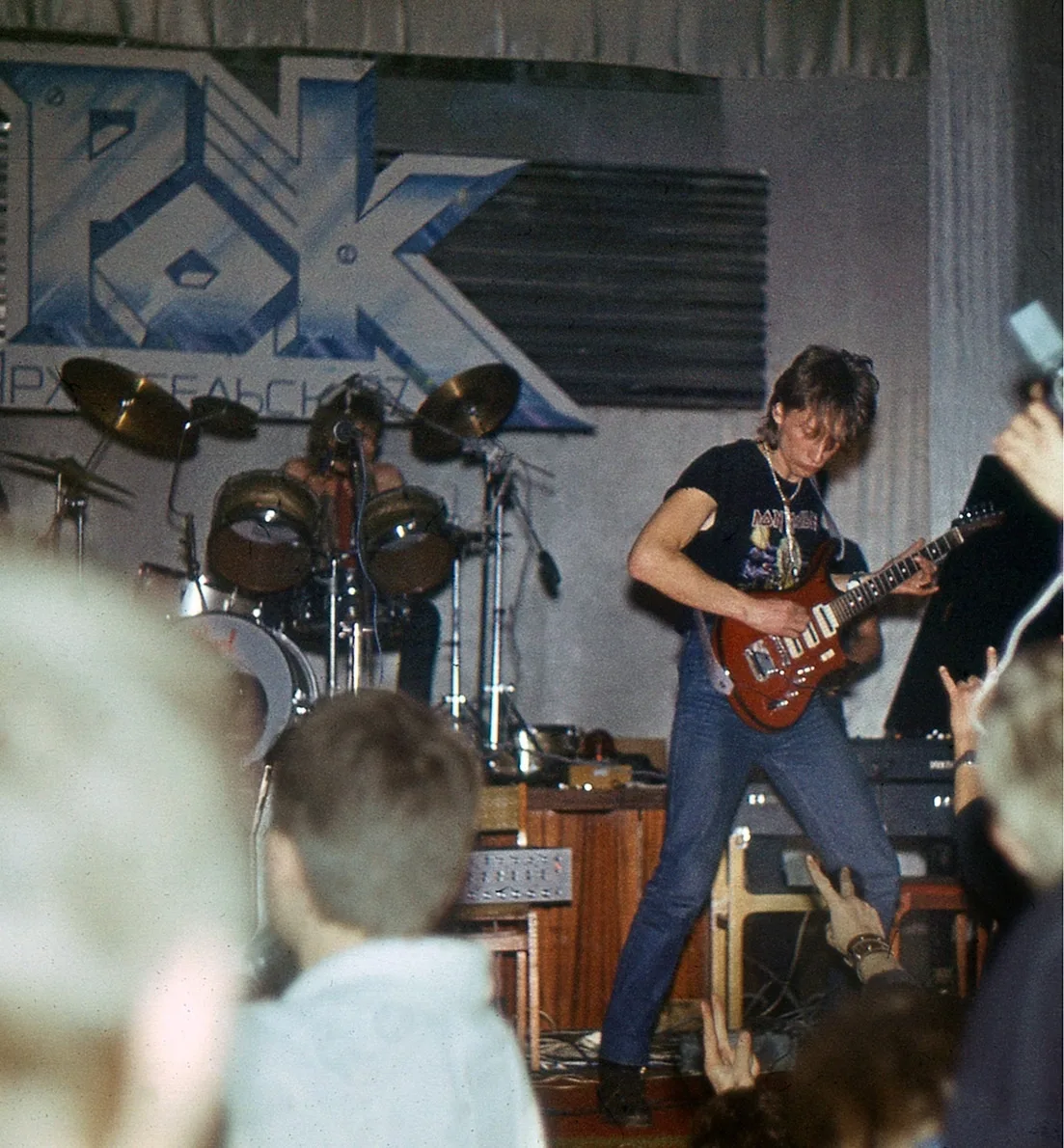
As headliners, on Bogaev's advice, they invited the Leningrad band Alisa: their album was then everybody's favourite. The Komsomol supervisors allotted three hundred roubles for the flight and food. The guests were put up right there, in the Oblachny Kray studio in the annexe of the culture palace: the musicians slept on pushed-together speakers, while the bass player Pyotr Samoylov and the trumpeter Andrey Vasiliev stayed with Lukin — and Samoylov lent him his Yamaha bass for the sets. After talking with Bogaev about the sound, Kinchev said: never mind that the rig is so-so, what matters is that the kick, the snare and the voice can be heard. Bogaev still added bass and keyboards to the mix. Kinchev did not believe the feeble desk could carry the bass — it did.
Bogaev himself managed to be several people that day. He sat at the 12-channel "Elektronika" desk, at times left it to an acquaintance who later wrote down his recollections (here they are), and in the finale of Zapasny Vykhod went on stage himself to play a guest guitar part. Alisa, by the same recollections, warmly praised the sound afterwards, and Kinchev invited Lapshin to play a solo in the song "Vozdukh".
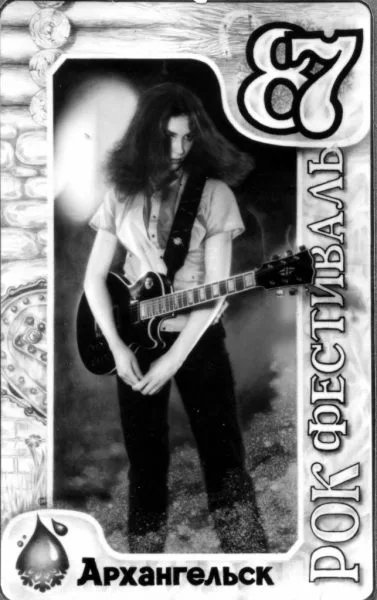
For Oblachny Kray the year was only beginning: Moscow on 25 April (how that went), then Chernogolovka and Podolsk. And on Arkhangelsk television in those months clips of Oblachny Kray, Autodafe and Kamera were shown — by the recollections of "Podtankovskaya Gvardiya", Vitaly Galilyuk had just launched the series "Music That Unites" (details). Bogaev himself tells the story of the festival with humour and in full detail in chapter 7 of his memoir (part 1, part 2) — it is worth reading in full.
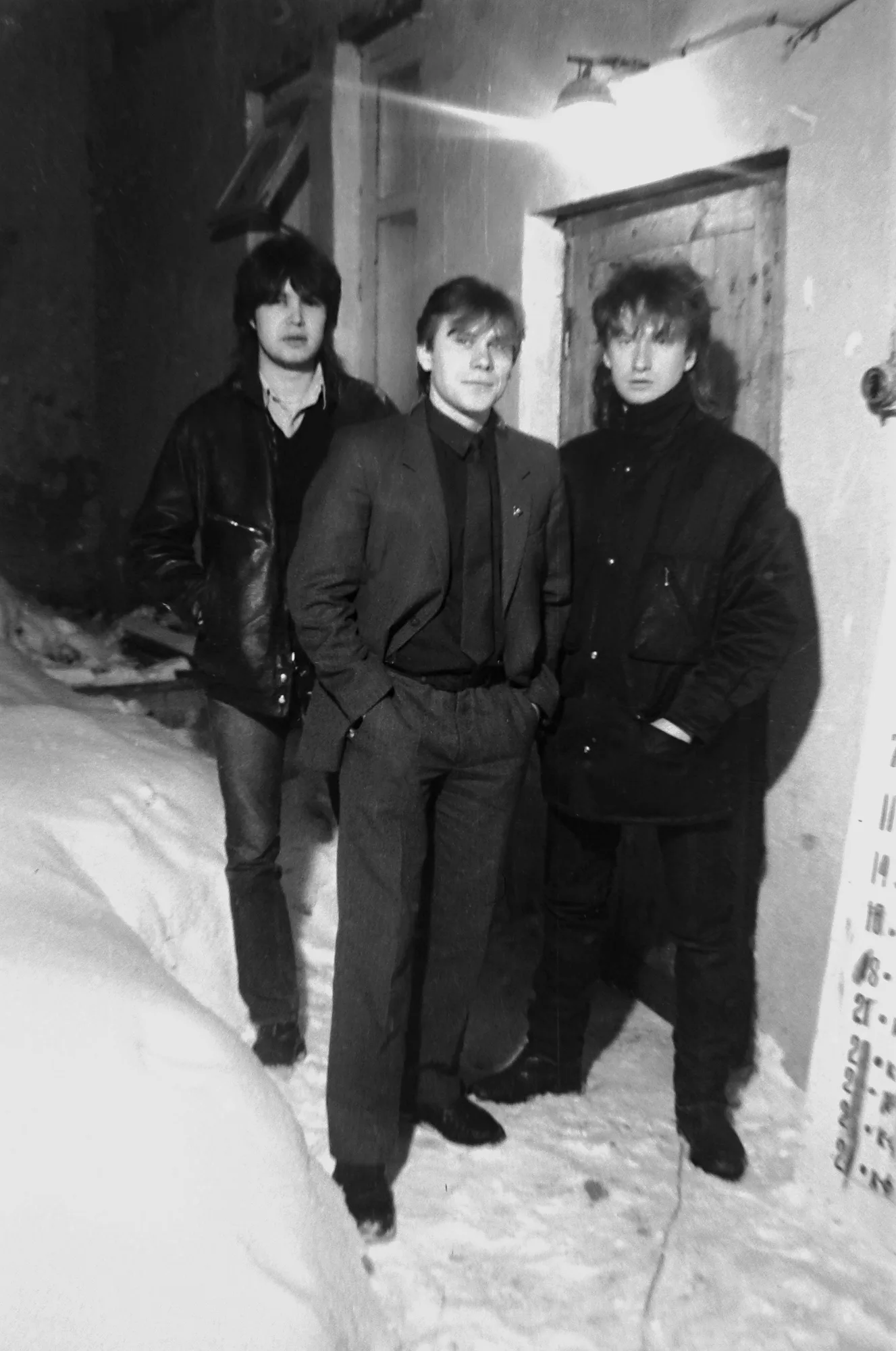
Used here: chapter 7 of Bogaev's memoir; Troitsky's (designated a foreign agent in Russia) "Rock in the USSR" (the Arkhangelsk chapter); the recollections of the festival's sound assistant and E. Bogucharsky's report on the 2018 "Pod Tankom v 6" gathering, both from the community "Podtankovskaya Gvardiya".