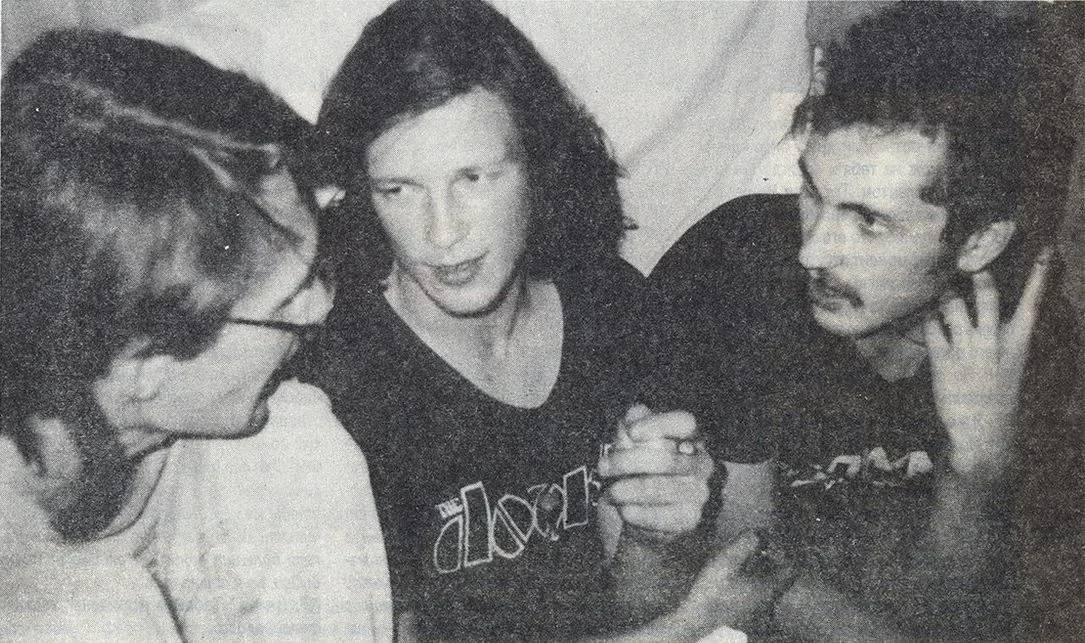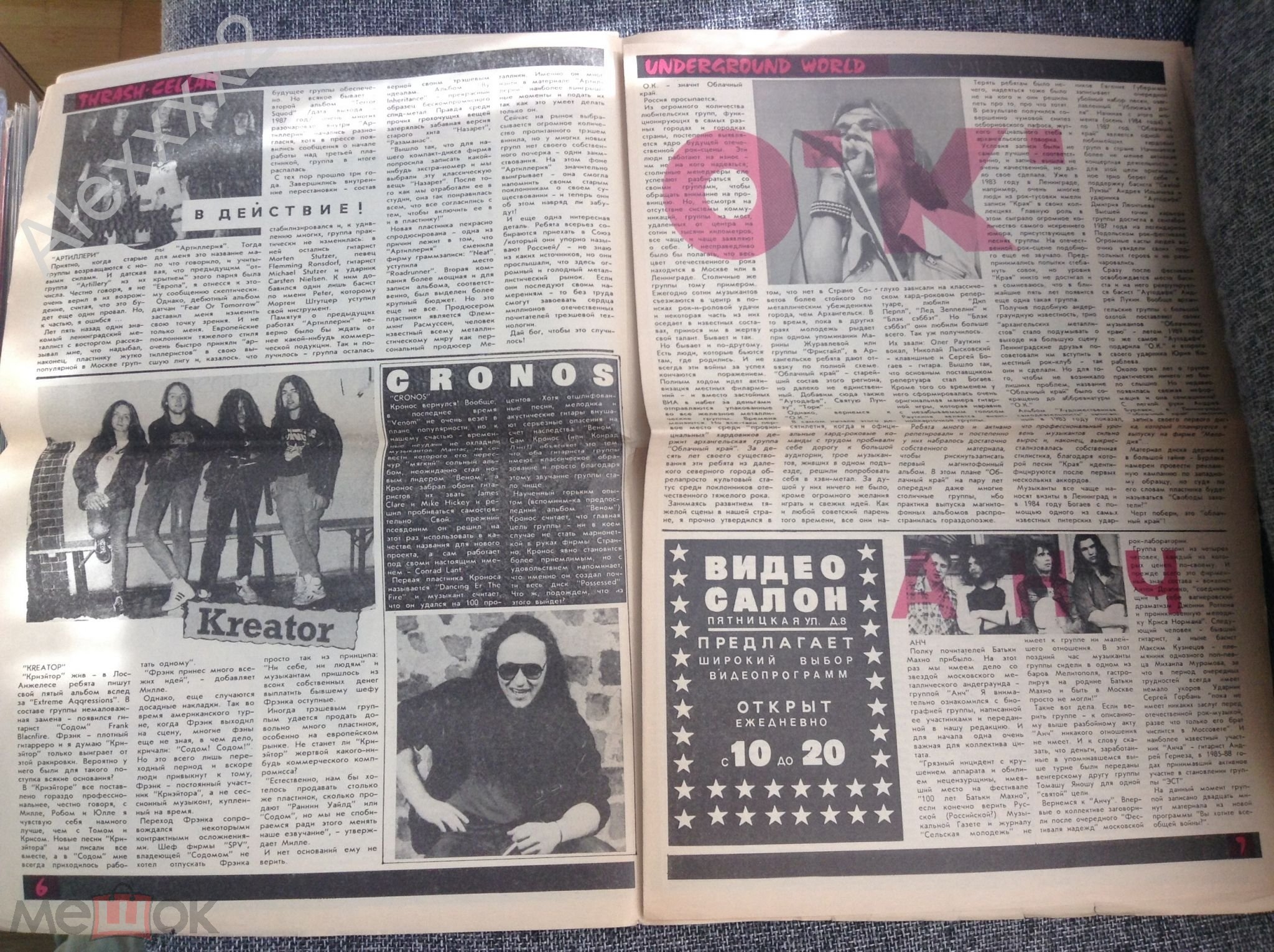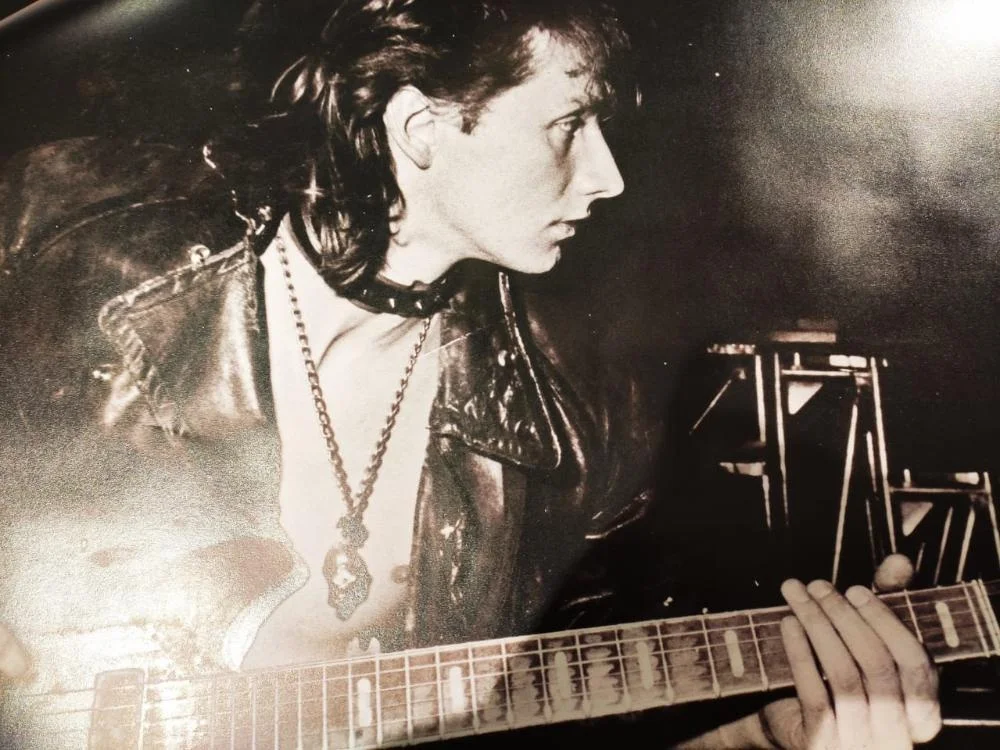
The interview was recorded by Evgeny Bogucharsky for the Arkhangelsk news site nd29.rf after a concert in the exhibition hall of the Union of Artists: before about fifty listeners played Otdelny Korpus (where Dmitry Leontiev sings and plays) and Vladimir Budnik's Svyataya Luiza. Otdelny Korpus performed songs of Oblachny Kray — "Russkaya narodnaya", "Yuny naturalist", "Sosi-posasyvay", "Svyatoe delo" — and the title song of its new album "S Severa". The concert was organised by the photographer Igor Borodin; exhibitions of Arkhangelsk photographers were shown as well. Below is what the conversation says about Oblachny Kray. The source gives the date "23 April"; the year is not stated.
How Borodin met Bogaev
Borodin says he worked at the Krasnaya Kuznitsa palace of culture, had a video salon, and Sergey Bogaev rehearsed behind the wall, in his "radio den". One day Bogaev came: "Igor, you are rich. Give me money for strings. We have an important concert soon" — they bought Czech strings. "And then rock'n'roll," says Borodin. Then came the studio under the bus station: when the rock club was closed and the pressure began, it turned into a "Youth Centre" that moved under the bus station; for two years Borodin was formally its director, and Bogaev was the studio's operator. By his account they recorded on a portastudio bought from Alla Pugacheva, there were cheap red "Amati" drums, and the TV programme "Oblachny Kray: 10 years" was recorded right there. Leontiev adds: "It was the best studio in Arkhangelsk at the time. The sound there was very good."
Borodin speaks modestly about his role: "I am afraid none… First of all, it is Sergey Bogaev, originally, by himself. All the other musicians only worked with him. He is a very complex person, really. About forty musicians played with him in all." His own role, he says, was to let musicians work and record, and "to buy the port wine". Leontiev says of himself: "Who was I in the band? Maybe a bass player, maybe a lead guitarist, maybe a drummer, maybe a vocalist…"
Leontiev: from 1983, and Podolsk
Leontiev recalls playing with the band from 1983: Bogaev invited him to play the drum part in "Arkhangelsk Rock'n'Roll". The band rehearsed at Krasnaya Kuznitsa; there was no hall, only a small cubbyhole; he played, Bogaev liked it, and afterwards he "always took the place of an absent musician".
About Podolsk-87 (11–13 September 1987, called "the Soviet Woodstock") he tells it like this: they landed at Sheremetyevo, it is forty minutes to Podolsk, it was raining in Moscow, they were in a hurry — did not even manage to buy a drink, "in Podolsk Oblachny Kray played sober". After the performances they drank with Mike Naumenko and his Zoopark: "We lie on a sofa — Bogaev, Mike Naumenko and I. Then everyone is shaken awake: 'Mike Naumenko, on stage!'". The musicians were driven to rest houses, the band was lodged with Kalinov Most; Dmitry Revyakin "played his songs alone with a guitar. And it was such a beautiful night." Leontiev recalls an unpleasant moment too: in the dark, while the audience was dispersing, "lyubery" arrived and beat up several people. More on the festival: the article about the Podolsk box set and photographs of the festival.
Why Oblachny Kray became a studio band
Asked why from the early 1990s the band lost popularity and became a studio one, Borodin answers: when Sergey worked in the studio, "that was his joy. Beside him was the equipment he had prepared himself, the desk, his world, his kingdom. His work is a child. These are very fine lines… And what is show business? They devour each other there. Did he need that?" Of Otdelny Korpus he says: "Dima played and sang in Oblachny Kray in his time, he has the right to his own vocals, to sing the songs he sang once", and, by his assessment, "they have not spoiled anything, everything is very decent".
Source: Evgeny Bogucharsky, an interview after a concert in the exhibition hall of the Union of Artists (Arkhangelsk), published on nd29.rf and reprinted by the community "Podtankovskaya Gvardiya" (VKontakte). Short quotations and a retelling; the recollections are the participants' own retrospective assessments.