This survey was prepared by Mikhail Bubnovsky (pseudonym Michael Stolz) for one of the first rock encyclopedias of the country — the book by Artemy Troitsky (designated a foreign agent in Russia); the text is retold from the archive copy. It describes what Arkhangelsk rockers called "Arkhgorrok".
1976–1980: "Ritmy veka" and "Nord"
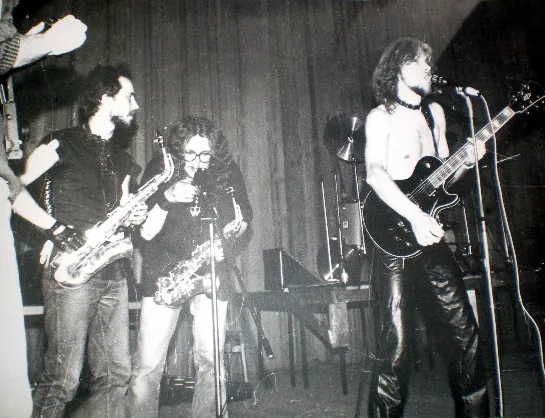
The history of the rock movement in Arkhangelsk, by the survey, begins in 1976. There had been bands before that played English songs on home-made instruments, but "the work of young rockers was scattered and spontaneous": they knew nothing of one another, and the public knew nothing of them. In 1976 the first city rock association "Ritmy veka" was created at the Builders' palace of culture; its first action was to invite the then unknown "Mashina vremeni". At the head of the movement for a long time stood Nikolay Kharitonov. In 1977 "Ritmy veka" became the rock union "Nord", and the first city festival was held at the same time. The visitors had the greatest success: the union invited Aquarium and Alexander Gradsky, "Visokosnoye leto", "Magnetic Band", "Araks" and the Moscow "Zodiak". By 1980 the core of the movement had formed: at the festival of 1980 "Vremena goda" and "Labirint" made themselves known, as did "a very interesting band 'Net'", and "Svyataya Luiza" took its first steps.
1982: the fourth festival
At the fourth festival "Zapasnoy Vykhod" was heard for the first time — the band's success was helped by the duo of the keyboard player Alexander Sukhanov and the bass player Andrey Lukin; they also played with "Stsena". In the line-up of "Stsena" are named Sergey Podyakov (guitar, vocals), Igor Koshkin (guitar), Konstantin Lapshin (saxophone, flute) and Vladimir Abroskin (drums); "thanks to excellent texts and successful musical decisions" "Stsena" was for a long time the leader of the movement. Another leader — "unseen by anyone but heard by all", as the survey puts it — "Oblachny Kray": it too planned to take part, but its first performance came only in 1987. Singled out separately as "a living hard-rock symbol of Arkhgorrok" is "Svyataya Luiza" (the core — Vladimir Budnik and Andrey Ilyichev).
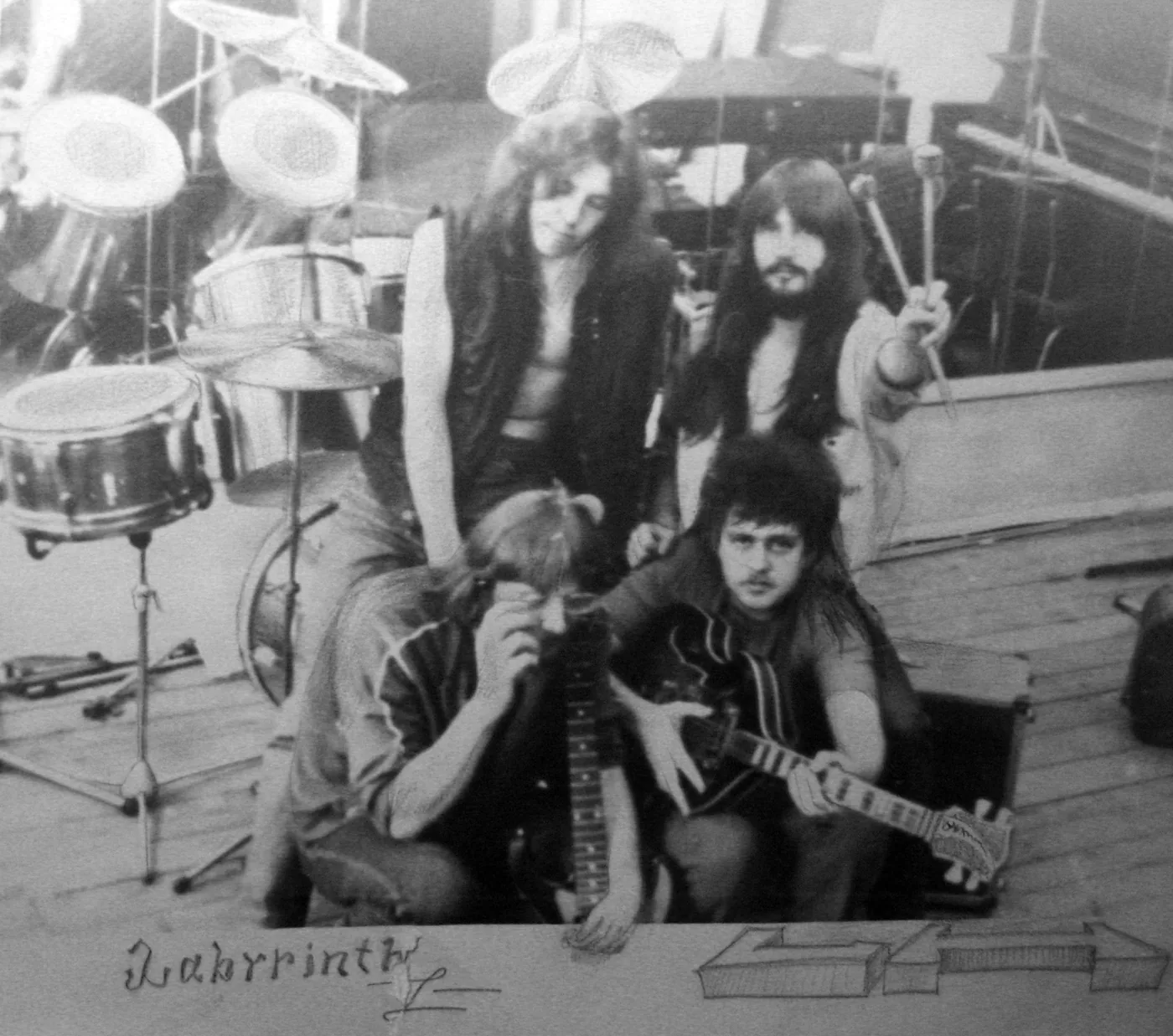
Five years of "uncertainty"
After the festival of 1982 "quite gloomy days" began for rock: five years of "uncertainty, disappointments and persecution by bodies clothed with power". Life went on: "Stsena" recorded the tape album "Sezon dozhdey", "Oblachny Kray" released a new tape album every year, rare concerts took place. But on the whole, the author writes, this existence "could be compared to a creative parabiosis". Some revival came with the preparations for the fifth festival (1984), which took place only three years later: "Autodafe" and "Laboratoriya" made themselves known, and "Nokaut" with the vocalist and guitarist Alexander Koptev won the sympathy of hard-rock fans. "But the bureaucratic machine proved stronger than rock."
1987: the fifth festival and the "golden days"
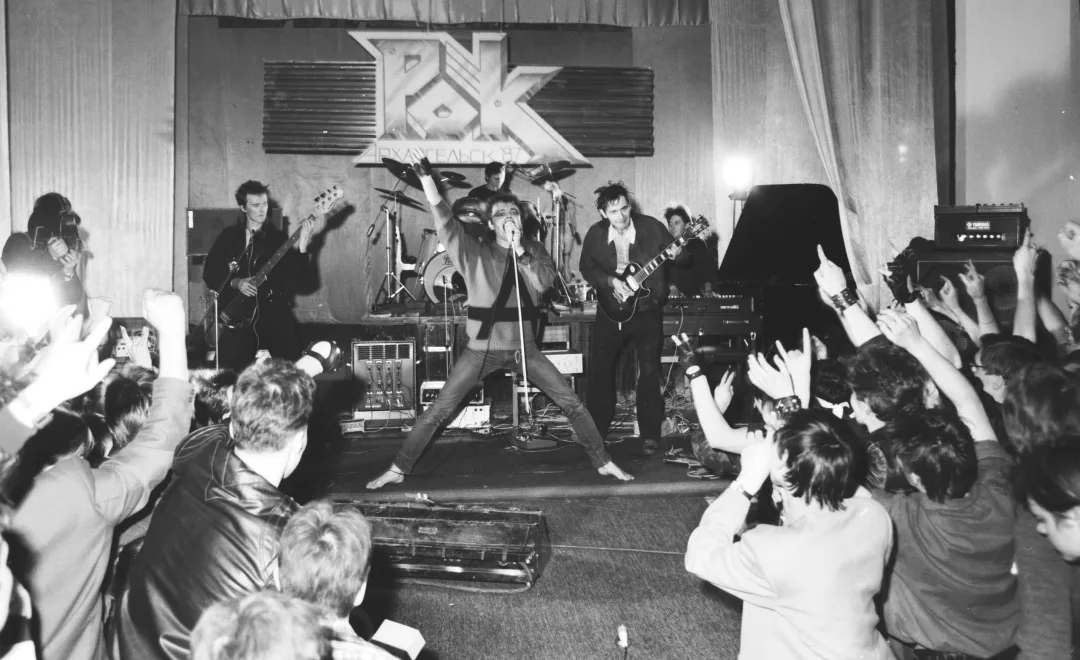
The fifth rock festival of 28 February – 1 March 1987 at the Krasnaya Kuznitsa palace of culture, "which became the new home for the revived rock club", is called "a real holiday" (about it — the V rock festival). The discovery was the jazz-rock "Blues Inspector", organised by Stsena's musicians Igor Koshkin and Konstantin Lapshin; a stage-action group performed with it. Many remembered "the bright heavy-metal show of Autodafe" — in it are named Alexey Bulygin (lead guitar), Dmitry Leontiev (ex-drummer of Oblachny Kray, now a vocalist), the second guitarist Andrey Korelsky ("Laboratoriya") and the bass player Andrey Lukin. The performance of the rock bard Sergey Khokhryakov the survey calls "strong in its own way", and "the strongest" the block with "Oblachny Kray" and the Leningrad "Alisa": for "Oblachny Kray" it was "the first and perhaps the most successful performance in all their history".
After the festival "truly golden days" began for the rock club: concerts, festivals, tours, the press's interest, "at times not very flattering" — a growth in popularity and at the same time "satiety of the Arkhangelsk public". In the summer of 1988 the festival was held in half-empty halls; of the nineteen participants "only four were well known to the general public", and OK and "Blues Inspector" did not take part. "Musically and commercially competent programmes" were shown by "Autodafe" and "Vremya Kh", "Tor" and "Ravelin" (by the survey, "a product of the break-up of Nokaut"); "Shturm", "M'Art" and "Poprobuy obyasni" did well; the audience prize went to the Severodvinsk new-wave band "Menestreli". The end of 1988 and the beginning of 1989 were marked by a "rock landing" of Leningrad bands in Arkhangelsk; the opening of the 1988–1989 season went "extremely badly". The seventh festival was planned for May 1989.
The magazine "Severok"
All events of "Arkhgorrok" were reflected by the magazine "Severok", published since 1987 once a quarter: the first six issues were typewritten, then the magazine of 60 pages came out in 1,000 copies and had "more than 700 subscribers in various cities of the country". The first issue of another samizdat magazine — the atlas of Arkhangelsk rock culture "Nord" — also came out. About Bogaev's interview in "Severok" — "Through the veils of the clouds…".
More about Autodafe: Autodafe: sworn brothers of Oblachny Kray, the V rock festival of 1987, Arkhangelsk rock around Oblachny Kray.
Where this comes from: M. Bubnovsky, "Arkhgorrok. The first round" (a survey for a rock encyclopedia of the late 1980s), in the archive republication of the band Autodafe; the passage on 1976–1989. The judgements are the survey author's.