I slapped some solos onto everything very quickly, and the only thing left was the vocalist, Rautkin. Just as I had expected, all the music was ready in two weeks. We went to the communications office on Dvortsovaya, made a call, agreed to a meeting, and set the time and place. Since our stay at the Oktyabrskaya hotel—to the delight of the administration and the guests in the neighboring rooms—was coming to an end, we moved in with Tropillo on Varshavskaya Street, in Kupchino. Overall, that apartment took quite a beating... Andrey was rarely there more than once a week, and we partied there to the fullest. Our head of public relations was Andrey Lukin, who had become good friends with half of the rock club. He was friends with Alex Ogoltely from the band 'Narodnoe Opolchenie' [People's Militia], may he rest in peace. Alex provided a direct supply of live warmth: we never had a shortage of girls, and they were always different, and all very nice. What can you say—youth is youth.
Very quickly I laid down all the solos, and the only thing left was our vocalist, Rautkin. Just as I had expected, all the music was ready in two weeks. We went to the communications office on Dvortsovaya, made a call, agreed to meet, and set a time and place. Since our stay at the Oktyabrskaya Hotel—much to the delight of its administration and the guests in the neighboring rooms—was coming to an end, we moved in with Tropillo on Varshavskaya Street, in Kupchino. Overall, that apartment really took a beating... Andrey was there no more than once a week, but we partied there to the fullest. Our head of public relations was Andrey Lukin, who had become good friends with half the Rock Club. He was buddies with Alex Ogoltely from the band 'People's Militia,' may he rest in peace. Alex provided direct supplies of live warmth: we never had a shortage of girls, and they were always different, and all really great. What can you say—youth is youth.
Rautkin arrived on the May holidays—right on time for Victory Day. Fresh off our shifts, dead drunk, we met him at the metro station and couldn't believe our eyes: Oleg was standing there in a suit, shirt, and jacket, reading a book right in the middle of the hall. Absolutely sober, looking at us with reproach. "Look at you guys—you look like you've been through a meat grinder." We took him home: "Just purely symbolically, guys, not for the sake of getting drunk, but for our health." What more can I say: his coherent speech ended right there.
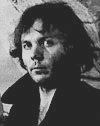
The strain on Tropillo's apartment doubled. In terms of sheer mess and reckless abandon, Oleg was worth the four of us combined. First, we drank to the victory, to our grandfathers who defended the country, then to those who never came back, then to those who survived, then to those who lived to see it all... we fell like chopped-down warriors on the battlefield of Kulikovo. The weather was nice, and Oleg got hot. The small window pane wouldn't budge, and he couldn't think of anything better than to find a little hatchet in the toilet storage room and use it on the stubborn window. When Andrey dropped by next, well, I had never heard such swearing before in my life. To top it all off, we had also gotten hammered, forgetting to close the door behind us, so it stood wide open all night. Tropillo showed up in the morning. He didn't even need his keys; stepping over sleeping bodies, he slipped on an empty bottle.
By all rights, he should have kicked us out immediately, but either natural kindness or a passion for art stopped him, although when he swore, I felt our fate was hanging by a thread. He asked – who did this? – Rautkin confessed. He just couldn't open the window vent. he tried every which way, but it wouldn't budge. There was an exact same vent in the kitchen, and Tropillo led him over to it: "Look! you take the handle, one swift motion... and that's it..."– "Well, I couldn't do it, back in Ukraine these latches work completely differently"…
And that's exactly the thing: in different houses, in different cities, they install different window latches. This isn't some *Irony of Fate* movie, this is the harsh reality of life. A severe test for a drunken brain that couldn't handle an elementary task. But man, could he sing!! It seems we took part in a major collective concert at the CKK. Rautkin and Lukin put on a great show; a whole stadium applauded throughout both songs we were allowed to perform at that concert. Rautkin simply amazed me: the way they were dancing down at the edge of the stage – people were reaching out their devoted hands to us. In a situation like that, stepping off stage, we decided: we won't drink for a year, but under these circumstances – it would be a mortal sin not to celebrate it properly. We had never before played such a large venue for so many people, the mood was fantastic. And the weather didn't let us down either. It was the month of May.
At that event, we shared a dressing room with DDT. Vadik Kurylyov, the bassist, asked to tag along with us. We went. On the way from the metro, we stopped at a shop in Kupchino – they had just started selling smoked chicken there, and we didn't have anything like that in Arkhangelsk. We bought one – to try. In Tropillo's apartment, there was a lavish platter sitting on the table, completely at odds with the generally chaotic surroundings. We adorned it with the brown carcass of the smoked bird, framing it with all sorts of pickled vegetables. One thing led to another – we started reliving the event all over again, recalling how this guy jumped around, and how that one sang or played. Anyway – we talked and suddenly... we looked, and the platter was empty. We kept shifting our gaze from Vadik to the platter inquiringly. – "Oops, sorry guys, looks like I ate the whole chicken... didn't even notice... please forgive me guys, let me run out, maybe..." But naturally, no one ended up going anywhere, and we told him: "Well, hope you enjoyed your meal, here's to your health, thanks! Good thing you didn't manage to drink everything too, so thanks for that".
That's roughly how the recording of the album "Wanted Freedom" went... I didn't want to go too deeply into our professional routine – essentially, it's not as interesting as everything that happened around it. We recorded quickly; Yura Morozov was a magnificent partner and like-minded spirit. A brilliant musician and a senior comrade. May he rest in Heaven!
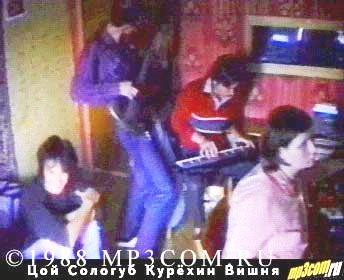
I had it easier than my friends when it came to hanging out. I had the best friend in Piter – Lyoshka Vishnya, and I used to visit him all the time at his place on Gagarin Street. His apartment was magnificent, much bigger than the one in Tropillo. Besides, he had just released arguably his best dance album, and even though I absolutely hate that kind of music, I didn’t mind listening to it when Vishnya performed it. As a matter of fact, my whole family felt the same way. I saw so many different people at his place... I met the American singer Joanna Stingray there; she was the one who released the double LP "Red Wave" and had come to Alexey's to record some stuff.
The apartment had two rooms, and there were cables running everywhere. I should say that Vishnya had adapted absolutely every space in the apartment for the studio: in the tiny bedroom, a microphone was always hanging down from the chandelier. A cable ran to the kitchen with two microphone lines and one monitor line – when recording a band like AVIA, he utilized the entire living space. I even joked about it back then, asking why there wasn't a microphone or a guitar jack in the toilet – what an outrage... Even the large room, which served as the control room, was divided by a wall with a small window. An ordinary city apartment had taken on an incredibly monstrous, technological look.
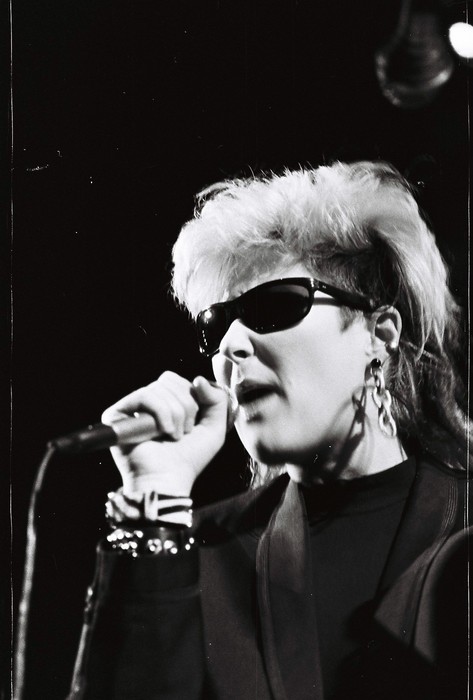
So, Joanna finished singing her song in English, and Vishnya called her to the mic room to listen to the result. The girl took off her headphones and yanked the door of the mic room toward her, even though it opened outward... anyway, the door got stuck. I was sitting in the kitchen, and suddenly I heard shouts like, "Shirt door, I cannot open door." I came to the rescue, pushed and pulled... nothing. Then Lyoshka took a running start and, in a fit of frustration, rammed the cursed door with his powerful shoulder. It flew off its hinges, burying the American diva underneath it, and Vishnya ended up lying on top of the door, while Joanna screamed bloody murder from underneath, "Your banny potap".... Fun times, in short, that's how his recording sessions went...
Another time, Lyskovsky and I went to see Alexey and brought him a Korg M1. We decided to celebrate the successful completion of the keyboard recordings for the album. Kolya wasn't 21 yet and looked completely underage, so I had to give him my passport to fool the vigilant salesladies. Kolya came back with the wine, but... without my passport. We searched and searched, walked all over the place – all for nothing. We sat there like whipped dogs, wanting neither to drink nor to eat. That is to say: no hotel, no flight for you, and God forbid the police ask for your documents while you're tipsy in the metro... you're totally screwed.
Vishnya kept optimistically trying to cheer us up: nothing to worry about, he said, we'll hang up some flyers, leave a phone number, offer a reward—and the passport will come back. I still remember looking at him back then like he was an idiot... You can imagine my surprise when, a couple of days later, he called us in Kupchino and told us to come pick up the passport. He really had plastered the entire district with his flyers and bought a bottle of the most expensive cognac for the person who found it.
The next day, after recording Routkin's vocals, I headed over to Lyoshka's place, picking up a bottle of genuine Italian Muscat along the way. Vishnya immediately stuck it in the fridge and got busy working his magic on some meat—legends already circulated about Vishnya's culinary skills, often shared among the hungry rockers who frequented his home. So, the meat was ready, dished out onto plates, and the Muscat sat in the middle of the table, exhaling a cold vapor... when the doorbell rang.
Vishnya reluctantly went to answer it—and it was Andrei Zabludovsky from the band Secret. The day before, they'd had some TV shoot that had gone incredibly well, which was precisely why Andrei currently looked absolutely worse for wear. Catching sight of the sweating Muscat on the table, he wiggled his eyebrows and gave me a look that made words completely unnecessary. Andrei didn't even think about using a wine glass—he felt that terrible. So terrible, in fact, that when he finished his reviving gulp, only five centimeters of wine remained at the bottom of the bottle. But listening to Zabl was entertaining; he was practically a pop star by then, having traveled a lot and experienced plenty of interesting stories. They were already packing stadiums for their solo gigs. We existed in entirely different worlds, and it was fascinating to hear what it was like over there...
Our recording time was drawing to a close, and during the vocal and mixing stages, Tropillo showed up at the studio almost every day, watching and listening to how everything was turning out. You could tell he was nervous; after all, he had pushed for and organized this recording using state funds. He was the one who had to answer for it. Plus, to top it all off, we were the first to use the newly installed equipment. Morozov, while recording us from time to time, would read the manuals for the outboard gear in the rack—flipping through the pages, making little pencil notes in the margins. We'd play, and he'd read. What else was a man like Yury Morozov supposed to do while guys like us were being recorded...
For the first time, Routkin and I weren't singing into the same microphone. That was usually how we did it when recording with Tropillo—there just weren't enough channels, as there were only eight. But here we had twenty-four. We had the opportunity to try a few different vocal arrangements: just Routkin, the two of us together, or just me. We tried those too... but the best takes always happened when we sang in counterpoint—line by line. In *Stremya i lyudi*, it was the "Mother of Order" track, and in *Svobody zakhoteli*, it was "Rise up, people, to fight the accursed idol." While recording "The Girl and the Vampire," Oleg stumbled over one of the verses; I could hear him moving his lips, trying to get a feel for it. He finally said, "No, this part isn't for me—you do it." The thought hadn't even crossed my mind—that he wouldn't sing this song and I'd have to step in.
We also decided on this album to redo our legendary 1983 track, "Russkaya narodnaya". We wanted to re-record it and hear how it would sound with the level of musicianship we had achieved by then, played on powerful equipment that had suddenly dropped into our laps right out of thin air. Oleg's voice had grown much stronger by then: in '83 he was a brash teenager, but now he was a seasoned man. Many people questioned this remake at the time; not everyone liked the new version. In my opinion, it turned out well. They are simply two completely different versions of "Russkaya narodnaya". We decided to record the line "and the wondrous Russian girls are beautiful and tender" with a female voice. When it came time to choose, we figured, why overthink it? After all, Lyoshka Vishnya had a wife, Lena, whom he sometimes used for exactly this sort of thing, and quite successfully, I must say. She came into the studio and performed the line.
We knocked out the album quickly. At the very least, not like these days, where people spend two weeks recording a single damn vocal take and still can't get it right. I feel it in my bones; I see all the pathology. For the most part, I've literally been living in Tropillo's studios for sixteen years, watching and hearing it all happen. Compared to those days, musicians have become lazy and complacent. They're all about their cars and their bling, with no time to think about higher things—they're just feeding their families and caring more about their surface image than about what they're actually creating. If they have the money, they'll re-record a single word or line two hundred times until they get the "right" result. That kind of approach makes you soft—these people are hardly capable of pulling it off exactly the same way live, in concert. Why hone your technique when you can just play a bit lower and slower, and then speed it up and quantize it later...
But back then, our studio shifts at Melodiya were short, just four hours, and only occasionally would Tropillo manage to let us stay for an extra shift. It's a shame, of course, that I wasn't fully in control of the mixing process—I just sat nearby. More precisely, the three of us sat behind his back: me, Rautkin, and Lukin. Everyone else had already gone back to Arkhangelsk. Sure, I could tell Yura, like, make this quieter, make that louder, pan this slightly left, pan that slightly right, but... anyway, if I were to remix it now, I would certainly do everything differently...
Once it was done, we dubbed the album onto Type IV metal tapes, one reel for each of us. Even though Tropillo said this recording would be released on vinyl, I found it hard to believe. Our material still had to face an arts council, and at any moment some directive could come down from Moscow, as had happened to us more than once before, and all those intentions would go up in smoke. Subconsciously, that was exactly what I was preparing myself for. But just the mere fact that we had an album after five years of silence—that was already a huge victory for us and a massive step forward. We were the pioneers at the new studio and, it seems to me, we did ourselves proud.
The last song we mixed was the title track, "Wanted Freedom," finishing it in half a shift, in about two hours. Even Tropillo showed up right on time to be present at the birth of the new offspring. By tradition, this was "Scotch tape day," when all the tracks were spliced together one after another. But in this case, there was no need for Scotch tape—cutting-edge equipment automatically edited everything precisely to the timecode, and the true sign that the album was finished was the moment Andrey, still wearing his coat and hat, taped a leader to the beginning of the reel.
Having pressed the "STOP" button for the last time, Yura leaned back in his chair and said ironically: "Well, Beatles, that's it... come on, where is it, break out your port wine now." Throughout the entire process, he hadn't partaken in our drinking, but now—naturally—it was time to relax. We always had port wine on hand—like a heart patient keeps their validol. Tropillo listened to it too, pulled a bottle of champagne from his briefcase, and we threw a little banquet right at the mixing console. A couple of apples, "Port Wine 13", and champagne. It was hard to believe it was already the last day... we had spent four weeks there. On one hand, it felt endlessly long; on the other, it flew by in a single day once everything was ready.
After shaking hands, we scattered in different directions, heading home. Tropillo drove Lukin and me to the airport in his white Volga, dropped us off, and ordered us to send him the artwork immediately. We flew home, celebrating without ever letting go of the tape reels. These were precious copies of the master tape; the sound quality was top-notch and couldn't hold a candle to the sound on the released vinyl record. The factory equipment on Tsvetochnaya Street was either too old, or perhaps it was being operated by drunken idiots—either way, the record sounded sloppy. But those reels we brought with us caused a sensation in Arkhangelsk—the recording quality was absolute and unprecedented, neither in Arkhangelsk nor in Leningrad.
Now, after so much time has passed, I prefer the two previous albums because I mixed them myself. No one will ever mix Oblochny Krai better than me—the author of the music and lyrics. But besides me, hardly anyone noticed—the individually recorded quality of the instruments outweighed any mixing flaws. Upon returning, I immediately went to "Krasnaya Kuznitsa," where our studio was located, and made a few copies for friends, as well as for the artist—Sergey Supalov. He didn't need to be told anything: just the album title and a copy. While listening to the record, he immediately made his first sketches based on the associations that came to mind as the music played.
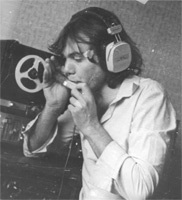
It had been almost a year since our vinyl came out: I've already mentioned the sound, but the printing was exactly on par with the plastic. The colors were dull, the low end was non-existent… A mere souvenir, really. But when our record hit the open market in Arkhangelsk, it naturally produced a massive socio-political impact, and it happened completely out of the blue. One day, my first wife, Lenka, bursts into the apartment, yelling: "Bogaev! Look what I brought!", holding "Svobody zahoteli" ("They Wanted Freedom") in her hands… Like a bomb dropping! She bought it for 3 rubles and 60 kopecks at a department store, having popped in purely for some women's errands.
The vinyl record department was right across from the department store entrance; it was impossible to walk past the familiar outlines of our album art. A record by Oblachny Krai—a band rejected and chased away from everywhere—had suddenly been released on a state label, not on some shady bootleg tape… it was unreal! We had a vinyl, a real one, just like Sofia Rotaru, Iosif Kobzon, or Pesnyary—your banny potap, as Joanna would say, and a stingy male tear rolled down my cheek.
The department clerks played our "Idolishehe poganoie" ("The Vile Idol") on endless loop; naturally, it was a local band, from Arkhangelsk! And since all the interested parties had long owned a copy of it by then, people snatched up the vinyl purely as souvenirs. Later on, they printed another run, which was made prettier—with a glossy finish and deeper colors. The sound remained at the same old level, but none of that mattered anymore: as it happened, we became the first to record at the new Melodiya studio, and the last ones to have our vinyl reprinted... right in the thick of 1991, when the factory was overgrown with weeds, the equipment written off and quietly sold off abroad.
Five years later, "Svobody Zahoteli" was released in Germany on compact disc, and this time it was done to the highest standard—both the packaging and the sound were as close to the original as possible. Ahead of us lay the turbulent times of the new Russian state's formation: amid a series of new victories came a string of new losses, joys, and sorrows. It was a harsh time, but more on that later—all in good order.
Recorded by Alexey Vishnya
For Special Radio
January 2007
Related materials:
Original article: https://specialradio.ru/art/id237/