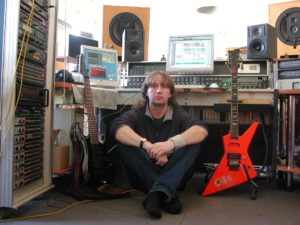
The time has come for the final chapter in the story of the Arkhangelsk band Oblachny Krai — about the work that is currently nearing its logical conclusion. It's a good thing it isn't a tragic one, although such an ending to our epic was not out of the question, and what's more... but it passed me by, passed me by, and once again passed me by the other day — God willing, not for the last time.
I have already described in detail the equipment I used to record all the albums, and the conditions in which I worked. Along with new global aspirations, the Millennium brought new technologies into my life and work. The Great Analog Path was dug up and buried for a multitude of natural reasons: the equipment started failing in cascades. There was nothing to replace the capacitors that had dried out in the sweltering studio heat, and the wide magnetic tape was shedding and warping. The sixteen-channel Ampex was dying channel by channel, and attempts to resuscitate it proved unsuccessful. The format had exhausted itself and died a natural death from old age, practically before my very eyes — or rather, right in my hands.
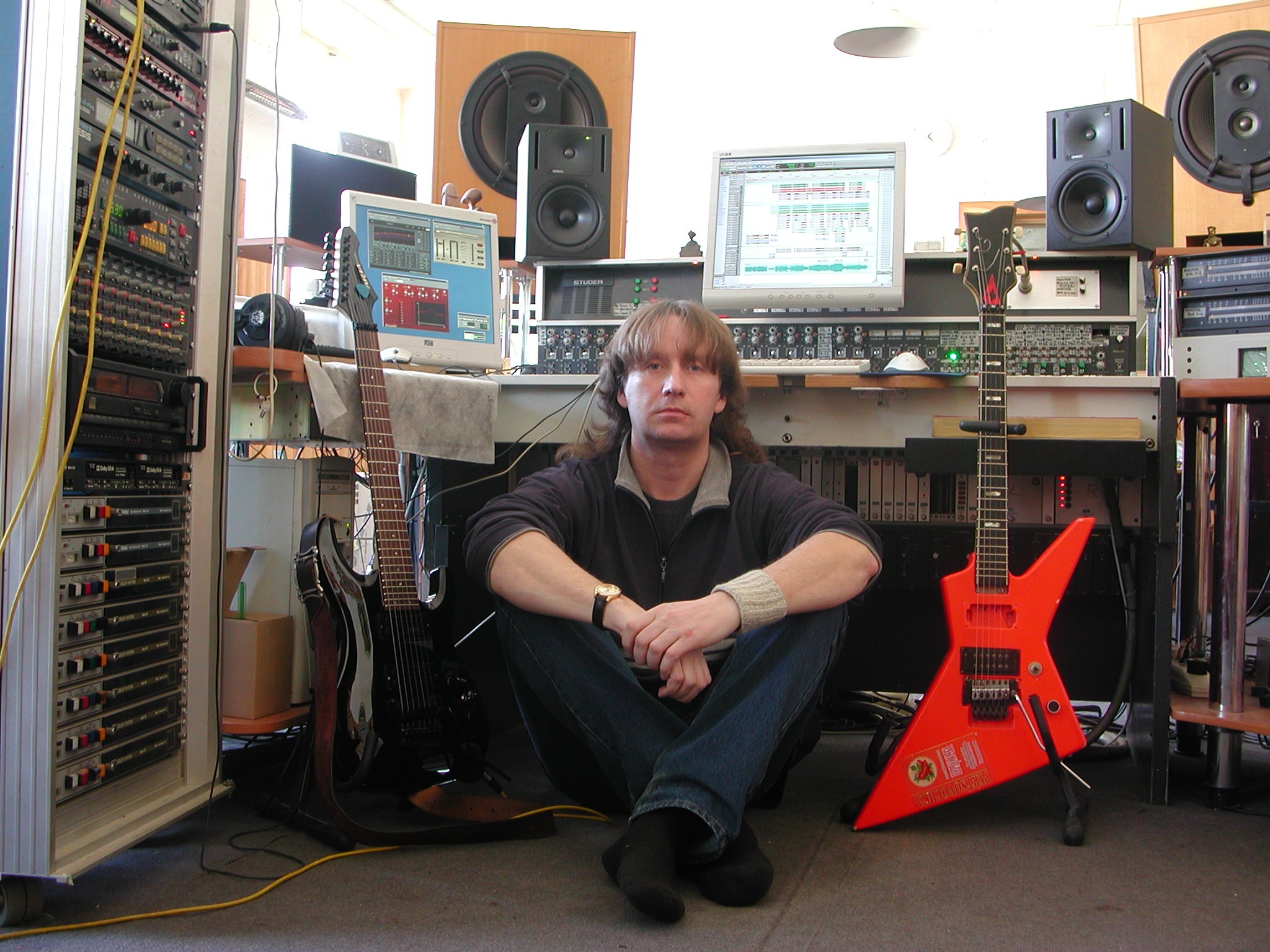
The time has come for the narrative of the final chapter about the Arkhangelsk band Oblachny Krai — about the work that is currently nearing its logical conclusion. It's a good thing it isn't a tragic one, although such an ending to our epic wasn't out of the question, and moreover... but it passed me by recently, passed me by again and again; God willing, not for the last time.
I have already described in detail the equipment I used to record all the albums and the conditions under which I worked. Along with new global aspirations, the Millennium brought new technologies into my life and work. The Great Analog Path was dug up and buried for a multitude of natural reasons: the equipment began to fail in cascades. There was nothing to replace the capacitors that had dried out in the stuffy studio, and the wide reel-to-reel tape was shedding and wrinkling. The sixteen-channel Ampex was dying channel by channel, and attempts to resuscitate it yielded no success. The format had outlived its usefulness and died a natural death from old age, practically before my very eyes, or rather, right in my hands.
I was recording some band at the end of 2003 — I don't remember exactly which one, as I chronically fail to memorize English names. They played some heavy reggae and stank up the whole studio. Their ambition was to play everything live and record it track by track onto wide magnetic tape, especially since they were all good musicians. The tape recorder wasn't showing clear signs of decay yet — the meters were jumping, the music was playing. Nothing boded ill: I put a relatively new reel on the recorder, counting on half an hour of continuous recording. The guys played the first song, then the second. We listened — it seemed to be recording fine, so we kept working.
It was completely impossible to notice that by the middle of the reel, and especially towards the end, the tape speed was slowing down slightly, no longer thirty-eight centimeters per second, but thirty-seven, or even thirty-five. It would have been fine if this defect had occurred linearly and predictably, but no: during recording, the speed fluctuated even more than during playback, rendering the entire recording useless. This was completely beyond the pale, absolutely unacceptable, it couldn't withstand any criticism, and was entirely good-for-nothing.
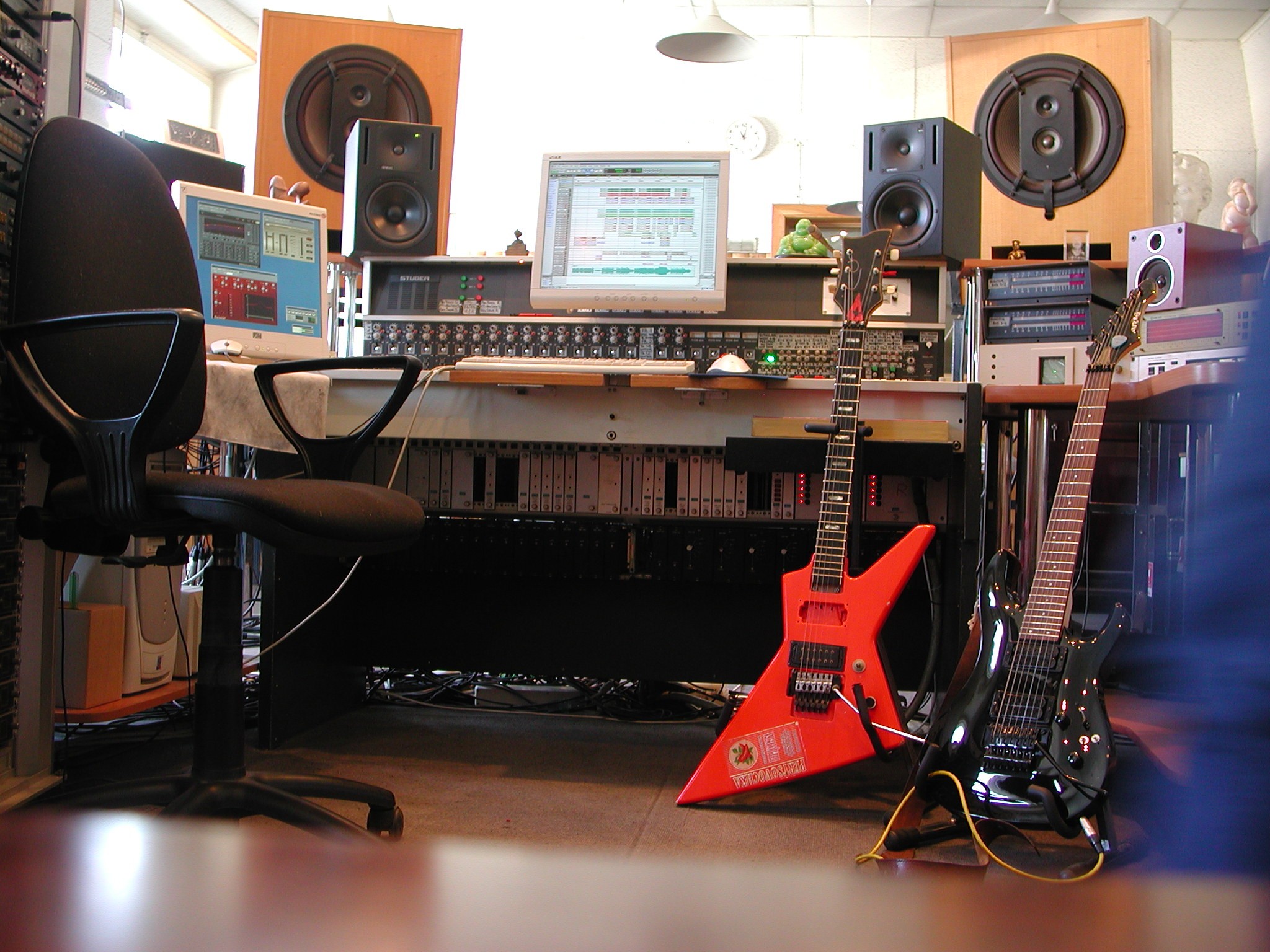
With that, the analog chapter of Russian rock's history at Anthrop Studio came to an end. The bulky Ampex was replaced by a Pro Tools 6.4 system. But for a long time, a computer seemed to me like something incomprehensible—a closed black box. The most I could do on my own was plug it into the wall. I had to master the new technology. I had never imagined I would actually need it someday, so I had always avoided even talking about computer-related topics.
It’s one thing to properly capture the sound from a guitar amp—to catch the signal, to get the drum sound; that was a whole science, one I could teach anyone myself. But this mouse, some screen, hundreds of confusing icons—I stared at them like a deer in the headlights and couldn't help myself. Even now, at my current stage, if you were to evaluate the depth of my knowledge on a five-point scale, I'd get a 0.7 or even a 0.5! This level of mastery today allows me to plug the computer into the wall, launch Pro Tools, create a new session or open an old one, add tracks, and record a part.
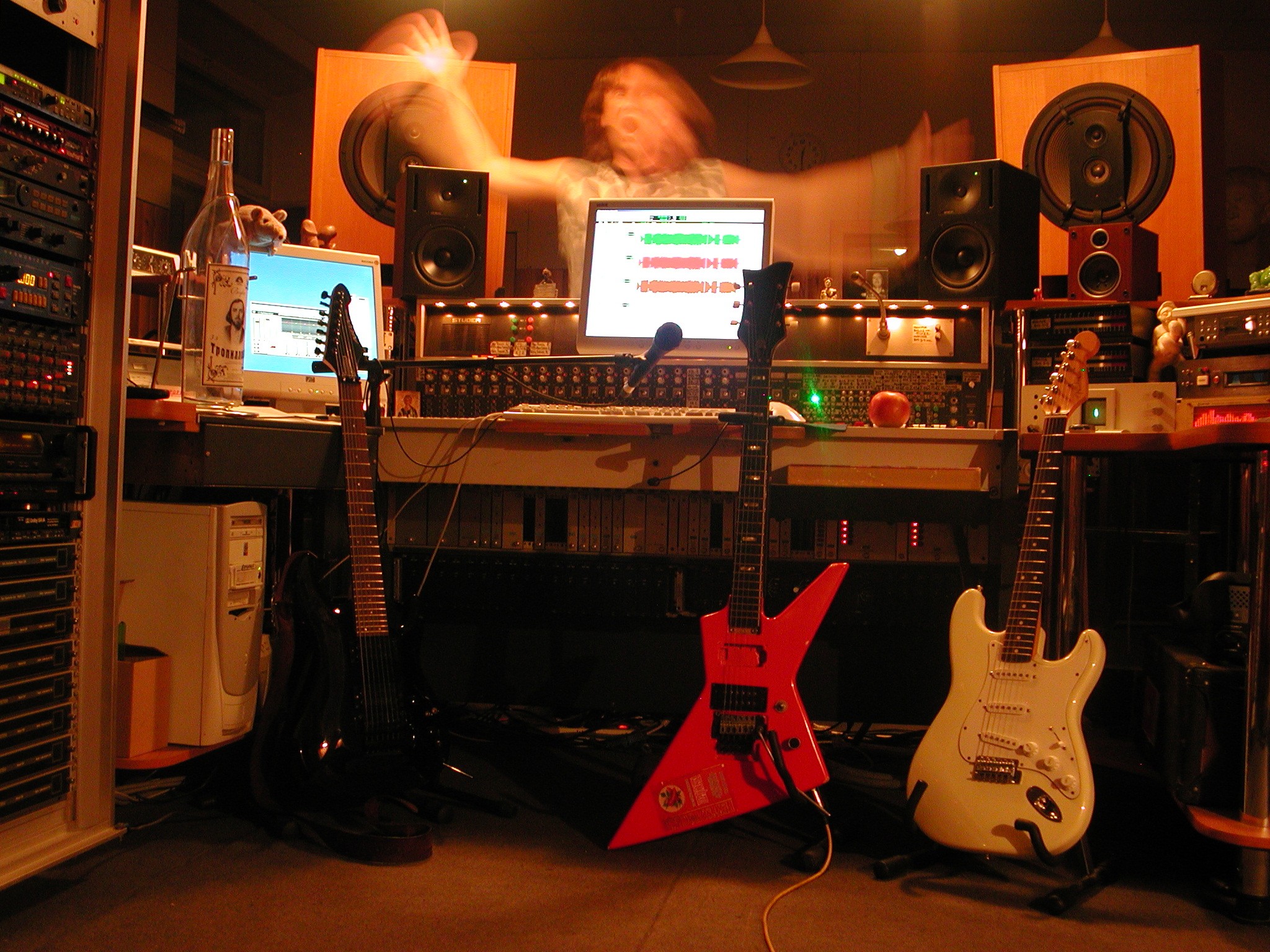
That's how it is now, but back in early 2004, I pestered everyone around me with the most trivial questions, inevitably irritating my fellow studio mates. Besides, they were still in the process of teaching themselves at the time. Eventually, I went home, my head swarming with new musical ideas. I was desperate not to repeat the mistakes I had discovered on *Patriot* as soon as the album rolled off the assembly line. No, that wasn't the sound I had envisioned—I had trusted the experience of the sound engineers, who had already figured out computers by that time. If I had mixed the album myself, it would have sounded completely different.
I set myself a difficult task: it wasn't enough to just get a good sound; it had to be properly recorded, and the hardest part—preserving the original sound of the individual instruments in harmony with the other tracks. Mixing is like diluting pure alcohol to make vodka. Judge for yourselves: we have a glass of pure water and a glass of pure alcohol. You can drink the water, cook soup with it, boil it to make tea; and with the alcohol, you can clean tape heads, scrub contacts, disinfect wounds, and so on. Vodka, however, is the final product—the only thing you can do with it is get drunk, nothing more. That's exactly how I listened to *Patriot*, drank vodka, and thought about how the next album would turn out much better if the entire process was in my hands.
The long saga surrounding the latest album has been filled with plenty of absurd events, as well as such completely bizarre decisions on my part that it's strange how it all even came about. I had planned to celebrate 2004 with my family, stay in Arkhangelsk until the summer, then head to the Khutor, and from there on to St. Petersburg. However, in the autumn, something began stirring inside me, driving me to total exhaustion. I felt that I was wasting precious time outside the studio, squandering my life. To my wife's surprise, I suddenly began hurriedly packing for St. Petersburg—I had an overwhelming, itchy restlessness. It felt more like fleeing on the eve of my birthday rather than a planned departure. Masha and Natasha saw me off, tears in their eyes. It was as if they knew something very long and not very good was beginning. I brushed away any dark thoughts with my characteristic optimism. However, a nasty little worm of dread persistently gnawed away at my mood.
On the train, I decided that I no longer had any reason to drink. For the entire twenty-seven hours to St. Petersburg, I didn't take a single sip of anything, not even beer. Since a new phase was beginning, the journey itself had to start in a new way. Perhaps for the first time in my life, St. Petersburg met me completely sober. I called my friend Gena Sivolapov from the station, asking if I could drop my things off at his place. I had a bit of money on me, so I went into a shop to buy some booze and a snack. As usual, there were three disgusting, sketchy, bluish banderlogs hanging around the entrance—panhandling for a bottle from anyone they could, whining at passersby. After I made my purchases and stood at the register, they stared intently through the window glass into the store, so much so that even I noticed it. From their position, they had a clear view of what someone was pulling out of their pocket and roughly how much money they had. And so, they quickly zeroed in on my financial state.
My route went through a long tunnel formed by the walls of buildings, and that was exactly where they caught up with me. I heard running footsteps, turned around, and received a massive kick to the head. Sparks flew before my eyes, but thank God I was sober and managed to stay on my feet. That was an instance where sobriety saved my life; otherwise, they would have simply kicked a drunk man to death, or I would have been left disabled if that bastard had managed to repeat his well-placed boot strike to my lower back.
It threw the banderlog off that I didn't fall; apparently, he had counted on knocking me out with a single blow and then calmly cleaning out my pockets. But I swung with a kind of fury and forcefully drove my heavy German winter boot straight into his groin, hitting him so hard my own leg hurt. It worked out perfectly, because the passageway between the buildings was narrow, just over a meter wide, and while he writhed in the snow, his accomplices tried in vain to catch me. There was black ice, they were drunk, and I was sober.
And so I ran away from them, even though my head was buzzing – which is no joke... I took such a heavy blow. It must have been a concussion, because afterwards I felt nauseous, and the stars kept flashing incessantly before my eyes. The wind painfully scratched the abrasions on my face, and, making sure the orcs were no longer chasing me, I limped through the biting wind towards Sivolapov.
FOR SPECIALRADIO.RU
Prepared by Alexey Vishnya
Summer 2008
Saint Petersburg
Related materials:
 FROM THE HISTORY OF THE BAND "OBLACHNY KRAI". CHAPTER 19: BOGAEV FOREVER
 FROM THE HISTORY OF THE BAND "OBLACHNY KRAI". CHAPTER 17: EXILE FROM PARADISE. A TRIBUTE TO MAYAKOVSKY
 FROM THE HISTORY OF THE BAND "OBLACHNY KRAI". CHAPTER 16: EXILE FROM PARADISE. A TRIBUTE TO GREBENSHCHIKOV
 FROM THE HISTORY OF THE BAND "OBLACHNY KRAI". CHAPTER 15: UNCLE MISHA IS ALIVE!
 FROM THE HISTORY OF THE BAND "OBLACHNY KRAI". CHAPTER 14: WHY THE HELL DO WE NEED THE WEST
 ASTRAKHAN LESSONS OF THE ELECTIVE BAYAN OF THE PETERSBURG GUITAR SENSEI
 Short stories about interesting cases from the life of Andrey Tropillo told by himself. PART 12. Alcohol .:. Bogaev .:. The Golden City .:. Analog
 EXCERPTS FROM AN UNPUBLISHED RECORDING. PART 3. About Moscow music lovers, Iggy Pop, John Lydon, Andrey Tropillo, Leonid Fyodorov, Dmitry Prigov, Konstantin Zvezdochetov, Sven Gundlakh, Vovan Terekh, Anatoly Gerasimov
 FROM THE HISTORY OF THE BAND "OBLACHNY KRAI". CHAPTER 13: SHEVCHUK, KINCHEV'S WIVES, AND SERGEY KUREKHIN
 FROM THE HISTORY OF THE BAND "OBLACHNY KRAI". CHAPTER 12, PART 2: SERYOGA'S BIRTHDAY
 FROM THE HISTORY OF THE BAND "OBLACHNY KRAI". CHAPTER 12, PART 1: OLGA PERSHINA
 FROM THE HISTORY OF THE BAND "OBLACHNY KRAI". CHAPTER 11, PART 2: "NOVAYA ZEMLYA"