The band Oblachny Krai – Aria of the Varangian Guests.
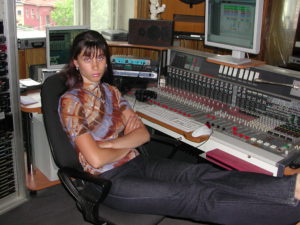
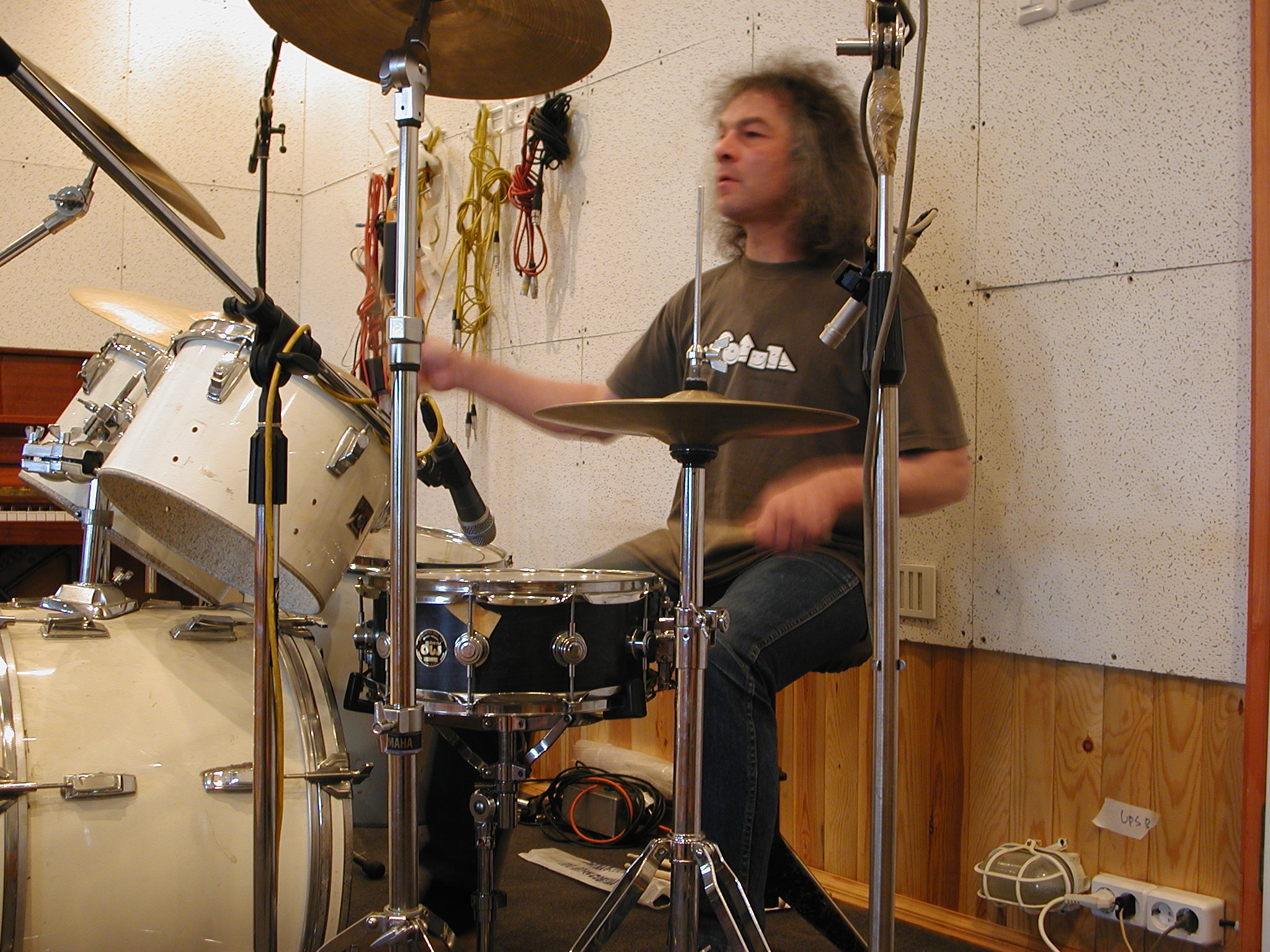
Life in the studio is half positives and half negatives. It's good that in the studio you are always at your workplace; you can always get some work done. But it's also crap because you have to be there while others are recording, when you aren't working but simply marinading your ears and testing your nerves. It's great when musicians leave their instruments overnight—you aren't going to lug a case all over the city if you have to bring it back to the studio again tomorrow. I took advantage of this quite often, because I didn't have an instrument of my own, aside from a pair of pliers, and I still don't. It sucks when you finish your shift, but you have nowhere to go and nowhere to rest; there's nowhere to tuck yourself away—everywhere this hostile, alien music is blaring. It seeps into every crack, and there is no escape from it. At times I tried renting apartments, but that just led to a whole new pain in the ass: either I had no money for the commute, or I had so little that it was only enough for port wine. The cheapest port wine costs twenty-seven rubles (in 2008 prices – SR), while the subway and a route taxi there and back costs seventy-two. Scrounging up twenty-seven around the neighborhood is easier than scrounging up seventy-two. Because of this, when living in rented apartments, my access to the studio was disproportionately smaller. Cancellations happened often, and I booked them all for myself, since I was constantly at my workplace.
Oblachny Krai band – Aria of the Varangian Guests.
Life in the studio is half pros and half cons. It’s good that in the studio you’re always at your workplace; you can always get some work done. But it also sucks because you have to be there while others are recording, when you aren't working but just marinading your ears and testing your nerves. It’s nice when musicians leave their instruments overnight—after all, you aren't going to lug a case all over the city if you have to bring it back to the studio the next day. I took advantage of this quite often, because I didn’t have an instrument of my own, aside from a pair of pliers, and I still don't. It sucks when you finish your shift and you have nowhere to go and nowhere to rest; nowhere to tuck yourself away—everywhere you go, this hostile, alien music is playing. It seeps into every crack, and there’s no escaping it. At times, I tried renting apartments, but then a whole new pain in the ass begins: either you have no money for the commute, or you have so little that it’s only enough for port wine. The cheapest port wine costs twenty-seven rubles (in 2008 prices – SR), while the metro and the routed taxi there and back is seventy-two. It’s easier to scrounge up twenty-seven around the neighborhood than seventy-two. So, while living in rented apartments, I had disproportionately less access to the studio. There are often cancellations, and I booked them all for myself, since I was constantly at my workplace.
Listening to the new track "Aria of the Varangian Guests" for the umpteenth time, I came to the conclusion: I shouldn't be allowed to play the drums! Everyone should stick to their own business: if you know how to play the drums, then play. If the guitar came easier to you in life, play the guitar, otherwise the result is just a mess. I decided that I would let myself record a drum track one last time, and I won't even try anymore, especially on a professional level when the product goes into circulation. Well, just for myself, it was passable—I had to do something, after all.
My drummer has always been, and still is, Dima Zhuravlev, but he's in Arkhangelsk. This means that to use him, I'd have to provide his food, accommodation, and some money, too. And I myself have major problems with the first, the second, and naturally, the third. There was absolutely no way I could bring him over. The situation was saved by a single phone call, which profoundly and suddenly reshaped my mindset. I called Vishnya; he was delighted and invited me over for lunch. I must say, Lyoshka is an incredibly good cook—almost as good as me—but I simply have nowhere to practice. There is a kitchen in the studio, but I don't have access rights to it.
That day, Alexei had made beetroot borscht using a roasted marrow bone and fried up some juicy cutlets with fried potatoes. Noticing my slight tremor, Vishnya dug into his stash and pulled out an open bottle of some greenish liquid:
– "Will you have some absinthe?" Alexei asked. I nodded to indicate I would, but just in case, I asked: – "What is it?"
Vishnya poured the strong, aromatic drink into a 100-gram glass, which I instantly drained. I hadn't had the chance to try this wonderful drink before; I had repeatedly come across mentions in world literature of absinthe as a narcotic potion. Perhaps this aspect introduced certain adjustments to my consciousness, because everything that happened against its backdrop took on a fateful significance.
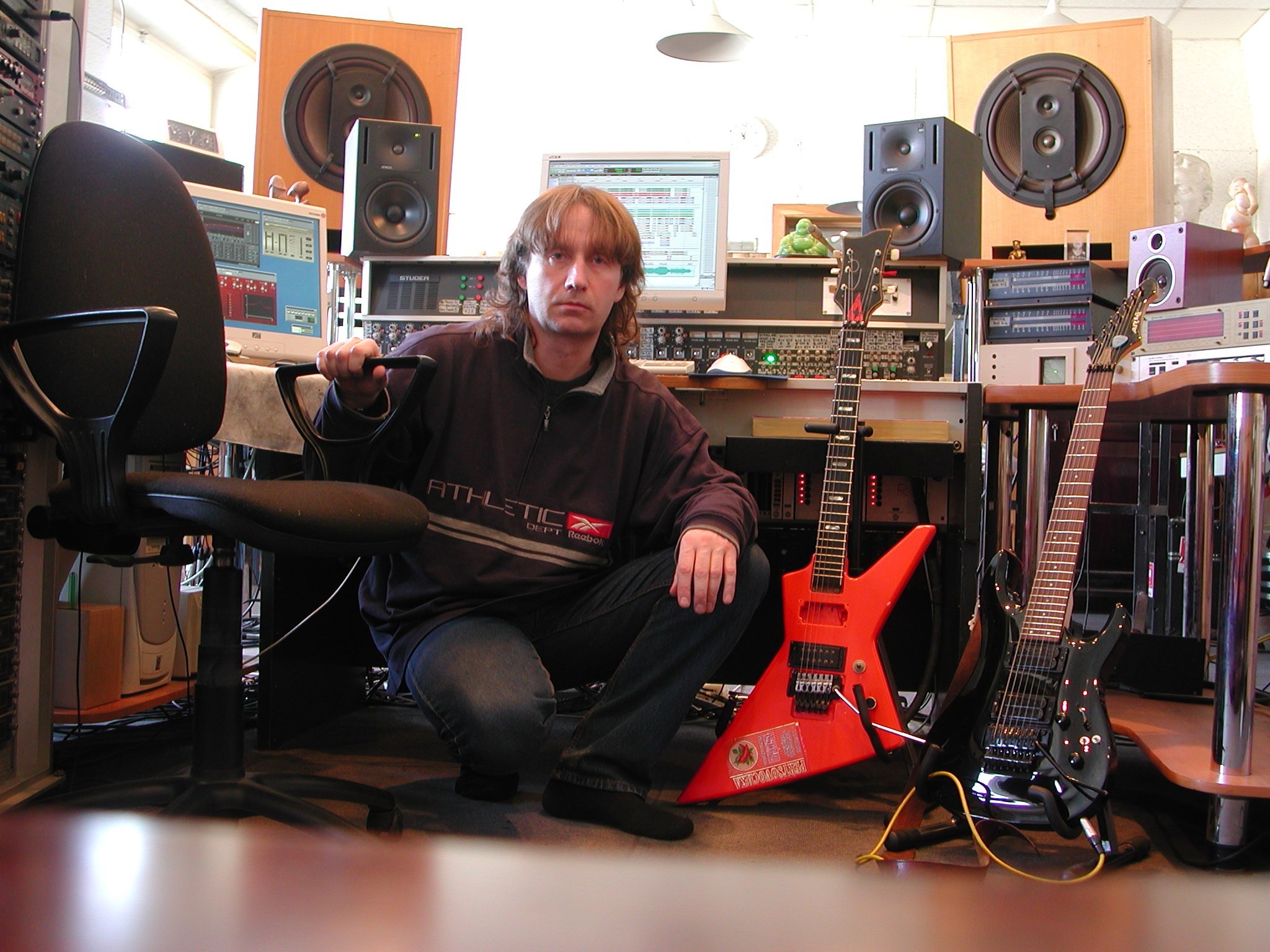
Alexei has a small but well-equipped home studio: several keyboard instruments, a solid Japanese reverb unit, and two computers with half-kilowatt acoustic monitors. I especially liked the Korg Karma—it fills the heart with enchanting cascades of sound just by pressing a single key. Since I am no Rachmaninoff, and Vishnya is no Richter, these wonderful capabilities of imported gear could easily compensate for a complete lack of performance mastery.
In addition, he had many gigabytes of short drum track snippets stored on his hard drives, formatted as loops. You could set a loop to play continuously and enjoy a few measures of a well-played drum track. You can't get away with that for too long, although nowadays you can hear songs on the radio created using nothing but a single drum loop.
The sounds Vishnya suggested were fantastic. Not only that, but they impressed more than just me: to this day, if someone walks into the studio while I'm recording, they marvel at how we managed to record such massive, nuclear drums. Anyway, for the first time in my life, I came face-to-face with loops, and it wasn't half bad. Lyoshka queued up one loop after another, we selected the ones we needed, and then started building little pyramids out of them: first one, then a second, then a third, a pause, and back to the first... we ended up with a rough mix about four minutes long, after which Lyoshka dumped the file onto a compact disc.
At the studio, I layered in some live hardware, and it sounded amazingly good. It was a turning point in my musical career, because nothing was holding me back anymore, and the urgent need to find a place for Zhuravlyov to live in St. Petersburg had vanished.
It should be noted that the absinthe had a very progressive effect, acting a bit differently than just slightly diluted alcohol, plus a good lunch, and beautifully sounding drums—all of this brought new positive vibrations into my life. Burning with impatience, I quickly loaded the rough mix into an already prepared Pro Tools session and rejoiced at how smoothly this new technology fit into my established world. I plugged in the guitar.
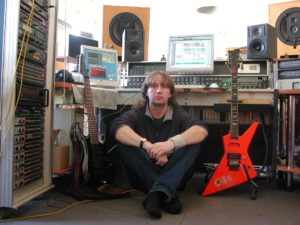
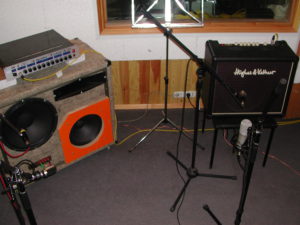
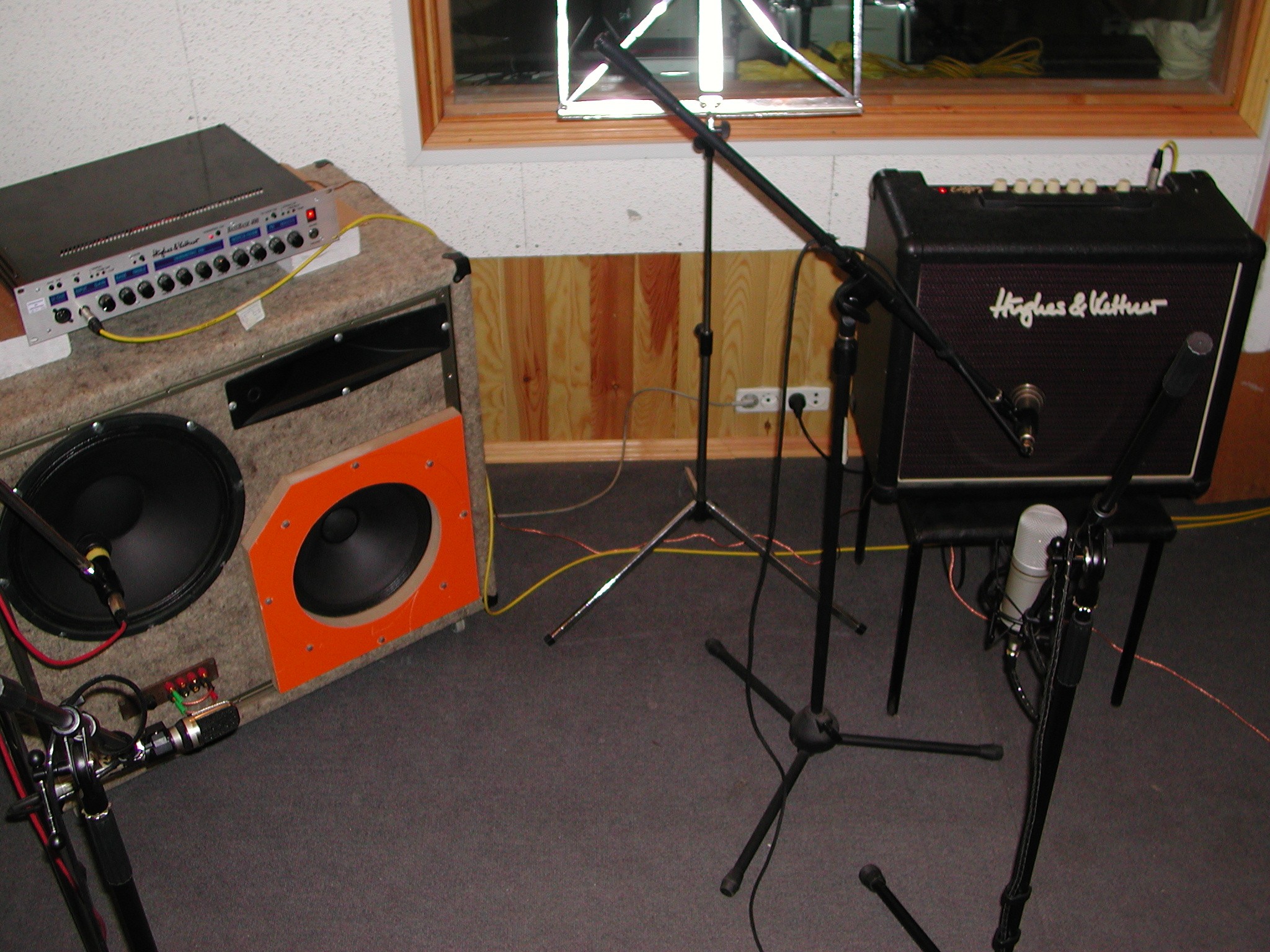
I have my own method for recording guitar: I plug it into the mixing board, then route the signal to two massive amps—a bass amp and a guitar amp. The reason is obvious: the guitar occupies the entire spectrum of conceivable frequencies and sounds like a solid wall. I captured the sound using four or five microphones and spread them across the stereo field. A single strike of the low E string in this configuration creates a literal wind in the room.
That day, I sat with the guitar right up until morning. The understanding of what the guitar should sound like over those drums didn't come immediately. At first, I eagerly started playing all sorts of intricate riffs to the given tempo—it sounded entirely too neat. I tried simpler riffs—it got even worse—turning into pure pop. Soon enough, you couldn't even hear the drums behind that guitar. No, this won't do, I thought. It was only the next day that I found the one right approach, which served as the starting point for the album's overall concept. At the same time, but only during daylight hours, the studio was occupied by Sanya Saveliev with his rock opera about Tropillo, "Olliport" (an anagram of Tropillo — SR). He had his Ovation acoustic guitar sitting there, and I played a few bars on it. Adding an acoustic sound to the heavy mess I had created brought a touch of clarity; it provided a kind of release, a breathing room. Today, music is driven not so much by notes as it is by shifts in mood. It's always a pleasure when a track doesn't just flow as one solid mass, but chops itself into sections, each carrying its own atmosphere, its own emotional state.
After mixing the first track, I flew to Okhta, to Vishnya, as if on wings. The result was so unexpected that we even hugged out of joy! It became clear to both of us that we had to keep moving in this direction with this technology. Besides, Tropillo had already heard everything; while I was mixing, he walked into the studio with a friend and asked:
– Seryoga, what is this?
He had never praised me to my face before, but here he was simply at a loss for words. It didn't quite sound like his drums, and it didn't sound like a human playing, yet the sound was absolutely killer. During shift changes, all the sound engineers working in the studio would click their tongues:
– It needs English lyrics, – they would say, – because the music turned out to be top-tier Western quality, and Russian lyrics would kill any chance of breaking into the West...
Oh, what West! We were just trying to keep from starving to death right here. But it was only a two-hour drive to Vishnya, and there was always something to eat there. Besides, our country is enormous—from the Baltics to the Sea of Okhotsk and Chukotka, so why the hell would we even need the West and their language! At the time, my wife and daughter were visiting me, and I added Masha's voice to the track. Some band was recording at Yasin's (Tropillo's nephew – SR) place, and I asked the Jew's harp player to lay down a few throat singing passages, which I used to open our song No. 001. I went to see Alexey, and he had already fried up some lamb, stewed some eggplant and cabbage, and made some kidney solyanka soup. He even had some Absent left untouched from my last visit. Compared to me, Vishnya drinks very rarely and very sparingly. That bottle would last him a month, whereas I’d polish it off in half a day.
He and I decided to try creating something at a different tempo. Vishnya keeps a close eye on the new gear released all over the world. This time, I noticed a new addition on his desk—a wildly expensive Roland XT synthesizer with an absolutely heavenly sound. Whatever he pulled out of it, it fit my music perfectly. That's how we got down to song No. 002, then 003, 004, and it suddenly dawned on me that in just another couple of months, the album would be finished. But things don't always go as planned. Even though four years have passed since the events described here, I don't regret letting the material marinate for so long. After all, during that time I conducted a lot of experiments, layering and erasing guitars, recording bass and then erasing it again. If I had rushed it back then, it definitely would have been a flop.
FOR SPECIALRADIO.RU
Prepared by Alexei Vishnya
Summer 2008
Saint Petersburg
Related materials:
Musical jokes of the Reload project
 THE SIGNATURE STYLE OF "MIFY". PART 2
 FROM THE HISTORY OF THE BAND "OBLACHNY KRAY". CHAPTER 19: BOGAEV FOREVER
 FROM THE HISTORY OF THE BAND "OBLACHNY KRAY". CHAPTER 18: MY COMPUTER
 FROM THE HISTORY OF THE BAND "OBLACHNY KRAY". CHAPTER 17: EXPELLED FROM PARADISE. MAYAKOVSKY TRIBUTE
 FROM THE HISTORY OF THE BAND "OBLACHNY KRAY". CHAPTER 16: EXPELLED FROM PARADISE. GREBENSHCHIKOV TRIBUTE
 FROM THE HISTORY OF THE BAND "OBLACHNY KRAY". CHAPTER 15: UNCLE MISHA IS ALIVE!
 HOW WE GAVE ROCK N' ROLL. Part 1
 ASTRAKHAN LESSONS OF THE ELECTIVE ACCORDION OF THE PETERSBURG GUITAR SENSEI
 Short stories about interesting cases from the life of Andrei Tropillo, told by himself. PART 12. Alcohol .:. Bogayev .:. City of Gold .:. Analog
 MY MUSICAL MARATHON
 EXCERPTS FROM AN UNPUBLISHED RECORDING. PART 3. About Moscow music lovers, Iggy Pop, John Lydon, Andrei Tropillo, Leonid Fyodorov, Dmitry Prigov, Konstantin Zvezdochetov, Sven Gundlach, Vovan Terekh, Anatoly Gerasimov