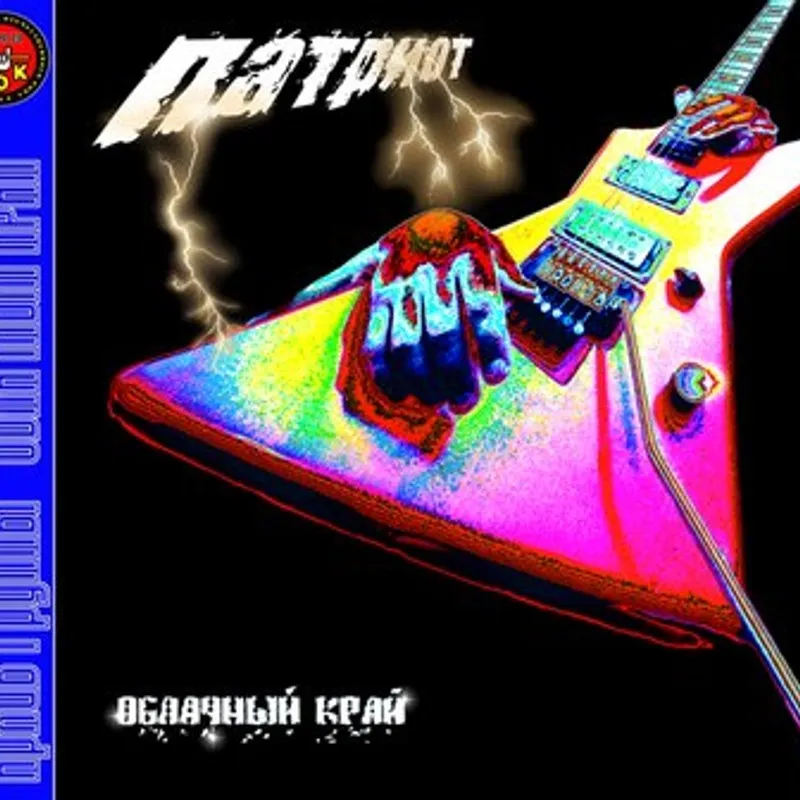
Believe it or not, Oblachny Krai was the first so-called Soviet rock band I ever heard in my life (not counting a tape of 'Radio Africa' in '84 in such terrible quality that I could hardly tell it apart from, say, King Crimson). This in itself is surprising, because this Arkhangelsk bunch was a semi-mythical band back in '86…

Believe it or not, Oblachny Krai was the first so-called Soviet rock band I ever heard in my life (not counting a tape of 'Radio Africa' in '84 in such terrible quality that I could hardly tell it apart from, say, King Crimson). This in itself is surprising, because this Arkhangelsk bunch was a semi-mythical band back in '86. One of the oldest Russian hard rock bands recorded their first albums at the dawn of the eighties, featuring chants clearly inspired by Deep Purple in perhaps the most primitive technical execution. Despite clearly belonging to the 'fighters of Perestroika', Oblachny Krai didn't fit into the ranks of Leningrad rock (they recorded with Tropillo starting in '84), nor into the emerging pseudo-metal scene (the VIA Aria and the like). Unlike Leningrad rock, which was characterized by the primacy of lyrical pretentiousness over music borrowed from Western icons, the Arkhangelsk guys focused on the 'hammering beat' and hard rock drive, rarely rising above the level of a wall newspaper in a kolkhoz club in their lyrics, using monstrously stilted, gopnik-everyday vocabulary. However, you'd have to be too narrow-minded not to see a fair amount of trolling in this approach, something absolutely alien (to this day) to the Aria-Kruiz crowd. Moreover, the deliberate roughness of the arrangements and sound, given the noticeable technical proficiency of the musicians, didn't fit the image of patented à la Russe metal, which for the most part was only capable of rearranging something by Iron Maiden and Saxon in their own way. Despite a noticeable affinity for punk, Oblachny Krai also didn't become part of the existential wave, because they looked at events of even a planetary scale through the eyes of a tractor driver. Having recorded what is perhaps their best album, 'Stremya i Lyudi', in '85, the band disappeared from the public eye. In '91, the label Melodiya released the bland and boring 'Svobody Zakhoteli?', after which the band finally went belly up. The new album released in the late 90s called 'Lyubov k Zhizni' was presented as a collection of works spontaneously written over the previous decade by the band's leader Sergei Bogayev, and although it was released under the name Oblachny Krai, it was essentially a solo album, because apart from Bogayev himself, no one from the old lineup was left. Therefore, I was surprised to hear at the beginning of last year about the release of a 'new' album by the band. About six months later, a search on the internet yielded nothing promising, except for a cryptic phrase saying that the album was recorded, mixed, and circulating among the people (much like the specter of communism over Europe in its time) on an unofficial CDR. The band continues to maintain its semi-mythical status — even when, quite unexpectedly, this album in the form of a professionally published CD turned up at Gorbushka, the Net continues to remain silent (as of January 2004 — D.M.).
In light of the above, it is most convenient to discuss this work in the context of the band's previous efforts, for which it is necessary to mention the changes in sound, apparently resulting from a lineup shake-up. Instead of the more or less familiar hard rock — with the booming, easily recognizable vocals of the now-absent Oleg Rautkin — that Oblachny Krai played in the 80s, the music noticeably shifted into metallic territory. The guitar of Bogayev, who now reigns supreme, took a dominant place in the sound, now producing a juicy, ringing, crunchy rasp that Western bands of the NWOSDM (New Wave of Swedish Death Metal) scene usually boasted, recorded at Abyss Studios by Peter Tägtgren (Hypocrisy). Bogayev's vocals, which lacked Rautkin's juiciness, were more of the typical rasp associated with such music, dissolving almost without a trace in a sea of guitar roar, making the lyrics difficult to make out. The rhythm section tightened the screws. In this form, the material for 'Lyubov k Zhizni' was presented to the listener, its main drawback being an abundance of ballast.
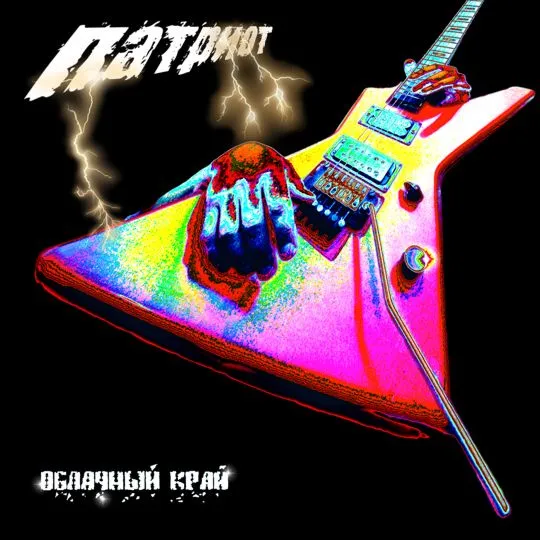
On the new album, the tightening of the screws continued. As on practically all of Krai's albums (with the possible exception of the unique 'Selkhozrok', 1982, and 'Stremya i Lyudi'), 'Patriot' reveals a gigantic chasm between the technically proficient music, leaning almost toward avant-progressive thrash metal ('Tupaya'), and that same crude, everyday dialect of chanted verse circa '84 (if anyone remembers 'Vershina Idiotizma'):
The wallpaper is splattered with beer,
The blanket is soaked in wine,
But you smiled playfully,
You didn't understand much.
You didn't understand much,
or to put it simply — you didn't get it,
I sang you a sad song,
And for some reason you guffawed.
You squealed obscenely, acted rude,
Sneered at everything sacred
By midnight you got stupidly drunk,
And lay there passed out until morning.
…
The album turned out not only very angry (even by Oblachny Krai's standards), but also incredibly 'crooked'. The guitar riffs became even sharper and more choppy, bordering on industrial, the sound even drier and more ringing, and the experiments in sound (like the wild saxophone inserts) and arrangements are not aestheticizing, but are carried out weightily, roughly, visibly. All together, it's an unplaned, lopsided, crookedly cobbled together, yet impressive monster on stilts, driven by raw energy. Although, of course, things aren't that simple. Oblachny Krai wouldn't be itself if there wasn't a healthy dose of trolling, of recognizable aggressive trash in all this mess. For example, in the excellent track 'Nastya' (compare, by the way, with 'Ya Stoyu na Mramornom Balkone'):
Once, hear me out, bro,
Seriously, I'm not BSing you,
I got my ass dragged to some high-society shindig,
Bankers, diplomats, art critics, snobs,
Poets, musicians, and just plain assholes.
I'm standing in the corner, my outfit isn't exactly brand new,
I'm just like some Chilean bumpkin among this grandeur.
My face is bluer than a plum, my hair like a papakha hat,
Probably from a hangover, or maybe from over-screwing.
And later, in the same song:
Her eyes — Spain, bullfight, temperament,
A delicate lace creature, while I'm like parchment all over.
All of this is played to caveman heavy metal in the aesthetic of 'A Monster Attacking a Bipedal Individual (or The Bitten-Off Symbol)'. The album begins in a similar vein (with the instrumental 'March') and ends with the symphonic 'Waltz', where Bogayev plays the electric guitar accompanied by a chamber orchestra conducted by Andrei Korelsky. As a result, we have 46 minutes of wild, absurd, trashy, odious, politically incorrect — like life itself — music, practically devoid of ballast. The album was mixed in three different studios, which made it somewhat patchwork. The relatively poor mixing, which I almost wrote off as a flaw, actually adds to the trashiness. Perhaps this is how DK would have played if they had decided to retrain as metallers.
In a word, the guys from Arkhangelsk have pleased us.
January 2004
D.M.