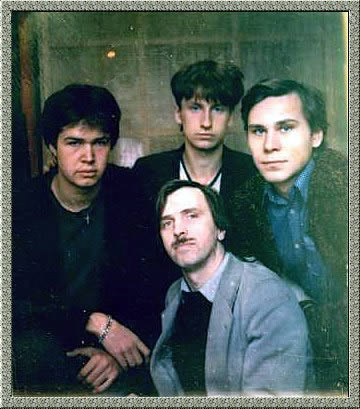
This was back in the late 80s, around the winter of '88-'89. The band Alisa invited us to Leningrad for a return visit—a year prior, we had hosted them as guests of honor at a rock festival in Arkhangelsk. The band Autodafe traveled with us; their frontman played drums in our band. The very first surprise 'delighted' us right at the train station, when we realized that Autodafe's drummer hadn't shown up for the train, and his ticket was lost. So we decided to go ahead with the show—first Autodafe somehow, then us, and Alisa would wrap it all up, of course.
This was back in the late 80s, sometime during the winter of '88-'89. The band "Alisa" invited us to Leningrad for a return visit—a year prior, we had hosted them as guests of honor at a rock festival in Arkhangelsk. The band "Autodafe" traveled with us; their frontman played drums in our band. The very first surprise "delighted" us right at the train station, when we realized that Autodafe's drummer hadn't shown up and his ticket was lost. So we decided to go ahead with the show: first "Autodafe" would play somehow, then us, and "Alisa" would close things out, naturally.
The whole gang piled onto the train: "Oblachny Krai", "Autodafe", and a couple of people accompanying us, as usual on such trips. Even the president of the Arkhangelsk Rock Club himself, Rostislav Dubinin, came along with us. This was in the winter; I don't remember the exact month anymore, but it was quite cold. Sometime between December and February. The anti-alcohol campaign was already in full swing across the country. If you could still find something in the big cities, back home in Arkhangelsk everyone had to fend for themselves however they could. And so we rode, our modest belongings clanking away at the rail joints. We had calculated everything so our stash would last us all the way to Leningrad, but we consumed everything we had managed to get our hands on in the very first third of the journey. Nothing was sold at the stations back then, and we had no money for the dining car or the conductors. So we decided—fine! We would tough it out until the Northern Capital, where we were promised a proper welcome upon arrival.
Once the booze ran out, the euphoria quickly evaporated, and everyone grew sullen. All that was left to do was take our guitars out of their cases; everyone quietly picked away at their strings to themselves—which was a blessing, since unplugged electric guitars don't make much noise. We sat there killing time, glancing at our watches. Six hours left, then four, then two... And then, as we were approaching the city, we slowed down and saw the station: Volkovstroy-2. We stopped. And suddenly... good heavens! Right in front of our window was a kiosk selling bottled beer!! In Arkhangelsk back then, beer was practically unheard of. Anyone who hasn't been there since the mid-80s would have a hard time understanding what beer meant to an Arkhangelsk native... it was something sacred and unattainable, acquired only through incredible labor and effort. And here it was—a kiosk standing right before our eyes, with not a soul in line. Naturally, we all rushed over, emptied our pockets, and collectively pounced on the president of the rock club accompanying us, Rostislav Dubinin. He had some funds from the rock club's treasury on him. He tried to resist, saying the money wasn't his but the rock club's. To this, he was told that since we, "Oblachny Krai" and "Autodafe", were the very brightest representatives of that club, who deserved the money to help them out in a difficult moment more than we did? Wasn't that only fair? The train's stopping time was inexorably running out, and we had already closed in on our curator in a tight, unforgiving, shrinking ring... and he gave in.
We spent all our money on Baltic beer. Everyone carried as much as they could, and when we piled it all together, it turned out there was hardly any room left in the train compartment. The small table was cluttered, the floor was covered, bottles were practically out in the aisle, and even the overhead racks were stuffed. The train pulled out, and for a while we just sat there, unable to believe our eyes. Then, simultaneously, as if on cue, we all silently scrambled to crack them open on whatever we could find, using whatever we had—teeth, hands, pocketknives... and everyone downed their first bottle in silence, in one gulp, greedily. A blissful silence hung in the air for half a minute. Just as silently, we all grabbed a second, popped them open, and without rushing, began a leisurely conversation with a deep sense of profound satisfaction. Stuff like—good thing we made the trip, how lucky we were to have looked out the window, that the kiosk was right opposite our carriage, that President Dubinin came along with us, and that he happened to bring along what he brought...
When we were about an hour away from Leningrad, half the beer was already gone. Everyone was half in the bag by then; some were completely plastered from the sheer volume of suddenly acquired happiness. People were talking loudly, breaking into song—each singing their own tune, some joining in on choruses, others starting something different. In short, those final kilometers before our destination passed by loudly and cheerfully. Upon arriving in Leningrad, we fell into the warm, caring hands of the Leningrad Rock Club representatives, who immediately took our condition in stride... An hour before the city, the train toilets had already been locked, but there was still plenty of beer, and it was desperately begging for an exit. The guys were suffering, but holding it in; however, the beer remained, and we just kept drinking and drinking. They say you can't eat or drink for the future, but that rule didn't apply to us back then. We made a frantic dash to find a patch of open soil to relieve our suffering, but the welcoming Leningrad locals stopped us, hurriedly loaded us onto a bus, and drove us to the rock club to sort out the necessary formalities. Rubinstein Street is a tucked-away sort of place, so we didn't even bother asking "where's the bathroom here," obtaining instant satisfaction from fate right where the bus stopped—fortunately, right opposite the entrance to the Theater of Folk Art, there was a small patch of lawn. After taking care of the necessary business at the rock club headquarters, we pulled ourselves together a bit and headed to the venue, the Leningrad Palace of Youth. We arrived... people were already showing up. Naturally, everyone was there for Alisa, but a few folks actually knew Oblachny Krai. I personally heard the name of our band from the lips of some guys in the crowd. It was true, though, that no one had heard of Autodafe yet.
The atmosphere promised nothing but the absolute best: a luxurious Palace, great sound equipment, plush seats in the auditorium, and tons of people. We could feel that some major, milestone event in our lives was fast approaching. After all, this was our very first trip in such a major lineup, at a great venue, and to top it off, we’d been invited by Kostya Kinchev, the frontman of one of the best bands around. We settled into the dressing rooms behind the stage, and right away, runners from the local volunteers headed out to the store. Fortunately, things were a bit more relaxed in Leningrad in that regard; they bought some light wine—or, for some, not so light—because after the beer, which was essentially just a refreshing cooler, we needed something to warm us up. The marble walls of the freezing Leningrad Palace of Youth radiated a bitter chill.
Having snacked a little, our cheeks flushed and our spirits lifted, we began getting ready for the concert. Our mood only kept improving. Even though we were told that opening for Alisa was a thankless task, we felt no apprehension whatsoever. We were simply expecting something new and unusual. And not without reason.
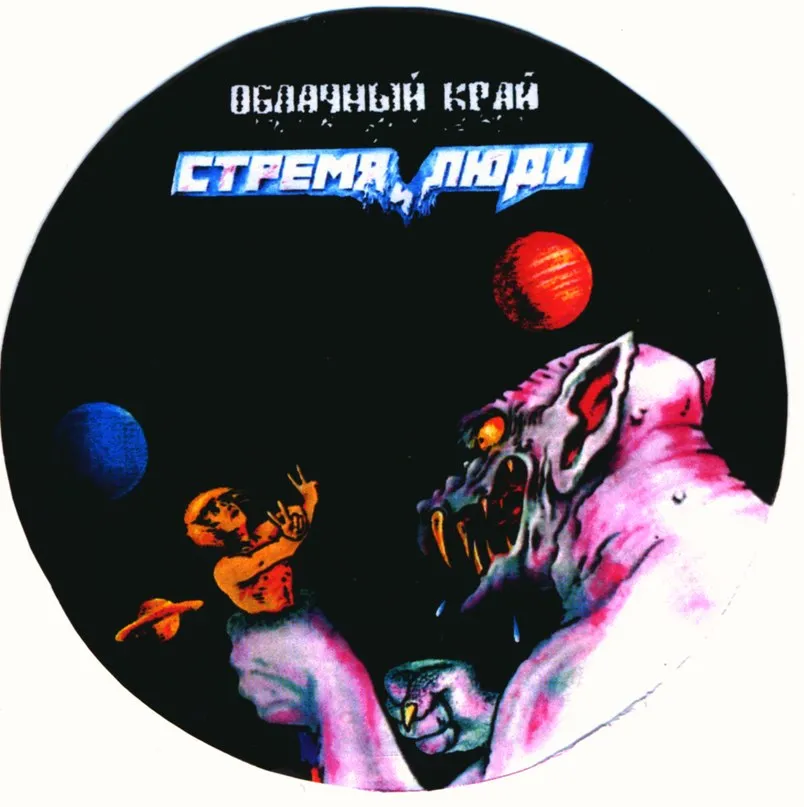
Auto-da-Fé was up first. Misha Nefyodov from Alisa had to fill in on drums for them—he was hastily shown the material right before the concert, as best as possible. Of course, it wasn't quite the same, but Misha played everything cleanly and solidly. And I played drums on the last, best song, because I had previously recorded it with them in the studio. The song had a mid-tempo pace, and while I'm a guitarist, I can handle the drums pretty well too, especially if it's not too fast. Overall, it sounded quite convincing. The crowd was slowly warming up, and then it was time for our set. More people knew us by then; it had been three years since the recordings of our two albums made in Leningrad—*Scum's Fortune* and *Stirrup and People*—had started circulating. The albums were successful, and we had chosen the strongest songs from them for the concert, which the audience was already singing along to. Everything went wonderfully; no one threw empty bottles at us, our set time flew by like a dream, and nothing foreshadowed any trouble.
Then came a short break. Alisa took the stage and started setting up. Meanwhile, we were gathering our gear backstage and could have finally relaxed a bit—the gig was over, and we could rest easy. Fortunately, each of us had stashed a couple of bottles of booze, like white port wine. We sat there listening to Alisa, sipping our wine. From the side, we had a great view of both the musicians and the part of the audience right in front of the stage. Overall, the atmosphere was magnificent. Our keyboard player, Kolya Lyskovsky, the youngest among us, had been sitting with us through the entire set when something suddenly snapped in him during the last song. He silently set aside his half-empty bottle, stood up, and walked over to Pasha Kondratenko, gesturing as if to say, "Can I play..." Pavel waved him over to the keyboard stand with a grand gesture, and the two of them started soloing together on the electric organ. It was only then, lifting his gaze into the depths of the dark hall, that our Nikolai realized this was a live concert, that Kondratenko was on his left and Kinchev on his right, and that he had crawled out onto the stage right in the middle of their performance. He didn't know his part for the song at all, but the crowd decided that this was exactly how it was supposed to be. It was the closing number, and everything was drowned out by roaring cheers.
Meanwhile, strange people started appearing backstage in suits and ties, like the clones from the movie *The Matrix*—with identical, expressionless faces, except they weren't wearing sunglasses. None of us paid any attention to them. They roamed everywhere backstage like shadows and didn't bother anyone. But there were more and more police officers. During Alisa's set, the guys from Auto-da-Fé decided to go out to the floor to hear how everything actually sounded in the room. All the service doors were blocked off by the police and the men in grey, but we had backstage passes pinned to our chests. Although we had been drinking a bit, we weren't stumbling against the walls just yet. Right at the moment when Alisa was playing their encore, someone from our crew ran up to us shouting: "Lyokha has been arrested by the police! Bulygin!!"
We exchanged bewildered glances... we were overcome with indignation. Imagine this: the victim was the quietest and most mild-mannered of us all, the guitarist for "Auto-da-Fé" and our artist, who painted the covers for our albums. The most sober of us, the most modest, was the one in trouble. Alexei had never gotten involved in any scandals; no matter how much he drank, he always behaved with dignity—at worst, he would just quietly fall asleep. Yet for some reason, he was the one they dragged in. I wasn't the first to hear the news, but rather our vocalist, Oleg Rautkin, who, on the contrary, was a wild, hot-tempered guy, to put it bluntly. Right off the bat, practically screaming, "They're beating up one of ours!" he rushed to Bulygin's rescue. Of course, Rautkin was no diplomat; he raised his voice and they grabbed and twisted his arms too. Then I arrived, having already found out what happened. I introduced myself as the artistic director of the band and asked:
– "What exactly is the matter here?"
To which the young policeman replied:
– "We actually picked up this citizen here, and your singer, so to speak, comes running over, starts waving his arms, shouting, making a scene. For his rude, disrespectful attitude toward police officers on duty, we are taking him in too. And since you're stepping in to defend them, we're taking you as well." And since our entire group had gathered by that point, they hauled in the rest of us too. When we asked, "But why did you actually detain our friend Bulygin in the first place?" one of the cops who had stopped him answered in all seriousness:
– "He was walking down the stairs, looking at me, and smiling with a special kind of cynicism. A smile like that can only be taken as an insult, so he was detained for insulting an officer on duty."
In reality, Alexei naturally had that kind of sly smile, just like Georgy Vitsin. You can't possibly consider a smile like that an insult! So the guy is walking along, smiling, not averting his eyes but looking straight at the policeman and smiling—and they stop him, like, "Don't smile..." Our bassist, Andrey Lukin—may he rest in peace—tried to intervene. He was the "diplomat" of the group—a polite, calm guy, but passions had already flared up. None of us listened to his voice anymore; we were already completely carried away. In the end, they grabbed all of us and marched us through the lobby, right in front of the entire audience, to the local police station located just nearby in the palace lobby, behind a door marked "POLICE." They shoved all of us behind a partition. And there, sitting right across from us, was a man in civilian clothes. It was obvious that he was the one commanding all the officers. He was also the oldest among them, and judging by how promptly everyone carried out his orders, presumably the highest-ranking as well. The intense interrogation began...
Recorded by Alexei Vishnya
For Special Radio
May 2004
Related materials:
Original article: https://specialradio.ru/art/id51/